ARIA Token Crash: Suspected Manipulators Trigger Devastating 91% Plunge with $5.4M Sell-Off
BitcoinWorld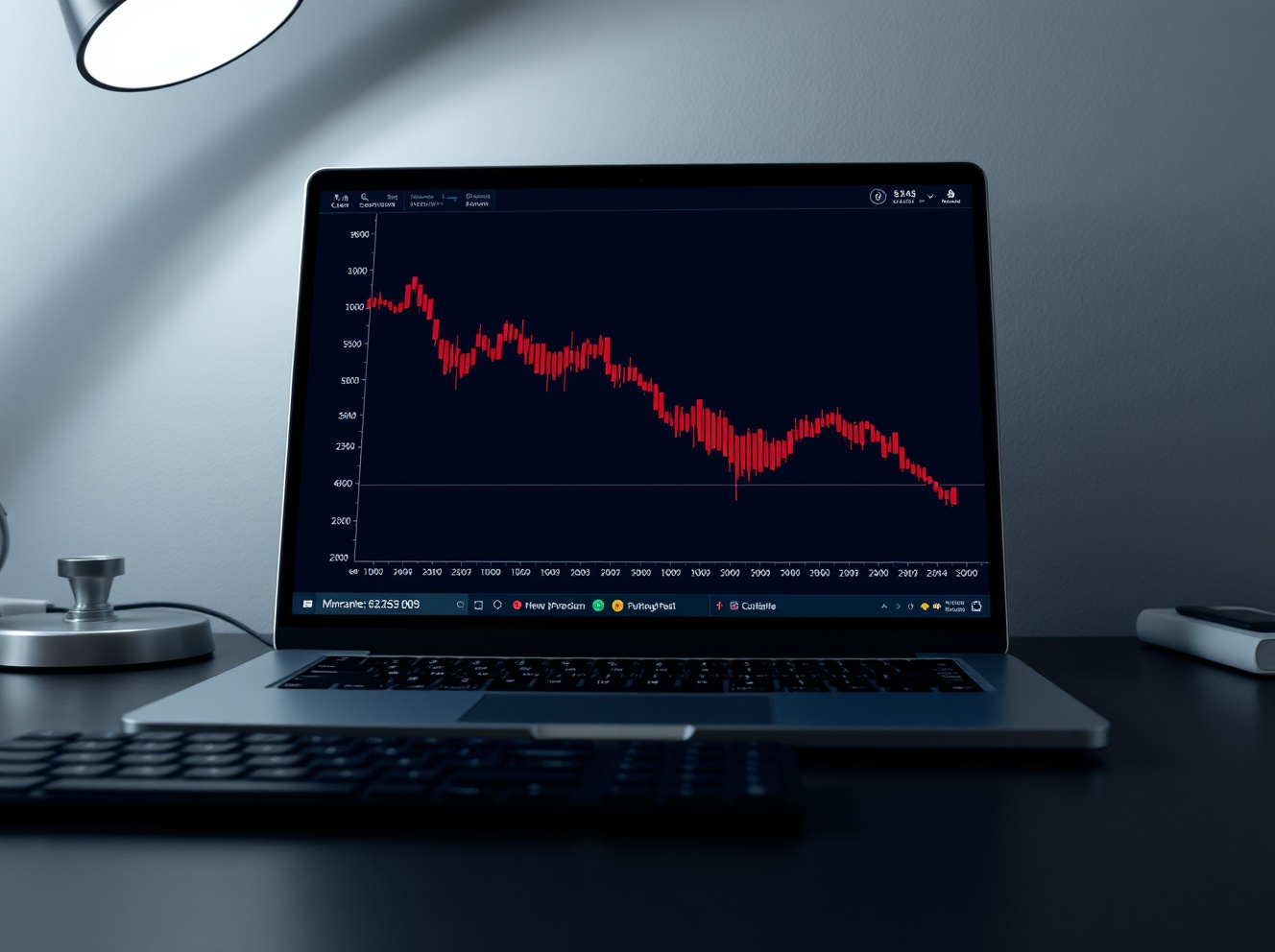
ARIA Token Crash: Suspected Manipulators Trigger Devastating 91% Plunge with $5.4M Sell-Off
A sudden and catastrophic sell-off by suspected market manipulators vaporized 91% of the ARIA token’s value on April 14, 2025, transferring $5.42 million from the project’s market capitalization into private wallets and sending shockwaves through the cryptocurrency community.
Anatomy of the ARIA Token Crash
Blockchain analytics firm EmberCN reported the incident, which occurred around 4:00 p.m. UTC. The firm identified a coordinated transaction where 45.64 million ARIA tokens were sold for 5.42 million USDT. Consequently, the token’s price collapsed from $1.01 to a mere $0.09. This single event erased approximately $276.5 million in market value, reducing the total capitalization from $315 million to $38.5 million. The scale and speed of the decline immediately raised red flags for analysts monitoring on-chain activity.
EmberCN’s investigation revealed a critical pre-crash pattern. Specifically, the tokens used in the massive sell-off originated from the Gate.io exchange. Three weeks prior to the crash, coinciding with the start of ARIA’s recent price surge, these tokens moved from the exchange to eight separate private addresses. This preparatory withdrawal suggests a planned operation rather than a spontaneous market reaction.
Understanding Cryptocurrency Market Manipulation
Market manipulation remains a persistent challenge within digital asset markets. The ARIA incident exhibits classic hallmarks of a “pump and dump” scheme, albeit on a sophisticated scale. Typically, bad actors accumulate a low-float asset quietly. They then artificially inflate, or “pump,” the price through coordinated buying or promotional hype. Finally, they “dump” their holdings at the peak, leaving other investors with massive losses.
Common manipulation tactics include:
- Wash Trading: Artificially inflating volume by trading with oneself.
- Spoofing: Placing large fake orders to create false demand or supply pressure.
- Coordinated Social Media Hype: Using influencers to create unsustainable buying frenzy.
The table below contrasts legitimate volatility with manipulative events:
| Legitimate Volatility | Manipulative Crash |
|---|---|
| Driven by macroeconomic news or protocol updates | Preceded by suspicious token movements to private wallets |
| Recovery patterns often emerge | Involves near-total liquidity removal |
| Volume spreads across many participants | Volume concentrated in a few large, coordinated transactions |
Expert Analysis of On-Chain Forensics
Blockchain investigators emphasize the importance of tracing fund flows. The three-week gap between withdrawal and the dump is particularly telling. This period allowed the manipulators to distance the tokens from the exchange’s visible holdings. Furthermore, using multiple private addresses complicates tracking but is a known obfuscation technique. Regulatory bodies globally are increasingly applying traditional financial market abuse laws to such crypto activities. However, enforcement across jurisdictions remains complex.
The Ripple Effect and Market Impact
The ARIA crash did not occur in isolation. Events of this magnitude often trigger a loss of confidence in similar small-to-mid-cap altcoins. Investors may engage in broader risk-off behavior, moving funds into more established assets like Bitcoin or Ethereum. Moreover, exchanges listing the affected token face scrutiny regarding their monitoring systems. Gate.io, as the originating platform, will likely review its internal controls for detecting suspicious bulk withdrawals.
For the ARIA project itself, the crash presents an existential challenge. Rebuilding trust with a decimated community and restoring functional token economics is extraordinarily difficult. The development team must now operate in an environment where the token’s utility and perceived value have been fundamentally undermined by external actors.
Conclusion
The ARIA token crash serves as a stark reminder of the vulnerabilities in cryptocurrency markets. The incident underscores the critical need for robust on-chain analytics, vigilant exchange monitoring, and informed investor due diligence. While blockchain technology offers transparency in transaction history, it does not inherently prevent coordinated exploitation. The path forward for market integrity relies on a combination of technological tools, regulatory clarity, and investor education to mitigate the impact of such manipulative schemes.
FAQs
Q1: What exactly happened to the ARIA token?
On April 14, 2025, entities suspected of market manipulation sold 45.64 million ARIA tokens for 5.42 million USDT. This massive, coordinated sell-off caused the token’s price to crash by 91%, from $1.01 to $0.09.
Q2: How did investigators identify potential manipulation?
Analysts from EmberCN traced the sold tokens back to a withdrawal from the Gate.io exchange three weeks prior. The timing of this withdrawal at the start of ARIA’s price surge, followed by a single large dump, exhibits a classic “pump and dump” pattern.
Q3: What is a “pump and dump” scheme?
It is a form of market manipulation where perpetrators artificially inflate (“pump”) the price of an asset through misleading statements or coordinated buying. They then sell (“dump”) their overvalued holdings at a peak, causing a crash and profiting at the expense of other investors.
Q4: Can the investors who lost money recover their funds?
Recovery is typically very difficult. Unless law enforcement identifies and prosecutes the manipulators, and assets are seized, losses are often permanent. This highlights the high-risk nature of investing in low-liquidity, speculative tokens.
Q5: What can investors do to protect themselves from such events?
Investors should conduct thorough research, be wary of tokens with sudden, unexplained price surges, check on-chain data for large movements to private wallets, diversify holdings, and understand that low-market-cap assets carry significantly higher manipulation risks.
This post ARIA Token Crash: Suspected Manipulators Trigger Devastating 91% Plunge with $5.4M Sell-Off first appeared on BitcoinWorld.


추천 콘텐츠

China Nabs Another Huione Group Core Member in Cambodia Extradition

SUI Price Prediction: $1.10 Target Within 30 Days as Smart Money Goes Long