

USD Strength: How Rate Expectations and Crisis Hedging Fuel the Dollar’s Surprising Resilience
BitcoinWorld
USD Strength: How Rate Expectations and Crisis Hedging Fuel the Dollar’s Surprising Resilience
FRANKFURT, March 2025 – The U.S. dollar demonstrates remarkable resilience against major global currencies, supported by shifting Federal Reserve policy expectations and persistent demand for safe-haven assets during geopolitical uncertainty. Commerzbank analysts identify these dual drivers as fundamental to understanding current USD strength across foreign exchange markets. Market participants increasingly position for potential Federal Reserve policy adjustments while simultaneously hedging against multiple global risk factors.
USD Strength and Federal Reserve Policy Expectations
Federal Reserve interest rate expectations significantly influence U.S. dollar valuation through multiple transmission channels. Firstly, higher anticipated rates typically strengthen the dollar by attracting foreign capital seeking improved returns. Secondly, the Federal Reserve’s monetary policy stance signals broader economic confidence, affecting global investor sentiment. Recent economic data releases have prompted market participants to reassess their rate trajectory forecasts.
Commerzbank’s currency research team notes that inflation metrics remain crucial for determining future policy moves. The Personal Consumption Expenditures (PCE) price index, the Federal Reserve’s preferred inflation gauge, continues to receive close market scrutiny. Additionally, employment figures and consumer spending data provide essential context for monetary policy decisions. Market-implied probabilities derived from Fed Funds futures contracts show evolving expectations throughout 2025.
The Yield Differential Mechanism
Interest rate differentials between the United States and other major economies create powerful incentives for currency flows. When U.S. Treasury yields rise relative to comparable sovereign bonds, international investors often reallocate portfolios toward dollar-denominated assets. This capital movement naturally increases demand for the U.S. dollar, exerting upward pressure on its exchange rate. The relationship between yield spreads and currency valuation demonstrates strong historical correlation.
Recent movements in two-year and ten-year Treasury yields highlight this dynamic. Comparative analysis with European Central Bank and Bank of Japan policies reveals substantial divergence in monetary approaches. These policy differences manifest directly in currency pair valuations, particularly for EUR/USD and USD/JPY. Market participants continuously monitor central bank communications for signals about future policy directions.
Crisis Hedging Demand Supports USD Valuation
Geopolitical tensions and economic uncertainties sustain robust demand for the U.S. dollar as a primary safe-haven currency. During periods of market stress, investors traditionally seek refuge in dollar-denominated assets, including U.S. Treasury securities. This flight-to-quality behavior reinforces the dollar’s role in the global financial architecture. Multiple concurrent crises amplify this hedging behavior across institutional and retail investor segments.
The U.S. dollar maintains its dominant position in global trade invoicing and international reserves. Approximately 60% of global foreign exchange reserves remain denominated in dollars, according to International Monetary Fund data. This structural dominance creates inherent demand during risk-off market environments. Currency market volatility indices frequently correlate inversely with dollar strength, demonstrating this relationship.
Regional Conflicts and Economic Fragility
Ongoing geopolitical conflicts in Eastern Europe and the Middle East contribute to risk aversion among global investors. Additionally, economic fragility in several emerging markets prompts capital preservation strategies favoring dollar assets. Banking sector concerns in specific regions further amplify safe-haven flows. These factors combine to create sustained structural support for the U.S. dollar independent of interest rate considerations.
Historical analysis reveals consistent patterns during previous crisis periods. The dollar typically appreciates during initial crisis phases before potentially correcting as conditions stabilize. Current market positioning data from the Commodity Futures Trading Commission (CFTC) shows substantial net long positions in dollar futures contracts. This positioning reflects institutional expectations for continued dollar strength amid uncertain global conditions.
Technical Analysis and Market Positioning
The U.S. Dollar Index (DXY), which measures the dollar against a basket of six major currencies, provides important technical context. Recent trading patterns show the index testing significant resistance levels previously established in 2024. Technical analysts monitor moving averages and momentum indicators for signals about potential trend continuations or reversals. Support and resistance levels offer frameworks for understanding possible price trajectories.
Market positioning data reveals substantial institutional involvement in currency markets. Hedge funds and asset managers maintain significant exposure to dollar strength themes through various instruments. Options market activity indicates growing demand for protection against dollar appreciation in certain currency pairs. These technical and positioning factors interact with fundamental drivers to determine short-term price action.
Comparative Currency Performance Analysis
| Currency Pair | Year-to-Date Change | Primary Driver |
|---|---|---|
| EUR/USD | -4.2% | Policy divergence |
| USD/JPY | +8.7% | Yield differentials |
| GBP/USD | -3.1% | Economic outlook |
| USD/CHF | +2.4% | Safe-haven flows |
The table above illustrates divergent performance across major currency pairs. These variations reflect different sensitivities to the dual drivers of rate expectations and hedging demand. Currency pairs with higher sensitivity to risk sentiment demonstrate particular volatility during geopolitical developments. Pairs more closely tied to interest rate differentials show stronger responses to central bank policy signals.
Economic Fundamentals and Structural Factors
Underlying economic fundamentals provide essential context for currency valuation analysis. The United States maintains several structural advantages supporting dollar strength, including:
- Economic growth differentials: U.S. GDP growth continues to outpace many developed economies
- Energy independence: The U.S. has transitioned to net energy exporter status
- Technological leadership: Dominance in innovation sectors attracts global investment
- Deep capital markets provide unparalleled liquidity for international investors
These structural factors create inherent support for the U.S. dollar beyond cyclical considerations. Demographic trends and productivity metrics further influence long-term currency outlooks. Comparative analysis with other reserve currencies reveals relative strengths and vulnerabilities across economic systems. Policy responses to global challenges significantly affect currency market perceptions.
Inflation Dynamics and Policy Responses
Inflation trajectories differ substantially across major economies, prompting varied central bank responses. The Federal Reserve’s approach to inflation management directly affects dollar valuation through multiple channels. Market participants carefully analyze inflation data releases and central bank communications for policy signals. Expectations about the timing and magnitude of policy adjustments create volatility in currency markets.
Historical patterns suggest that currencies from countries with more decisive inflation-fighting policies often appreciate during tightening cycles. Credibility of central bank commitments proves crucial for market reactions. The Federal Reserve’s dual mandate of price stability and maximum employment creates complex policy trade-offs. These considerations influence both short-term market movements and longer-term currency trends.
Global Implications and Market Consequences
Sustained dollar strength carries significant implications for global financial markets and economic conditions. Emerging market economies with substantial dollar-denominated debt face increased servicing costs. International trade flows adjust to exchange rate movements, affecting corporate profitability across sectors. Multinational corporations implement hedging strategies to manage currency exposure risks.
Global commodity pricing, particularly for oil and industrial metals, demonstrates sensitivity to dollar valuation. A stronger dollar typically exerts downward pressure on commodity prices denominated in dollars. This relationship affects producer and consumer economies differently across regions. Central banks in affected countries may implement policy responses to mitigate exchange rate impacts.
Portfolio Allocation Considerations
Investment managers adjust global portfolio allocations in response to currency market developments. Currency-hedged investment products experience fluctuating demand based on dollar outlook expectations. International diversification strategies incorporate currency risk management components. These allocation decisions collectively influence capital flows across borders and asset classes.
Risk management frameworks increasingly incorporate currency scenario analysis. Stress testing portfolios against various dollar strength scenarios has become standard practice. The interaction between currency movements and other asset class returns creates complex portfolio dynamics. Professional investors continuously monitor these relationships for optimization opportunities.
Conclusion
The U.S. dollar maintains its position through the powerful combination of Federal Reserve rate expectations and crisis hedging demand. Commerzbank analysis highlights these dual drivers as fundamental to understanding current USD strength. Market participants must monitor both monetary policy developments and geopolitical risk factors when assessing dollar outlook. The interaction between these elements creates complex dynamics in currency valuation. Future dollar trajectory will depend on evolution in both policy expectations and global risk conditions. USD strength remains a central consideration for global investors navigating uncertain financial markets.
FAQs
Q1: How do Federal Reserve rate expectations specifically affect the U.S. dollar?
Higher anticipated interest rates typically strengthen the dollar by attracting foreign investment into U.S. assets seeking better returns. This capital inflow increases demand for dollars, pushing up its value against other currencies. Market participants monitor economic data and Fed communications to adjust their rate expectations continuously.
Q2: What makes the U.S. dollar a preferred safe-haven currency during crises?
The dollar benefits from the depth and liquidity of U.S. financial markets, political stability, and its dominant role in global trade and reserves. During uncertainty, investors seek assets perceived as secure and easily tradable, with U.S. Treasury securities being the premier global safe-haven asset, requiring dollars for purchase.
Q3: How does the U.S. Dollar Index (DXY) relate to individual currency pairs?
The DXY measures the dollar’s value against a basket of six major currencies (euro, yen, pound, Canadian dollar, Swedish krona, and Swiss franc), weighted by trade significance. While it provides a broad dollar strength indicator, individual pairs like EUR/USD or USD/JPY can show different movements based on specific regional factors and bilateral relationships.
Q4: What are the potential negative consequences of sustained dollar strength?
Prolonged dollar appreciation can hurt U.S. exporters by making their goods more expensive abroad, widen trade deficits, increase debt servicing costs for emerging markets with dollar-denominated debt, and potentially create deflationary pressures in other countries by lowering import prices.
Q5: How do currency traders typically position during periods of expected dollar strength?
Traders might establish long positions in dollar futures or options, buy USD-denominated assets, or enter currency pairs expecting dollar appreciation (like buying USD/JPY). They also monitor interest rate differentials, economic data releases, and geopolitical developments that might affect safe-haven flows to the dollar.
This post USD Strength: How Rate Expectations and Crisis Hedging Fuel the Dollar’s Surprising Resilience first appeared on BitcoinWorld.


Potrebbe anche piacerti

Caitlyn Jenner’s Memecoin Triumphs in Court Ruling
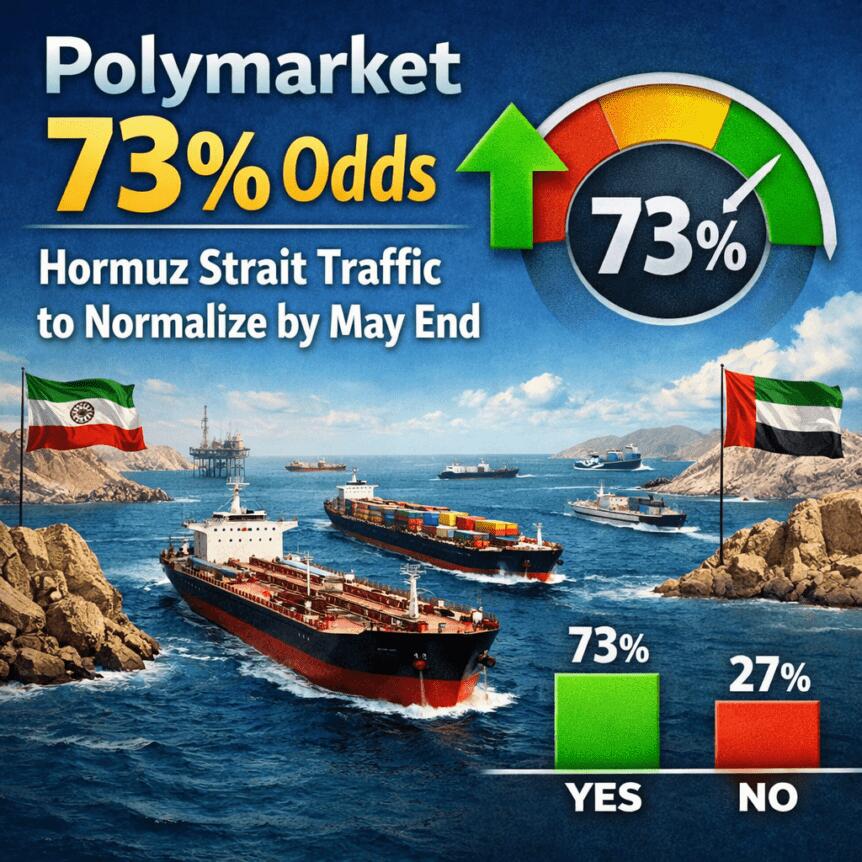
Polymarket 73% odds Hormuz Strait traffic to normalize by May end




