The post Vitalik Buterin Wants Ethereum Staking to Be as Easy as “One Click” appeared first on Coinpedia Fintech News Vitalik Buterin, ETH Co-founder, is advocatingThe post Vitalik Buterin Wants Ethereum Staking to Be as Easy as “One Click” appeared first on Coinpedia Fintech News Vitalik Buterin, ETH Co-founder, is advocating

Vitalik Buterin Wants Ethereum Staking to Be as Easy as “One Click”

2026/03/10 20:15
3 min read
For feedback or concerns regarding this content, please contact us at crypto.news@mexc.com
Vitalik Buterin Ethereum staking

The post Vitalik Buterin Wants Ethereum Staking to Be as Easy as “One Click” appeared first on Coinpedia Fintech News

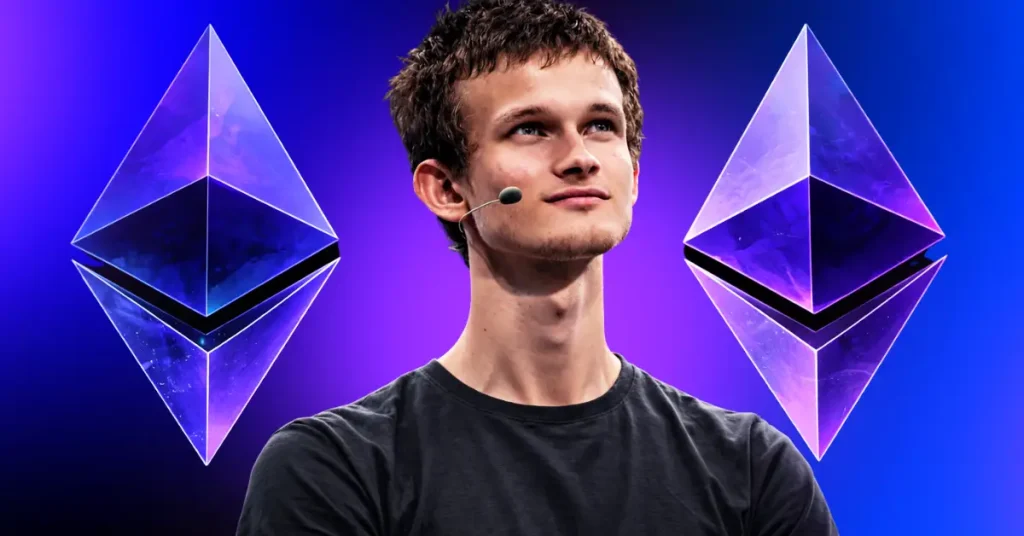
Vitalik Buterin, ETH Co-founder, is advocating for a simpler approach to staking on Ethereum, arguing that the process should not require specialized technical skills. According to Buterin, staking infrastructure has become too complex, which limits broader participation and weakens decentralization.

To address this, the Ethereum Foundation is currently testing a distributed staking system using 72,000 ETH. The setup uses a lightweight version of Distributed Validator Technology (DVT), allowing validator nodes to operate across multiple machines rather than relying on a single server.

The goal of this experiment is to make staking easier and more accessible, particularly for institutions holding large amounts of ETH.

How the New System Works

Under this model, participants do not need advanced technical expertise to run staking nodes. Instead, they simply choose the computers that will run the nodes and create a shared configuration file.

All machines use the same key, and the system automatically handles networking, validator coordination, and other technical tasks. This removes much of the complexity that usually comes with running blockchain infrastructure.

Reducing Complexity in Blockchain Infrastructure

Buterin also criticized the common belief that operating blockchain infrastructure requires professionals or highly specialized teams. He argues that such complexity discourages participation and goes against the core goal of decentralization.

Toward More Decentralized Staking

Looking ahead, Buterin suggests that staking could eventually run through simple deployment tools such as Docker containers or similar systems. Nodes could start with a single command, automatically connect, and begin staking.

He added that making staking easier is the first step toward spreading control of Ethereum’s validator network across more participants and institutions.

  • Also Read :
  •   Vitalik Buterin Admits Ethereum Hasn’t Meaningfully Improved People’s Lives
  •   ,

Staking Interest Remains High

Interestingly, despite fluctuations in Ethereum’s market price, staking participation continues to rise. Currently, around 3.2 million ETH is waiting to join the validator queue, creating a waiting period of about 55 days.

Meanwhile, only 29,000 ETH is waiting to exit staking, which takes roughly 12 hours to process. Overall, about 37.5 million ETH, valued at roughly $76.5 billion, is already staked on the network, accounting for nearly 31% of Ethereum’s total supply.

Looking Ahead

By making staking simpler, Buterin hopes more institutions and regular ETH holders will participate, increasing decentralization and strengthening the Ethereum network. If successful, the “one-click” staking model could reshape how ETH holders engage with the network, making validator participation accessible to everyone.

Never Miss a Beat in the Crypto World!

Stay ahead with breaking news, expert analysis, and real-time updates on the latest trends in Bitcoin, altcoins, DeFi, NFTs, and more.

bell icon Subscribe to News
Disclaimer: The articles reposted on this site are sourced from public platforms and are provided for informational purposes only. They do not necessarily reflect the views of MEXC. All rights remain with the original authors. If you believe any content infringes on third-party rights, please contact crypto.news@mexc.com for removal. MEXC makes no guarantees regarding the accuracy, completeness, or timeliness of the content and is not responsible for any actions taken based on the information provided. The content does not constitute financial, legal, or other professional advice, nor should it be considered a recommendation or endorsement by MEXC.

You May Also Like

Shocking OpenVPP Partnership Claim Draws Urgent Scrutiny

Shocking OpenVPP Partnership Claim Draws Urgent Scrutiny

The post Shocking OpenVPP Partnership Claim Draws Urgent Scrutiny appeared on BitcoinEthereumNews.com. The cryptocurrency world is buzzing with a recent controversy surrounding a bold OpenVPP partnership claim. This week, OpenVPP (OVPP) announced what it presented as a significant collaboration with the U.S. government in the innovative field of energy tokenization. However, this claim quickly drew the sharp eye of on-chain analyst ZachXBT, who highlighted a swift and official rebuttal that has sent ripples through the digital asset community. What Sparked the OpenVPP Partnership Claim Controversy? The core of the issue revolves around OpenVPP’s assertion of a U.S. government partnership. This kind of collaboration would typically be a monumental endorsement for any private cryptocurrency project, especially given the current regulatory climate. Such a partnership could signify a new era of mainstream adoption and legitimacy for energy tokenization initiatives. OpenVPP initially claimed cooperation with the U.S. government. This alleged partnership was said to be in the domain of energy tokenization. The announcement generated considerable interest and discussion online. ZachXBT, known for his diligent on-chain investigations, was quick to flag the development. He brought attention to the fact that U.S. Securities and Exchange Commission (SEC) Commissioner Hester Peirce had directly addressed the OpenVPP partnership claim. Her response, delivered within hours, was unequivocal and starkly contradicted OpenVPP’s narrative. How Did Regulatory Authorities Respond to the OpenVPP Partnership Claim? Commissioner Hester Peirce’s statement was a crucial turning point in this unfolding story. She clearly stated that the SEC, as an agency, does not engage in partnerships with private cryptocurrency projects. This response effectively dismantled the credibility of OpenVPP’s initial announcement regarding their supposed government collaboration. Peirce’s swift clarification underscores a fundamental principle of regulatory bodies: maintaining impartiality and avoiding endorsements of private entities. Her statement serves as a vital reminder to the crypto community about the official stance of government agencies concerning private ventures. Moreover, ZachXBT’s analysis…
Share
BitcoinEthereumNews2025/09/18 02:13
CME Group to Launch Solana and XRP Futures Options

CME Group to Launch Solana and XRP Futures Options

The post CME Group to Launch Solana and XRP Futures Options appeared on BitcoinEthereumNews.com. An announcement was made by CME Group, the largest derivatives exchanger worldwide, revealed that it would introduce options for Solana and XRP futures. It is the latest addition to CME crypto derivatives as institutions and retail investors increase their demand for Solana and XRP. CME Expands Crypto Offerings With Solana and XRP Options Launch According to a press release, the launch is scheduled for October 13, 2025, pending regulatory approval. The new products will allow traders to access options on Solana, Micro Solana, XRP, and Micro XRP futures. Expiries will be offered on business days on a monthly, and quarterly basis to provide more flexibility to market players. CME Group said the contracts are designed to meet demand from institutions, hedge funds, and active retail traders. According to Giovanni Vicioso, the launch reflects high liquidity in Solana and XRP futures. Vicioso is the Global Head of Cryptocurrency Products for the CME Group. He noted that the new contracts will provide additional tools for risk management and exposure strategies. Recently, CME XRP futures registered record open interest amid ETF approval optimism, reinforcing confidence in contract demand. Cumberland, one of the leading liquidity providers, welcomed the development and said it highlights the shift beyond Bitcoin and Ethereum. FalconX, another trading firm, added that rising digital asset treasuries are increasing the need for hedging tools on alternative tokens like Solana and XRP. High Record Trading Volumes Demand Solana and XRP Futures Solana futures and XRP continue to gain popularity since their launch earlier this year. According to CME official records, many have bought and sold more than 540,000 Solana futures contracts since March. A value that amounts to over $22 billion dollars. Solana contracts hit a record 9,000 contracts in August, worth $437 million. Open interest also set a record at 12,500 contracts.…
Share
BitcoinEthereumNews2025/09/18 01:39
Stablecoin market hits $312B as banks, card networks embrace onchain dollars

Stablecoin market hits $312B as banks, card networks embrace onchain dollars

Finance Share Share this article
Copy linkX (Twitter)LinkedInFacebookEmail
Stablecoin market hits $312B as banks, card
Share
Coindesk2026/03/10 22:48
