USD/CAD Plummets as US Supreme Court Delivers Stunning Blow to Trump-Era Tariffs
BitcoinWorld
USD/CAD Plummets as US Supreme Court Delivers Stunning Blow to Trump-Era Tariffs
WASHINGTON, D.C. & OTTAWA – The USD/CAD currency pair experienced immediate and significant selling pressure today following a landmark U.S. Supreme Court decision that struck down the core framework of tariffs imposed during the Trump administration. Consequently, the Canadian dollar surged against its U.S. counterpart as markets swiftly priced in a major shift in North American trade dynamics. This ruling, therefore, represents a pivotal moment for forex traders and economic policymakers on both sides of the border.
USD/CAD Reacts to Historic Supreme Court Ruling
The Supreme Court’s 6-3 decision declared that the executive branch overstepped its statutory authority by invoking Section 232 of the Trade Expansion Act of 1962 to impose broad tariffs on allies like Canada for national security reasons. Justice Elena Kagan, writing for the majority, stated the law required a clearer nexus to genuine defense emergencies. Markets reacted within minutes. The USD/CAD pair, which had been trading near 1.3650, fell sharply to 1.3520, marking one of its largest single-day drops against the U.S. dollar this year. This movement reflects a rapid reassessment of cross-border trade costs and supply chain fluidity.
Forex analysts immediately highlighted the correlation between trade policy and currency valuation. “Tariffs act as a tax on trade, often strengthening the currency of the imposing nation by reducing its import bill initially,” explained Dr. Anya Sharma, Chief Economist at Global Forex Insights. “However, their removal, especially when unexpected, triggers a reversal of those flows. The Canadian dollar is a commodity currency, and easier access to its largest export market is unequivocally positive.” Data from the Bank of Canada shows that nearly 75% of Canadian exports are destined for the United States, making this trade relationship paramount.
Background and Timeline of the Tariff Dispute
The contested tariffs on Canadian steel and aluminum were first implemented in March 2018. The Trump administration cited national security concerns under Section 232, a move Canada called “absurd” and retaliated against with equivalent countermeasures. A tentative truce, the USMCA, replaced NAFTA in 2020, but the underlying tariffs created persistent friction. Legal challenges culminated in this week’s Supreme Court hearing.
- March 2018: U.S. imposes 25% tariff on steel and 10% on aluminum from Canada.
- June 2018: Canada retaliates with $16.6 billion in tariffs on U.S. goods.
- May 2019: Tariffs are temporarily lifted but the legal authority remains contested.
- October 2023: Coalition of U.S. manufacturers and Canadian trade groups file suit.
- March 2025: Supreme Court hears oral arguments.
- Today: Court rules tariffs unconstitutional.
This timeline underscores a seven-year period of trade uncertainty that now appears resolved. The ruling’s precedent potentially affects other tariff actions, creating broader implications for global trade law.
Expert Analysis on Market Mechanics and Future Scenarios
Market strategists are now modeling several impact scenarios. The immediate effect is a reduction in costs for U.S. manufacturers who rely on Canadian metals, potentially boosting margins and investment. Conversely, U.S. domestic metal producers may face increased competition. For the USD/CAD pair, the key drivers will shift.
“We are watching two primary channels,” said Michael Chen, Head of Currency Strategy at Polaris Capital. “First, the trade balance: cheaper imports for the U.S. could widen its trade deficit, a negative for the dollar. Second, capital flows: increased cross-border investment and supply chain integration could benefit CAD-denominated assets.” Chen’s team has revised its year-end USD/CAD forecast down to 1.34 from 1.37. Furthermore, the Bank of Canada may gain slightly more policy flexibility if economic growth receives a sustained boost from exports.
Comparative Impact on Related Currency Pairs and Assets
The ruling’s effects are not isolated to USD/CAD. A comparative view shows correlated movements.
| Asset/FX Pair | Immediate Reaction | Primary Driver |
|---|---|---|
| USD/CAD | Sharp Decline (-0.95%) | Direct Trade Relation Easing |
| CAD/JPY | Moderate Gain (+0.6%) | CAD Strength as Risk-On Proxy |
| U.S. Steel (X) | Stock Price Down (-4.2%) | Anticipated Competitive Pressure |
| Canadian TSX Index | Sectoral Gains in Materials | Improved Export Outlook |
This table illustrates the ruling’s ripple effects. The Canadian dollar’s performance against other majors, like the Japanese yen, indicates its role as a proxy for global risk sentiment, which improved on the news. Meanwhile, equity markets began pricing in sector-specific winners and losers.
Broader Economic and Political Implications
Beyond forex charts, the decision carries weight for international relations and domestic policy. It reasserts congressional authority over trade policy, potentially limiting future presidents’ ability to use national security as a blanket justification for tariffs. Diplomatic relations between the U.S. and Canada, while functional, had been strained by the dispute. Prime Minister’s office issued a statement welcoming the decision as “a victory for rules-based trade and the deep partnership between our nations.”
Economists also point to potential inflationary implications. The removal of tariffs effectively reduces input costs for a wide range of U.S. goods, from automobiles to machinery. In the current economic climate, this could provide a marginal disinflationary tailwind, a factor the Federal Reserve may note in its ongoing policy deliberations. However, the impact is likely to be modest and gradual as supply chains adjust.
Conclusion
The USD/CAD exchange rate faces sustained pressure following the U.S. Supreme Court’s decisive rejection of the Trump-era tariff framework. This legal shift removes a significant barrier to seamless North American trade, bolstering the Canadian dollar’s fundamental outlook. While market volatility may continue in the short term, the long-term trajectory for USD/CAD now incorporates a materially improved trade environment for Canada. The ruling underscores the profound and immediate connection between judicial decisions, trade policy, and currency valuation in today’s interconnected global economy.
FAQs
Q1: What exactly did the U.S. Supreme Court rule on?
The Court ruled that the use of Section 232 of the Trade Expansion Act to impose tariffs on Canadian steel and aluminum for national security reasons exceeded the statutory authority granted to the executive branch, declaring those specific tariffs unconstitutional.
Q2: Why does this make the Canadian dollar stronger against the U.S. dollar?
The removal of tariffs reduces costs for Canadian exporters and improves Canada’s trade balance outlook. It also encourages investment and reduces economic uncertainty, making Canadian assets more attractive, which increases demand for the Canadian dollar (CAD).
Q3: Will this affect tariffs on other countries?
The legal precedent set by this ruling could be cited in challenges against similar Section 232 tariffs imposed on other U.S. allies, such as members of the European Union. However, each case would depend on its specific circumstances.
Q4: What does this mean for U.S. consumers and businesses?
U.S. businesses that import Canadian steel and aluminum will see lower input costs, potentially leading to lower prices or higher profits. Consumers may benefit from marginally lower prices on goods containing these materials. U.S. domestic metal producers may face increased competition.
Q5: How might the Bank of Canada and Federal Reserve react?
The Bank of Canada might view the ruling as a modest positive for economic growth, slightly influencing its future interest rate decisions. The Federal Reserve might see a minor disinflationary effect from cheaper imports, but it is unlikely to be a primary factor in monetary policy.
This post USD/CAD Plummets as US Supreme Court Delivers Stunning Blow to Trump-Era Tariffs first appeared on BitcoinWorld.
You May Also Like
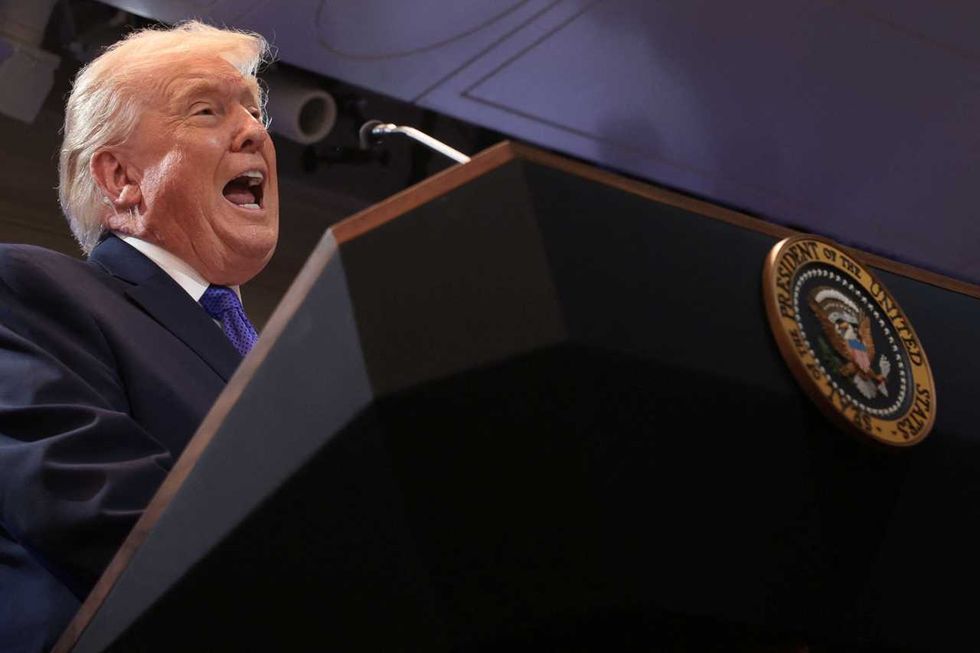
Trump 'ashamed' of 'unpatriotic and disloyal' Supreme Court after tariff decision

What is Driving Avalanche’s $675 Million Valuation?