

Bitcoin Trading Hours Reveal Stunning Shift: US Market Strength Defies 2025 Expectations
BitcoinWorld
Bitcoin Trading Hours Reveal Stunning Shift: US Market Strength Defies 2025 Expectations
Bitcoin’s trading patterns have undergone a remarkable transformation in early 2025, with the cryptocurrency demonstrating unexpected strength during US market hours that reverses established late-2024 trends. According to comprehensive data analysis from multiple sources including CoinDesk and Velo, BTC has gained approximately 8% during US trading sessions year-to-date, while showing only 3% growth during European hours and experiencing slight declines in Asian markets. This significant shift in market dynamics represents a fundamental change in how global cryptocurrency markets operate and interact with traditional financial systems.
Bitcoin Trading Hours Analysis Reveals Market Transformation
The cryptocurrency market has traditionally followed distinct regional patterns that reflect local investor behavior, regulatory environments, and economic conditions. However, recent data indicates a substantial departure from established norms. During the final quarter of 2024, Bitcoin faced consistent selling pressure during US trading hours, creating predictable downward pressure that traders could anticipate. This pattern has completely reversed in 2025, with US hours now driving the majority of Bitcoin’s positive momentum. Market analysts attribute this shift to several interconnected factors including changing institutional participation, evolving regulatory clarity, and shifting global capital flows. The transformation demonstrates how cryptocurrency markets continue to mature and integrate with traditional financial systems.
Data from Velo provides compelling evidence of this trend reversal. Their analysis shows that Bitcoin has gained 8% specifically during US trading hours in 2025, compared to just 3% during European sessions. Meanwhile, Asian trading hours have seen a slight decline of approximately 1-2%. This represents a complete inversion of late-2024 patterns when Asian markets typically provided support while US hours generated selling pressure. The consistency of this new pattern across multiple weeks suggests it represents more than temporary market noise. Rather, it indicates structural changes in how different global regions interact with Bitcoin markets. Market participants must now reconsider their trading strategies and risk management approaches to account for these new dynamics.
Global Investor Activity Drives Unexpected Market Behavior
Interestingly, the strength during US trading hours does not necessarily originate from US-based investors alone. CoinDesk’s analysis reveals that prices have sometimes risen even when the Coinbase Premium—the difference between Coinbase’s BTC/USD price and Binance’s BTC/USDT price—remains negative. This metric typically indicates whether US investors are paying a premium compared to global markets. The fact that Bitcoin can gain ground during US hours without this premium suggests broader global forces at work. International investors may be timing their entries to coincide with US market activity, or algorithmic trading systems may be responding to liquidity patterns that emerge during these hours. This complexity underscores the increasingly interconnected nature of global cryptocurrency markets.
Several factors contribute to this evolving market structure. First, institutional adoption has accelerated in the US following regulatory developments in late 2024. Second, global macroeconomic conditions have shifted capital flows toward dollar-denominated assets. Third, technological advancements in trading infrastructure have reduced latency differences between regions. Fourth, changing geopolitical dynamics have altered traditional safe-haven flows. These elements combine to create a new market environment where US trading hours exert disproportionate influence. Market participants must now monitor multiple time zones and their interactions rather than focusing on single-region dynamics. This represents both challenges and opportunities for traders and investors worldwide.
Expert Analysis of Market Timing and Regional Influences
Financial analysts specializing in cryptocurrency markets emphasize the importance of understanding these shifting patterns. According to market structure experts, the reversal in trading hour strength reflects deeper changes in Bitcoin’s fundamental characteristics. The cryptocurrency is increasingly behaving like a traditional risk asset during US hours while maintaining some of its unique properties during other sessions. This duality creates arbitrage opportunities but also increases complexity for market participants. Experts note that the 8% gain during US hours represents significant outperformance compared to traditional assets during the same period. This suggests Bitcoin may be developing new correlations and decoupling from previous patterns.
The implications extend beyond trading strategies to broader market understanding. When US hours drive strength, it typically indicates different types of market participants are active. Institutional investors, regulated entities, and traditional financial firms predominantly operate during these hours. Their increasing involvement suggests growing mainstream acceptance and integration. However, the negative Coinbase Premium during some of these gains complicates the narrative. It suggests that while US hours are important, the actual buying pressure may originate from global participants coordinating with US market activity. This distinction matters for regulatory analysis, market surveillance, and investment strategy development across all time zones.
Comparative Analysis of Regional Market Performance
A detailed examination of regional performance reveals striking contrasts in how different markets interact with Bitcoin. The following table summarizes key metrics across major trading regions:
| Region | Trading Hours (UTC) | 2025 YTD Performance | Late 2024 Pattern | Primary Market Participants |
|---|---|---|---|---|
| United States | 13:30-20:00 | +8% | Selling pressure | Institutional/Retail mix |
| Europe | 08:00-16:00 | +3% | Moderate buying | Professional traders |
| Asia | 00:00-08:00 | -1% to -2% | Strong support | Retail/Algorithmic |
This comparative analysis highlights several important trends. First, the complete reversal in US market behavior stands out as the most significant development. Second, European markets show consistent but moderate performance. Third, Asian markets have shifted from providing support to showing weakness. These patterns suggest global rebalancing of cryptocurrency exposure and risk appetite. Market participants should consider several key factors when analyzing these trends:
- Liquidity patterns have shifted significantly between regions
- Regulatory developments in late 2024 continue to influence 2025 behavior
- Institutional adoption timelines vary by region and affect market dynamics
- Macroeconomic conditions create different incentives across time zones
- Technological infrastructure improvements reduce regional arbitrage opportunities
Market Structure Evolution and Future Implications
The shifting patterns in Bitcoin trading hours reflect broader evolution in cryptocurrency market structure. Several structural changes have contributed to this transformation. First, market infrastructure has matured significantly, with improved connectivity between exchanges and reduced settlement times. Second, regulatory clarity in major jurisdictions has reduced uncertainty for institutional participants. Third, product innovation has created new vehicles for Bitcoin exposure that operate within traditional market hours. Fourth, increased institutional participation has changed liquidity patterns and market maker behavior. These developments collectively create a market environment where traditional financial market patterns exert greater influence.
Looking forward, market participants should monitor several indicators for continuation or reversal of these trends. The relationship between US equity market hours and Bitcoin performance warrants close attention. Similarly, correlations with traditional safe-haven assets during different sessions may provide insights. Regulatory developments in all major regions will continue to influence these patterns. Technological advancements in trading infrastructure could further reduce regional distinctions. Most importantly, the fundamental adoption trajectory of Bitcoin will ultimately determine whether current patterns persist or evolve further. Market participants must remain adaptable as these dynamics continue to develop throughout 2025 and beyond.
Historical Context and Pattern Recognition
Understanding current market behavior requires examining historical patterns and their evolution. Bitcoin has experienced several distinct phases in its relationship with traditional trading hours. In early development stages, the cryptocurrency showed little correlation with any specific session. As markets matured, Asian trading hours often dominated due to regional adoption patterns. The 2020-2022 period saw increasing US influence as institutional adoption accelerated. Late 2024 represented a temporary reversal of this trend, making the current 2025 resurgence particularly noteworthy. This historical perspective helps contextualize current developments and assess their likely persistence.
Pattern recognition becomes crucial for market participants navigating these shifts. The current strength during US hours follows specific technical and fundamental triggers. These include regulatory milestones, institutional product launches, and macroeconomic developments. Recognizing these triggers helps predict future pattern developments. Additionally, understanding how different market participants operate during various sessions provides valuable insights. Retail investors, institutional traders, market makers, and algorithmic systems each have distinct behaviors that vary by region and time. Their interactions create the complex patterns observed in current markets. Successful navigation requires understanding all these elements and their evolving relationships.
Conclusion
Bitcoin’s shifting strength to US trading hours represents a significant development in cryptocurrency market structure for 2025. The reversal from late-2024 patterns, with 8% gains during US sessions compared to mixed performance elsewhere, indicates evolving global dynamics. This transformation reflects broader changes in institutional participation, regulatory environments, and market infrastructure. While US hours now drive momentum, global investor activity continues to play crucial roles, as evidenced by the sometimes negative Coinbase Premium during gains. Market participants must adapt strategies to account for these new patterns while monitoring ongoing developments. The Bitcoin trading hours analysis provides valuable insights into how cryptocurrency markets continue maturing and integrating with traditional financial systems worldwide.
FAQs
Q1: What does Bitcoin’s strength during US trading hours indicate about market maturity?
This pattern suggests increasing institutional participation and integration with traditional financial markets, reflecting cryptocurrency’s ongoing maturation process.
Q2: How significant is the 8% gain during US hours compared to historical patterns?
The 8% gain represents a substantial reversal from late-2024 patterns and exceeds typical performance differentials between trading sessions in previous years.
Q3: Does negative Coinbase Premium during some gains indicate US investors aren’t driving the movement?
Yes, the negative premium suggests global investors timing entries with US market activity may be contributing significantly to the observed strength.
Q4: What factors could cause another reversal in trading hour patterns?
Major regulatory changes, significant macroeconomic shifts, technological disruptions, or changes in institutional participation could all potentially reverse current patterns.
Q5: How should traders adjust strategies for these changing market dynamics?
Traders should monitor multiple time zones, understand different participant behaviors across sessions, and develop flexible approaches that account for evolving regional influences.
This post Bitcoin Trading Hours Reveal Stunning Shift: US Market Strength Defies 2025 Expectations first appeared on BitcoinWorld.
You May Also Like
Flora Growth Announces $401M Funding to Boost AI Zero Gravity (0G) Coin Treasury
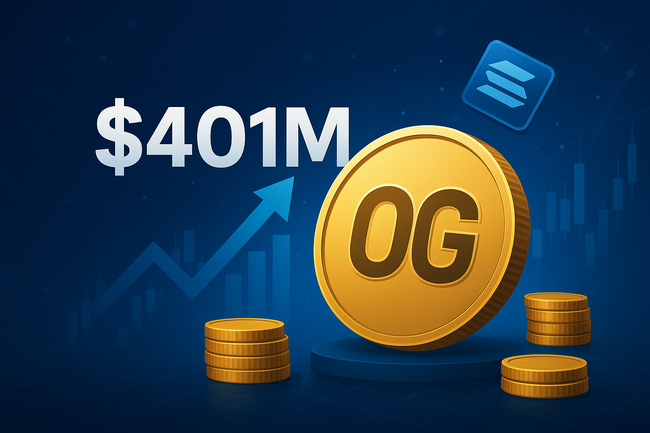
Highlights: Flora Growth announces $401M PIPE financing round aimed at establishing an AI Zero Gravity (0G) coin treasury. DeFi Development Corp. led the fundraising exercise with strong support from other companies. Flora Growth will rebrand to ZeroStack following the successful completion of the PIPE financing round. One of the world’s leading decentralised artificial intelligence (AI) treasury companies, Flora Growth, has announced the pricing of a $401 million private investment in public equity (PIPE) round. According to a September 19 press release, the move aims to fund the firm’s treasury strategy centred on AI Zero Gravity (0G) tokens. Upon completion of the PIPE round, Flora Growth will rebrand to ZeroStack, while still maintaining its current market ticker symbol, FLGC. Notably, the financing round is expected to close on or before September 26, 2025, pending customary approvals. Flora Growth Corp. (NASDAQ: FLGC) announced a $401 million PIPE financing led by Defi Development Corp., Hexstone Capital, and CSAPL. 0G Co-Founder Michael Heinrich will become Executive Chairman. The deal is expected to close on September 26. The company will adopt $0G as its… — Wu Blockchain (@WuBlockchain) September 19, 2025 Flora Growth Announces $401M PIPE with Strong Backing from Leading Crypto Firms DeFi Development Corp. (DFDV), the first treasury firm focused on Solana (SOL), led the financing round with a $22.88 million investment. Other partners included Hexstone Capital, Dispersion Capital, Blockchain Builders Fund, Carlsberg SE Asia PTE Ltd (CSAPL), Abstract Ventures, Salt, and Dao5. The fundraising exercise has already generated $35 million in cash commitments and $366 million worth of in-kind digital assets. Flora Growth sold its common shares and pre-funded warrants to investors at $25.19 per share. The company also pegged 0G tokens contribution at $3 per coin, adding that investors paying either cash or 0G tokens will also receive pre-funded warrants, exercisable once shareholder approval is granted. A big NASDAQ company (Flora Growth) just announced they’re raising $401 million. ︎ They plan to buy and hold $0G tokens as part of their company’s savings/treasury. Flora’s deal values $0G at around $3 per token for their planned purchase. Right now $0G is trading below… pic.twitter.com/qhOa3uT5ii — Jimmywontgiveup(Ø,G) (@jimmywontgiveup) September 20, 2025 Flora Growth Plans to Hold SOL in Its Treasury Flora Growth noted that it plans to hold part of its treasury in SOL. Joseph Onorati, the CEO of DeFi Development Corp., spoke on the partnership.“We’re thrilled to partner with FLGC on this fundraiser and look forward to driving a deep collaboration between 0G and Solana,” the CEO stated. Daniel Reis-Faria, Flora Growth’s incoming Chief Executive Officer (CEO), also spoke on the company’s latest initiative. He explained that the move encompasses financial restructuring and support for adopting AI infrastructures. The CEO commented: “This treasury strategy offers institutional investors equity-based exposure, enabling transparent, verifiable, large-scale, cost-efficient, and privacy-first AI development.” A Brief 0G Token Overview, Highlighting Reasons for Flora Growth’s Interest 0G is gaining significant traction, which has made experts describe the token as a breakthrough in decentralised AI. 0G’s model trained a 107 billion AI parameter model, representing a 357x improvement over Google’s DiLoCo research, challenging the idea that huge centralised data centres are needed for such projects. The 0G network proved that a decentralised network is highly effective for cost-effective computations, with transparent and privacy-first solutions. Unlike other AI blockchains, 0G integrated its computation, storage, and training marketplace into one platform, attracting Web2 and Web3 developers. In related news, Crypto2Community reported that Brera Holdings, an Ireland-based company, completed a $300 million PIPE financing round for a Solana-focused treasury on September 19. The fundraising program was led by Pulsar Group, a blockchain advisory firm based in the UAE. It received strong backing from the Solana Foundation, RockawayX, and ARK Invest. Like Flora Growth, Brera Holdings also rebranded to Solmate. eToro Platform Best Crypto Exchange Over 90 top cryptos to trade Regulated by top-tier entities User-friendly trading app 30+ million users 9.9 Visit eToro eToro is a multi-asset investment platform. The value of your investments may go up or down. Your capital is at risk. Don’t invest unless you’re prepared to lose all the money you invest. This is a high-risk investment, and you should not expect to be protected if something goes wrong.
XRP koers en de 21-maanden EMA: herhaling van geschiedenis of breuk met het patroon?
