

Here’s Why The Ethereum Validator Network Is So Strong
Amid the waning cryptocurrency market, the Ethereum blockchain continues to display notable resilience, proving its position as a leader in the blockchain sector. The blockchain is experiencing significant growth, especially the ETH’s Validator network, which underscores its robust reliability and stability.
A Pillar of Stability For The Ethereum Network
Ethereum is not just becoming a settlement layer for on-chain finance; it is also becoming a secured blockchain for its numerous validators. Even with a volatile crypto condition, hindering price and network growth, the ETH validator network appears not to be affected by the bearish phase.
The Ethereum validator network is demonstrating remarkable strength, highlighting the robustness of the blockchain’s proof-of-stake architecture. In an X post, Charles Allen, a market expert and the Chief Executive Officer (CEO) of Nasdaq, has shed light on why the ETH’s validator network is demonstrating robust strength.
Charles Allen’s perspective on the subject is primarily based on the significant demand for becoming a validator. Over the past few weeks, the expert highlighted that there has been a rise in demand to become a validator and stake ETH.
Furthermore, staking withdrawals have seen a substantial drop along with the rise in validator demand, indicating a notable shift in the landscape. With a 1 month period, staking withdrawals have fallen to about a one-day wait. Interestingly, concerns about congestion or forced exits are lessened by the shorter exit queue, which suggests a better balance between validators joining and departing the network.
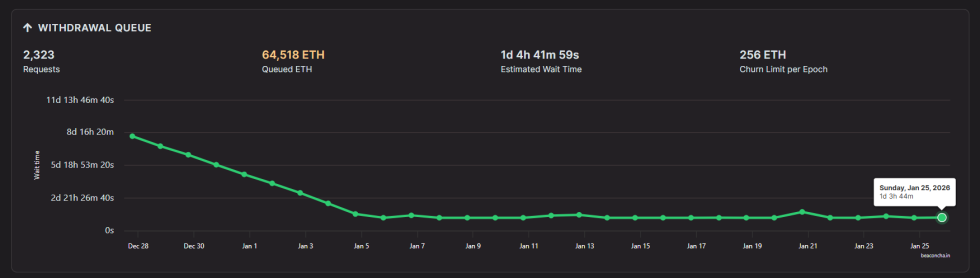
While withdrawal wait times have dropped to roughly a single day, the deposit queue has grown to more than 54 days. Such a growth reflects a strong validator interest and signals a surge of new capital waiting to enter the leading network. As more ETH becomes available for staking, the rising deposit backlog highlights the tightening of the liquid supply and the increased dedication to network security.
In simple terms, the expert stated that multiple companies and individuals wish to stake ETH rather than sell it. Allen added that this is considered a robust signal for network security and validator participation.
Bitmine Is Not Slowing Down On ETH Staking
Companies and individuals’ interest in staking Ethereum rather than selling it is largely evidenced by Bitmine Immersion Technologies’ massive staking activity lately. Broke Doomer on X reported that the largest ETH treasury holding company recently committed another $341 million worth of ETH to staking.
The chart shared by the crypto expert shows that the company conducted the transfer in a series of transactions within a single day. Following this latest move, Bitmine’s overall staking holdings are now positioned at more than 2.33 million ETH valued at a staggering $7 billion.
With this massive number of ETH, more than half of the company’s ETH holdings are currently locked and earning interest. Doomer classifies this adoption as a sign of conviction building among large entities or firms over the next few years. “You don’t do that if you’re bearish. You do that when you’re building conviction for the next few years,” the expert stated.
You May Also Like

Spot silver falls below the $100 mark

Solana network saw its active addresses more than double to over 5 million in January, with daily transaction volume jumping to 87 million.