EUR/GBP Steady at 0.8660 After BoE Decision: ECB Meeting Looms as Key Catalyst
BitcoinWorld
EUR/GBP Steady at 0.8660 After BoE Decision: ECB Meeting Looms as Key Catalyst
The EUR/GBP currency pair remains steady around the 0.8660 level following the Bank of England’s (BoE) latest monetary policy decision. Market participants now turn their attention to the upcoming European Central Bank (ECB) meeting, which could provide the next major catalyst for the exchange rate. This stability reflects a delicate balance between UK and Eurozone economic outlooks, interest rate expectations, and broader market sentiment.
EUR/GBP Steady After BoE Decision: What Happened?
The Bank of England held its key interest rate at 5.25% in its latest meeting, as widely expected. This decision marked the fourth consecutive hold since August 2023. The vote split showed 7-2 in favor of holding, with two members preferring a cut. This outcome reinforced the market’s view that the BoE remains cautious about easing policy prematurely.
The pound initially saw limited movement after the announcement. However, the EUR/GBP pair stabilized near 0.8660, reflecting a market that had already priced in the decision. Traders focused more on the accompanying statement and forward guidance than the rate decision itself.
Key takeaways from the BoE decision include:
- Rate hold at 5.25% – as expected by 90% of economists surveyed
- Vote split 7-2 – two members voted for a 25 basis point cut
- Inflation forecast revised – CPI expected to fall to 2% target in Q2 2024
- GDP growth projections – modest growth expected in early 2024
- Services inflation sticky – remains above 6%, a concern for policymakers
The BoE’s cautious stance contrasts with market expectations of rate cuts starting as early as June 2024. This divergence between market pricing and central bank guidance creates volatility potential for EUR/GBP.
ECB Policy Meeting: The Next Major Event
The European Central Bank meets next week, and its decision will directly impact EUR/GBP dynamics. Markets currently price in a 50% chance of a rate cut in June 2024. However, recent ECB comments suggest policymakers remain divided on the timing of the first cut.
ECB President Christine Lagarde has emphasized data-dependency. She stated that the ECB needs more evidence that inflation is sustainably returning to 2% before easing policy. Eurozone inflation fell to 2.4% in March 2024, down from 2.6% in February. Core inflation, excluding volatile items, stands at 2.9%.
Key factors for the ECB meeting include:
- Inflation trajectory – is disinflation on track?
- Wage growth data – negotiated wages rose 4.5% year-on-year in Q4 2023
- Economic growth – Eurozone barely avoided recession in H2 2023
- Services inflation – remains elevated at 4.0%
- Forward guidance – any signal on June rate cut probability
A hawkish ECB hold could strengthen the euro against the pound. Conversely, a dovish tone, hinting at a June cut, could weaken the euro and push EUR/GBP lower.
Rate Divergence: The Core Driver for EUR/GBP
The primary driver for EUR/GBP remains the divergence in monetary policy paths between the BoE and the ECB. Both central banks are navigating similar challenges: sticky services inflation, tight labor markets, and sluggish growth. However, their starting points differ.
The BoE has maintained rates at 5.25% since August 2023. The ECB’s deposit rate stands at 4.00%, set in September 2023. This 125 basis point spread favors the pound. However, market expectations for rate cuts are narrowing this gap.
Current market pricing suggests:
- BoE first cut: August 2024 (60% probability)
- ECB first cut: June 2024 (50% probability)
- Total cuts in 2024: BoE 50bps, ECB 75bps
If the ECB cuts rates before the BoE, the pound could strengthen relative to the euro. This scenario would push EUR/GBP below the 0.8600 support level. Conversely, if the BoE cuts first, EUR/GBP could rally toward 0.8700.
Technical Analysis: EUR/GBP at a Crossroads
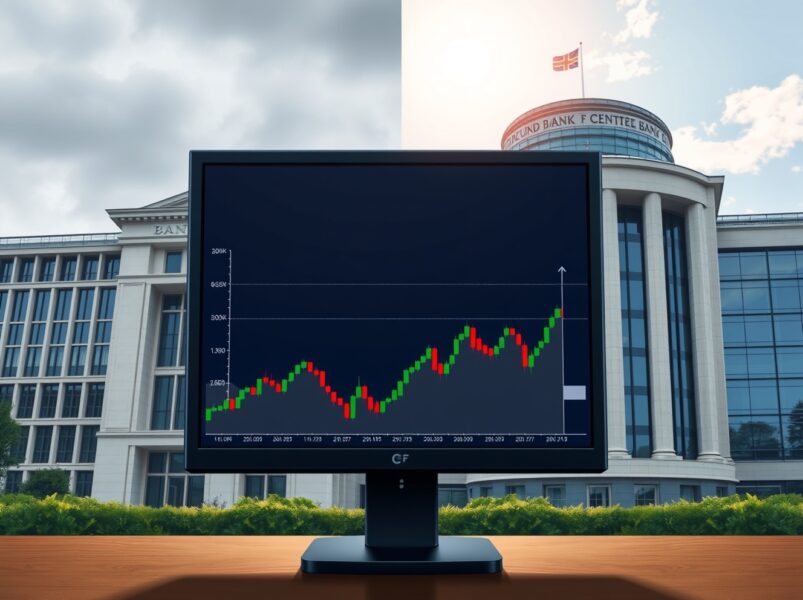
From a technical perspective, EUR/GBP remains in a consolidation phase. The pair has traded in a narrow range between 0.8550 and 0.8700 since February 2024. The 0.8660 level represents the midpoint of this range.
Key technical levels to watch:
- Resistance: 0.8700 (range high), 0.8750 (February high)
- Support: 0.8600 (psychological level), 0.8550 (range low)
- Moving averages: 50-day MA at 0.8620, 200-day MA at 0.8670
- RSI: Neutral at 48, indicating no clear directional bias
The pair is trading just below its 200-day moving average, a key technical indicator. A sustained break above 0.8670 could signal bullish momentum. A break below 0.8600 would suggest bearish pressure.
Traders should watch for a breakout from the 0.8550-0.8700 range. Such a move could trigger significant follow-through, given the extended period of consolidation.
Economic Data Calendar: Key Releases Ahead
Several economic data releases could influence EUR/GBP in the coming days and weeks. These include:
| Date | Release | Expected | Previous |
|---|---|---|---|
| April 15 | Eurozone Industrial Production (Feb) | -0.2% m/m | -3.2% m/m |
| April 16 | UK CPI (March) | 3.1% y/y | 3.4% y/y |
| April 17 | ECB Meeting | Hold at 4.00% | Hold at 4.00% |
| April 18 | UK Retail Sales (March) | 0.3% m/m | 0.0% m/m |
| April 23 | Eurozone PMIs (April) | 46.5 | 46.1 |
| April 24 | UK PMIs (April) | 49.5 | 49.1 |
UK CPI data, released before the ECB meeting, will be particularly important. A lower-than-expected reading could increase BoE rate cut expectations, weakening the pound. A higher reading would support the pound.
Market Positioning and Sentiment
CFTC data shows speculative traders remain net short EUR/GBP. This positioning suggests the market expects the pound to outperform the euro. However, net shorts have decreased in recent weeks, indicating some profit-taking.
Options market data shows implied volatility for EUR/GBP at multi-month lows. This suggests traders are not expecting large moves in the near term. However, low volatility often precedes sharp moves when catalysts emerge.
Risk reversals show a slight bias for EUR puts (GBP calls), indicating the market sees downside risk for EUR/GBP. This aligns with the net short positioning in futures markets.
Expert Perspectives: What Analysts Say
Analysts at major banks offer mixed views on EUR/GBP direction:
Goldman Sachs expects EUR/GBP to trade in a 0.8550-0.8750 range in the near term. They cite divergent monetary policy paths as the key driver. They recommend selling EUR/GBP on rallies toward 0.8700.
JPMorgan sees fair value for EUR/GBP at 0.8600. They note that the UK economy has shown more resilience than the Eurozone. This economic outperformance supports the pound. However, they caution that political risks in the UK could weigh on sterling.
HSBC is bearish on EUR/GBP, targeting 0.8500 by year-end. They argue that the ECB will cut rates more aggressively than the BoE. This rate divergence favors the pound. They recommend short EUR/GBP positions.
Deutsche Bank takes a neutral stance. They note that both central banks face similar challenges. The EUR/GBP range is likely to persist until clear direction emerges from either central bank.
Historical Context: EUR/GBP in 2023-2024
EUR/GBP has experienced significant volatility over the past 18 months. The pair traded above 0.9000 in September 2022 during the UK mini-budget crisis. It then fell sharply as the BoE raised rates aggressively.
Key milestones include:
- September 2022: EUR/GBP peaks at 0.9100 after UK fiscal turmoil
- December 2022: Pair falls to 0.8600 as BoE hikes aggressively
- February 2023: EUR/GBP recovers to 0.8850 on euro strength
- May 2023: Pair drops to 0.8550 as UK inflation surprises to the upside
- August 2023: EUR/GBP rallies to 0.8700 after BoE holds rates
- November 2023: Pair falls to 0.8550 on improved UK growth outlook
- February 2024: EUR/GBP stabilizes in 0.8550-0.8700 range
This historical context shows that EUR/GBP is sensitive to shifts in relative monetary policy expectations. The current range-bound trading reflects uncertainty about the timing of rate cuts.
Impact on Businesses and Investors
The EUR/GBP exchange rate directly impacts businesses and investors with exposure to both currencies. UK exporters to the Eurozone benefit from a weaker pound, as their goods become more competitive. Eurozone exporters to the UK prefer a stronger pound.
For investors, EUR/GBP movements affect the returns on cross-border investments. A UK investor holding Eurozone assets would see returns reduced if the euro weakens against the pound. Hedging decisions depend on the expected direction of EUR/GBP.
Corporates with EUR/GBP exposure should monitor the upcoming ECB meeting closely. A clear signal on rate cuts could trigger significant movement in the pair. Hedging strategies should account for the potential for increased volatility.
Conclusion
EUR/GBP remains steady around 0.8660 after the BoE decision, with the ECB meeting next week as the key catalyst. The pair is caught between competing forces: a BoE that is cautious but could cut rates later this year, and an ECB that faces similar decisions. The rate divergence narrative remains the primary driver. Traders should watch for a breakout from the 0.8550-0.8700 range, with the ECB meeting likely providing the trigger. The UK CPI release before the ECB meeting adds another layer of complexity. For now, EUR/GBP remains in a holding pattern, awaiting clearer direction from central banks.
FAQs
Q1: Why is EUR/GBP steady around 0.8660?
A1: EUR/GBP remains steady because the BoE decision was largely expected. Markets had priced in a rate hold at 5.25%. The focus now shifts to the ECB meeting for the next catalyst. The pair is in a consolidation phase between 0.8550 and 0.8700.
Q2: What will the ECB decision mean for EUR/GBP?
A2: A hawkish ECB hold could strengthen the euro, pushing EUR/GBP higher toward 0.8700. A dovish tone hinting at a June cut could weaken the euro, pushing the pair lower toward 0.8550. The decision will influence rate divergence expectations.
Q3: When are rate cuts expected from the BoE and ECB?
A3: Markets expect the ECB to cut rates in June 2024 (50% probability). The BoE is expected to cut in August 2024 (60% probability). Total cuts in 2024 are priced at 50bps for the BoE and 75bps for the ECB.
Q4: What are the key technical levels for EUR/GBP?
A4: Key resistance levels are 0.8700 (range high) and 0.8750 (February high). Key support levels are 0.8600 (psychological) and 0.8550 (range low). The 200-day moving average at 0.8670 is a critical technical level.
Q5: How does UK CPI data affect EUR/GBP?
A5: UK CPI data, released before the ECB meeting, is crucial. Lower-than-expected inflation could increase BoE rate cut expectations, weakening the pound. Higher inflation would support the pound. The data influences the rate divergence narrative between the BoE and ECB.
This post EUR/GBP Steady at 0.8660 After BoE Decision: ECB Meeting Looms as Key Catalyst first appeared on BitcoinWorld.


You May Also Like

USD/INR Surrenders Gains but Holds Near Record Highs: A Critical Juncture for the Indian Rupee
Legal expert taken aback by Supreme Court Justice's 'furious' dissent: 'Like a dirge'