

AI Security in the Agentic Workspace: The Hidden CX Risk Leaders Can’t Ignore
The Shift: AI Security in the Agentic Workspace Is Now a CX Priority
Customer Experience is undergoing a structural transformation.
It is no longer driven solely by human agents or deterministic software systems. Instead, it is increasingly shaped by autonomous, decision-capable systems powered by Generative AI and evolving forms of Agentic AI.
This shift—central to AI Security in the Agentic Workspace—introduces a new execution layer inside enterprises:
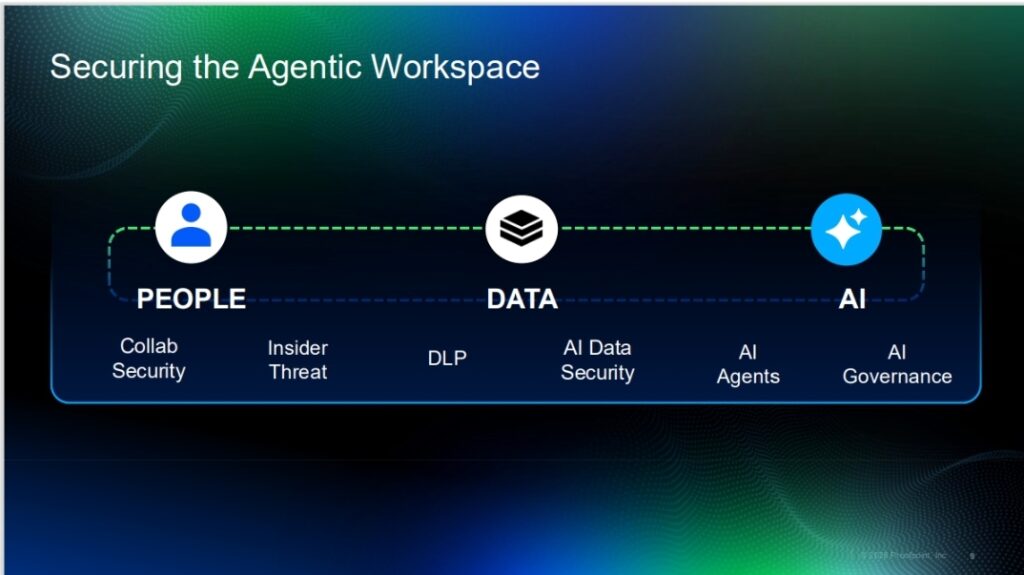
Companies like Proofpoint are framing this as a fundamental cybersecurity transition. But for CX leaders, this is something more critical:
The Rise of Agentic CX: From Assistance to Autonomy
AI is no longer just assisting workflows—it is executing them.
Across APJ markets, signals from firms like Gartner and McKinsey & Company indicate:
- Rapid enterprise AI adoption across workflows
- Increasing integration of AI agents into operational systems
- A growing gap between AI deployment and governance maturity
This creates a new CX reality:
- AI writes responses
- AI accesses customer data
- AI triggers actions across systems
CX is no longer “designed and delivered”
It is executed dynamically by machines
Where CX Breaks: The Invisible Risk Layer
The core issue is not AI adoption.
It is uncontrolled AI behavior inside customer-facing journeys.
1. Shadow AI in CX Workflows
Employees increasingly use unauthorized AI tools to:
- Draft customer communication
- Process sensitive data
- Automate decision flows
Result: Zero visibility, fragmented CX governance
2. Data Leakage Through AI Systems
Modern AI systems:
- Interact with enterprise datasets
- Pull from CRM, support logs, and knowledge bases
- Operate without contextual data classification
This directly challenges traditional Data Loss Prevention models.
Result: Silent data exposure embedded within CX flows
3. AI Agents Acting Beyond Intent
Autonomous agents can:
- Execute workflows
- Access integrated systems
- Make real-time decisions
But often:
- Without contextual guardrails
- Without intent validation
Result: Misaligned CX actions at machine speed
4. Insider Risk Amplified by AI
AI dramatically enhances insider capabilities:
- Rapid data extraction and summarization
- Context-aware manipulation of sensitive information
Result: Faster, scalable, and harder-to-detect CX failures
The CX Consequence: Trust Erosion at Machine Scale
These risks do not remain technical.
They manifest directly in customer experience:
- Incorrect or hallucinated responses
- Exposure of private customer information
- Inconsistent or non-compliant interactions
- Loss of contextual accuracy
The outcome is systemic:
In the agentic era:
Why Traditional Security Models Fail in Agentic CX
Legacy security frameworks were designed for:
- Human identity-based access
- Static permissions
- Predictable workflows
They are not built for:
- Autonomous AI agents
- Dynamic, real-time decisioning
- Cross-system interactions without explicit triggers
This creates a structural mismatch:
The New Model: Intent-Driven AI Security
To address this, a new paradigm is emerging:
Intent-Based AI Governance
Instead of asking:
- Who has access?
Organizations must ask:
- What is the system trying to do—and should it be allowed?
The CX Integrity Framework
A robust AI Security in the Agentic Workspace strategy must align:
- Intent → What action is being attempted
- Access → What systems/data are reachable
- Behavior → What actually happens in execution
CX integrity exists only when all three are aligned.
Decision Framework: What CX Leaders Must Do Now
This is no longer a future concern. It is an operational priority.
1. Discover the AI Footprint
- Map all AI tools in use (approved + shadow)
- Identify AI touchpoints across customer journeys
2. Establish CX-Centric Guardrails
- Define acceptable AI behavior in customer interactions
- Enforce policy at prompt, response, and action levels
3. Implement Real-Time Observability
- Monitor AI actions during execution
- Detect anomalies in behavior and outcomes
4. Enable AI Forensics
- Ensure traceability of every AI-driven interaction
- Build audit-ready CX systems
5. Converge CX, Security, and Data Functions
- Break organizational silos
- Define shared accountability for AI-driven experience
India & APJ Lens: The Governance Gap Widens
In markets like India and broader APJ:
- AI adoption is accelerating rapidly
- Regulatory frameworks (e.g., emerging data protection regimes) are evolving
- Enterprise governance maturity is inconsistent
This creates a high-risk environment:
- Rapid AI deployment without structured oversight
- Increased exposure to compliance violations
- Greater vulnerability to trust breakdowns
The implication:
Competitive Signal: A New Cybersecurity Battleground
Vendors like are positioning around:
- Human-centric security
- Data-centric governance
- AI interaction control
But the broader landscape is converging:
- Cloud security platforms
- Identity and access providers
- Data protection ecosystems
This signals a category shift:
CXQuest Insight: CX Is Now a Security Discipline
This is the defining shift.
Customer Experience is no longer limited to:
- Design thinking
- Journey orchestration
- Personalization engines
It now includes:
- AI governance
- Data integrity
- Behavioral control systems
CX leaders are no longer just experience owners.
They are:
CXQuest Take: The Agentic CX Risk Curve
We define this as:
The Agentic CX Risk Curve
As AI adoption increases:
- Efficiency rises linearly
- Risk escalates exponentially
Organizations that fail to govern this curve will face:
- Compounded CX failures
- Regulatory exposure
- Long-term trust erosion
Final Word: From AI Adoption to AI Accountability
The winners in the next era of CX will not be those who adopt AI the fastest.
They will be those who:
- Govern AI behavior
- Align AI with intent
- Protect customer trust at scale
Because in the age of AI Security in the Agentic Workspace:
And that makes AI security not just a technical priority—
But a core CX mandate.
The post AI Security in the Agentic Workspace: The Hidden CX Risk Leaders Can’t Ignore appeared first on CX Quest.


You May Also Like

Stakestone (STO) Soars: Token Surpasses $1.14 After Stunning 367% Rally

CME Group to launch Solana and XRP futures options in October
