

US Senator Urges Anti-Corruption Provisions in Crypto Bills
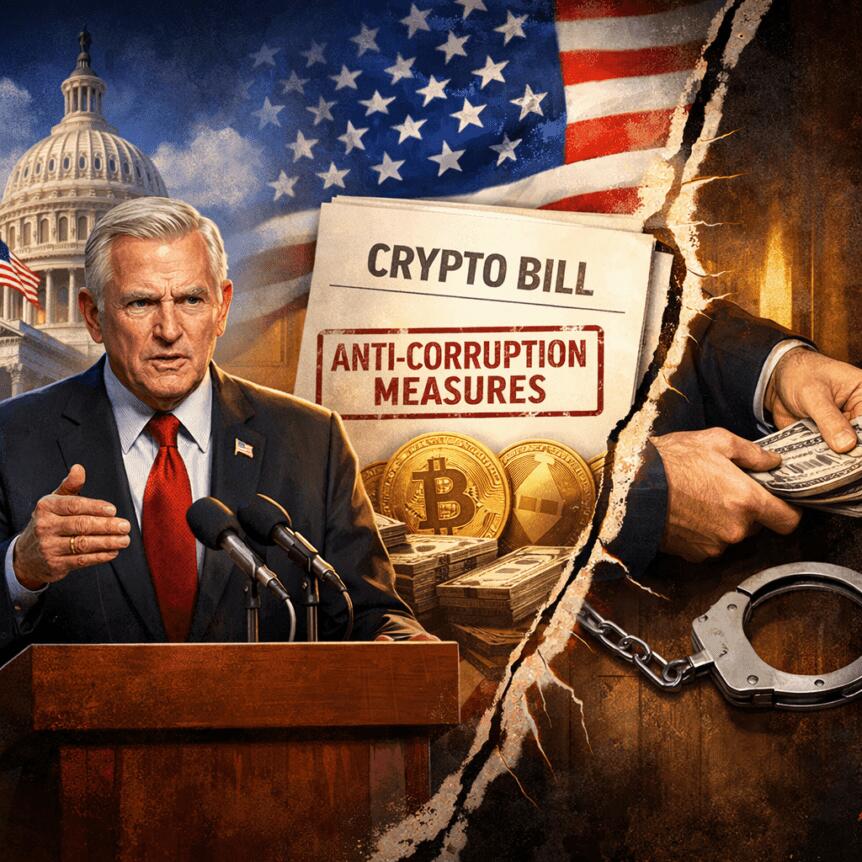
Washington, D.C. — Congressional scrutiny of crypto regulation intensified this week as Massachusetts Senator Elizabeth Warren sharpened her critique of the US Securities and Exchange Commission’s handling of a case against Justin Sun, the founder of Tron. Warren framed the settlement as a “free pass” for Sun after he poured an estimated $90 million into crypto ventures associated with former President Donald Trump and his family. The SEC had previously settled an unrelated matter with Sun for $10 million, a detail Warren highlighted to argue that regulatory actions should not appear to favor well-connected players in the industry. The debate arrives as lawmakers deliberate the market structure bill, widely known as the CLARITY Act, which seeks to clarify how digital assets are treated within the financial system and has become a battleground for critics of crypto policy. The White House has hosted three meetings between officials and representatives of the crypto and banking sectors in recent months, underscoring how regulatory dialogue remains a live process even as Congress debates specifics.
In parallel with Warren’s remarks, Sun’s involvement with Trump’s crypto ventures has kept the spotlight on enforcement and disclosure standards, while the SEC’s $10 million settlement related to Sun’s companies continues to echo in current discussions about accountability and transparency in crypto ventures. Warren’s commentary did not quote the CLARITY Act directly, but the legislation—seen as a cornerstone of administration and congressional thinking on market structure—has become a touchstone for how Congress intends to regulate tokenized assets, stablecoins, and new financial products built on distributed ledger technology.
A broader context shaping these debates is the ongoing push and pull around the market structure bill itself. The White House prioritizes clarity and a predictable framework for crypto entities, even as some lawmakers push back against faster approvals or blanket classifications that might restrict innovation. The CLARITY Act moved from the House to the Senate, earning attention for provisions involving tokenized equities, ethics, and stablecoin rewards. As the Senate contemplates the bill, it has been in the hands of committees with Warren serving as the ranking Democrat on the Banking Committee, a position that gives her influence over markup timelines and amendment opportunities.
Crucially, the dynamic surrounding the CLARITY Act is not happening in a vacuum. Several high-profile voices within the industry have raised concerns about how the legislation would be implemented. Coinbase CEO Brian Armstrong publicly asserted that the bill, in its current form, could not be supported “as written,” signaling that at least parts of the crypto exchange lobby consider the framework insufficiently precise or potentially burdensome for market participants seeking clear rules. Those tensions were echoed in Trump’s and Eric Trump’s recent social posts criticizing banks for their stance on crypto regulation, illustrating how political rhetoric intersects with policy development. To researchers and market watchers, the episode underscores a pattern: policy clarity often arrives only after intense, sometimes contentious, negotiations among lawmakers, the White House, and industry stakeholders.
For readers seeking a broader sense of what this means for investors and builders, the episode highlights the fragility of momentum on crypto legislation in the United States. The CLARITY Act’s path—strengthened by executive interest and congressional skepticism alike—depends on ongoing negotiation rather than a fixed timetable. The January postponement of a Senate Banking Committee markup, after concerns raised by industry participants, suggests that even with broad support in some corners, the final text must navigate a constellation of regulatory objectives, including consumer protections, market integrity, and financial stability. The debate is also shaped by political optics: how lawmakers balance the need for oversight with the ambition to preserve competitive innovation in a rapidly evolving sector.
Video discussions linked to the case have circulated online, providing public-facing elaborations on Sun’s regulatory history and the policy implications. For readers seeking deeper dives, see the linked discussions here: Video discussion: Sun case and crypto regulation and Video discussion: Market structure bill and banking concerns. These materials illustrate how experts frame the friction between enforcement actions and legislative action in an era of fast-moving digital asset innovation.
Crypto observers await markup for market structure bill
At the heart of the unfolding narrative is the market structure bill’s potential to redefine how crypto assets are categorized and regulated. The scope includes tokenized equities, ethics provisions, and how stablecoins may be rewarded or incentivized within the broader financial system. While the White House has hosted multiple meetings aimed at bridging industry perspectives with regulatory aims, it remains unclear whether those discussions have yielded concrete changes to the bill’s language as of the latest reporting.
Industry stakeholders, including banks and crypto firms, have argued that certain provisions—especially those touching on stablecoin rewards—could affect liquidity, consumer protections, and deposit dynamics. The tension is amplified by public disagreements among lawmakers about risk and innovation, and by calls from Trump and other figures for a robust stance that some see as necessary to curb perceived crypto abuses. Coinbase’s objections, echoed by other sector players, emphasize a desire for a careful calibration that reduces regulatory friction while preserving the capacity for new financial technologies to scale.
January’s postponement of a Senate markup added to the sense that timing and inclusivity are controlling factors in how the bill will ultimately be shaped. The Senate Banking Committee did not reschedule the markup by week’s end, delaying a formal discussion of securities law concerns before any potential floor vote. The absence of a firm timetable has left market participants in a wait-and-see posture as lawmakers balance enforcement precedent with forward-looking policy aims.
As the debate evolves, observers are watching how this interplay between enforcement history, political messaging, and legislative drafting will influence capital formation, exchange listings, and the pace of crypto innovation in the United States. The CLARITY Act’s fate could reverberate through token issuances, exchange governance, and the broader perception of regulatory certainty—an essential attribute for institutions considering long-term involvement in digital asset markets.
Why it matters
The Warren-Sun dispute highlights a central tension in US crypto policy: the perception that political connections may shape regulatory outcomes. If enforcement actions are seen as uneven or entangled with political favor, trust in the rule of law—and in the predictability of compliance costs—could erode. For industry participants, the episode underscores the importance of transparent governance and clear disclosure standards, particularly when investments intersect with public figures or political narratives.
From a policy perspective, the ongoing CLARITY Act conversation matters because it tests whether US regulatory architecture can accommodate rapid financial innovation without compromising investor protection or market integrity. The debate over tokenized assets and stablecoins speaks to fundamental questions about how digital instruments should be regulated, what constitutes a security, and how flows of liquidity affect financial stability. The White House’s engagement—through meetings with crypto and banking representatives—signals a willingness to shape policy through ongoing dialogue rather than unilateral decree, but it also preserves the risk that policy moves could lag behind technological progress.
For traders and builders, the practical implication is simple but consequential: policymakers are signaling that clarity, proportionality, and enforceable rules will eventually define the operating landscape. Even as the industry seeks to accelerate innovation, the potential for new reporting requirements, disclosure obligations, or capital-formation constraints remains a core consideration in strategic planning and risk assessment.
What to watch next
- Rescheduled markup: Monitor for a new date in the Senate Banking Committee to address securities law concerns tied to the market structure bill.
- Committee amendments: Expect potential amendments that sharpen definitions around tokenized assets and stablecoins.
- White House updates: Track any new White House statements or meetings thatCould influence the administration’s regulatory posture.
- Industry responses: Watch for statements from major exchanges and crypto advocacy groups that could signal coalition position changes on the bill.
Sources & verification
- Warren’s statement on the SEC dropping its case against Justin Sun: https://www.banking.senate.gov/newsroom/minority/warren-statement-on-the-sec-dropping-its-case-against-justin-sun
- Sun’s $10 million settlement in an unrelated SEC case: https://cointelegraph.com/news/justin-sun-sec-lawsuit-settles-10-million
- Clarity Act risks repeat of Europe’s mistakes, crypto lawyer warns (magazine): https://cointelegraph-magazine.com/clarity-act-micas-defi-mistake-lawyer-warns/
- Trump takes swipe banks over stalled crypto bill: https://cointelegraph.com/news/trump-takes-swipe-banks-over-stalled-crypto-bill
Market reaction and key details
The unfolding discourse around Warren’s critique, Sun’s investments, and the CLARITY Act highlights the complex, often competing priorities shaping US crypto policy. On one side, lawmakers seek precision and guardrails—especially around how assets are classified and how issuer and investor protections are enforced. On the other, industry participants argue for a framework that encourages innovation without stifling growth or creating excessive compliance burdens. The evolving narrative demonstrates how policy can influence market dynamics even when concrete legislative outcomes are still pending. The next steps—especially the rescheduling of committee markups and potential amendments—will be critical indicators of whether the United States can establish a stable, clarity-driven framework for the rapidly evolving digital asset ecosystem.
What it means for readers
Investors should watch how the policy dialogue translates into enforceable rules, especially around tokenized assets and stablecoins. For developers and exchanges, clarity will determine budgeting for compliance, listing standards, and product design. For lawmakers, the balance between safeguarding the financial system and enabling innovation will shape the long-term trajectory of crypto markets in the United States. The Sun case, Warren’s commentary, and the ongoing CLARITY Act discussions collectively illustrate that policy decisions in the coming months could have tangible implications for market liquidity, investor protections, and the competitive landscape for crypto firms.
This article was originally published as US Senator Urges Anti-Corruption Provisions in Crypto Bills on Crypto Breaking News – your trusted source for crypto news, Bitcoin news, and blockchain updates.
You May Also Like

‘One Battle After Another’ Becomes One Of This Decade’s Best-Reviewed Movies

Economic policies are chasing investors away from US – Mercer
