Key Insights: Vitalik Buterin has sparked debate over the blockchain architecture again, saying the crypto industry doesn’t need more layer-1 networks. His commentsKey Insights: Vitalik Buterin has sparked debate over the blockchain architecture again, saying the crypto industry doesn’t need more layer-1 networks. His comments

Vitalik Buterin Says Crypto Needs Fewer Layer 1 Chains: Here’s Why

Key Insights:

  • Vitalik Buterin said crypto doesn’t need more L1s and warned that copycat EVM chains without strong Ethereum links add little user value.
  • L1 usage slowed across networks. Token Terminal data showed stalled wallet growth. TVL dropped 21% on Solana and 22% on Ethereum.
  • Vitalik Buterin sold 2,961 ETH worth $6.6M via CoW Protocol in 3 days, following flagged planned withdrawals.

Vitalik Buterin has sparked debate over the blockchain architecture again, saying the crypto industry doesn’t need more layer-1 networks. His comments come as activity across major chains slows and liquidity thins in a broader market downturn.

At the same time, Buterin’s recent Ether sales have added to market sensitivity, linking infrastructure critique with capital discipline.

Vitalik Buterin Advocates for Fewer L1s and More Real Products

Vitalik Buterin said the crypto space has reached saturation at the base layer. He noted that launching new layer-1 chains, if they are copycat EVM networks, don’t add much user value.

In a worded post, he criticized EVM chains without optimistic bridges to Ethereum, calling them redundant and unnecessary.

According to Buterin, being close to Ethereum is no longer an attractive feature in itself. Many projects, he said, depend on hype instead of delivering products users actually need. He also pushed back against teams using his reputation to advance new networks without meaningful innovation.

Instead, Vitalik Buterin advocated for the need to build applications that are useful. He cited privacy tools, fast consumer apps, and low-latency systems as areas where there was real demand.

He encouraged teams to cease using “connection to Ethereum” as a major selling point.

Usage Data Shows L1 Growth Has Stalled

On-chain data supports Buterin’s argument. According to metrics from Token Terminal, daily active wallets on many layer-1 networks have plateaued. While chains operate at a higher baseline usage than they once did, growth has been mostly stalled over the last year.

Active Addresses (Monthly) by Project | Source: Token Terminal, XActive Addresses (Monthly) by Project | Source: Token Terminal, X

Ethereum continues to be an exception, maintaining its status as a core DeFi hub. Other large chains like Solana and BNB Chain have remained active largely because of meme token trading. Outside of these niches, many smaller L1s exhibit limited actual economic activity.

Value locked across layer-1 networks has also dipped following the recent market crash. Solana’s TVL fell by around 21%, and Ethereum saw outflows close to 22%. Smaller chains had trouble maintaining liquidity, despite expansion periods in 2024.

Buterin recognized a place for app-specific chains. He said networks built around a single strong use case, like prediction markets, can make sense. General-purpose chains, however, encounter diminishing returns.

ETH Sales Add Context to Infrastructure Push

In addition to his infrastructure critique, Vitalik Buterin has been heavily managing his personal holdings. Blockchain tracker Lookonchain reported that he sold around 2,961 ETH, worth approximately $6.6 million, over three days.

Data from Arkham Intelligence indicates that the swaps used the CoW Protocol via multiple small transactions.

Buterin’s ETH selling record | Source: Lookonchain DataButerin’s ETH selling record | Source: Lookonchain Data

Such execution methods generally minimize the market impact. Still, the timing raised eyebrows when the Ether price slid. ETH hit its lowest point since May last year and is down more than 50% from its all-time high.

Vitalik Buterin clarified that funds from sales are for long-term initiatives. He recently allocated 16,384 ETH, roughly $45 million, to fund privacy-preserving technologies and open infrastructure. He said deployments would be slow as the Ethereum Foundation enters a time of “mild austerity.”

Market Pressure Meets Structural Reset

The weakness in Ethereum’s price has reflected broader market stress. Bitcoin fell below $66K, which triggered leveraged liquidations. Also, ETH bulls lost over $237 million in the last 24 hours, according to liquidation data.

Spot Ethereum ETFs have also been consistently drained from their reserves, losing more than $68 million in February alone.

Technical analysts note that ETH has just broken key support at around $2,125, invalidating an earlier bullish reversal pattern.

Indicators such as RSI and stochastic oscillators are still close to oversold territory, and pressure is still present. Some predictions are now at $1,500 as a potential downside goal if recovery doesn’t occur.

The post Vitalik Buterin Says Crypto Needs Fewer Layer 1 Chains: Here’s Why appeared first on The Market Periodical.

Market Opportunity
Ucan fix life in1day Logo
Ucan fix life in1day Price(1)
$0.000536
$0.000536$0.000536
+3.45%
USD
Ucan fix life in1day (1) Live Price Chart
Disclaimer: The articles reposted on this site are sourced from public platforms and are provided for informational purposes only. They do not necessarily reflect the views of MEXC. All rights remain with the original authors. If you believe any content infringes on third-party rights, please contact service@support.mexc.com for removal. MEXC makes no guarantees regarding the accuracy, completeness, or timeliness of the content and is not responsible for any actions taken based on the information provided. The content does not constitute financial, legal, or other professional advice, nor should it be considered a recommendation or endorsement by MEXC.

You May Also Like

CME Group to Launch Solana and XRP Futures Options

CME Group to Launch Solana and XRP Futures Options

The post CME Group to Launch Solana and XRP Futures Options appeared on BitcoinEthereumNews.com. An announcement was made by CME Group, the largest derivatives exchanger worldwide, revealed that it would introduce options for Solana and XRP futures. It is the latest addition to CME crypto derivatives as institutions and retail investors increase their demand for Solana and XRP. CME Expands Crypto Offerings With Solana and XRP Options Launch According to a press release, the launch is scheduled for October 13, 2025, pending regulatory approval. The new products will allow traders to access options on Solana, Micro Solana, XRP, and Micro XRP futures. Expiries will be offered on business days on a monthly, and quarterly basis to provide more flexibility to market players. CME Group said the contracts are designed to meet demand from institutions, hedge funds, and active retail traders. According to Giovanni Vicioso, the launch reflects high liquidity in Solana and XRP futures. Vicioso is the Global Head of Cryptocurrency Products for the CME Group. He noted that the new contracts will provide additional tools for risk management and exposure strategies. Recently, CME XRP futures registered record open interest amid ETF approval optimism, reinforcing confidence in contract demand. Cumberland, one of the leading liquidity providers, welcomed the development and said it highlights the shift beyond Bitcoin and Ethereum. FalconX, another trading firm, added that rising digital asset treasuries are increasing the need for hedging tools on alternative tokens like Solana and XRP. High Record Trading Volumes Demand Solana and XRP Futures Solana futures and XRP continue to gain popularity since their launch earlier this year. According to CME official records, many have bought and sold more than 540,000 Solana futures contracts since March. A value that amounts to over $22 billion dollars. Solana contracts hit a record 9,000 contracts in August, worth $437 million. Open interest also set a record at 12,500 contracts.…
Share
BitcoinEthereumNews2025/09/18 01:39
China Blocks Nvidia’s RTX Pro 6000D as Local Chips Rise
China Blocks Nvidia’s RTX Pro 6000D as Local Chips Rise

The post China Blocks Nvidia’s RTX Pro 6000D as Local Chips Rise appeared on BitcoinEthereumNews.com. China Blocks Nvidia’s RTX Pro 6000D as Local Chips Rise China’s internet regulator has ordered the country’s biggest technology firms, including Alibaba and ByteDance, to stop purchasing Nvidia’s RTX Pro 6000D GPUs. According to the Financial Times, the move shuts down the last major channel for mass supplies of American chips to the Chinese market. Why Beijing Halted Nvidia Purchases Chinese companies had planned to buy tens of thousands of RTX Pro 6000D accelerators and had already begun testing them in servers. But regulators intervened, halting the purchases and signaling stricter controls than earlier measures placed on Nvidia’s H20 chip. Image: Nvidia An audit compared Huawei and Cambricon processors, along with chips developed by Alibaba and Baidu, against Nvidia’s export-approved products. Regulators concluded that Chinese chips had reached performance levels comparable to the restricted U.S. models. This assessment pushed authorities to advise firms to rely more heavily on domestic processors, further tightening Nvidia’s already limited position in China. China’s Drive Toward Tech Independence The decision highlights Beijing’s focus on import substitution — developing self-sufficient chip production to reduce reliance on U.S. supplies. “The signal is now clear: all attention is focused on building a domestic ecosystem,” said a representative of a leading Chinese tech company. Nvidia had unveiled the RTX Pro 6000D in July 2025 during CEO Jensen Huang’s visit to Beijing, in an attempt to keep a foothold in China after Washington restricted exports of its most advanced chips. But momentum is shifting. Industry sources told the Financial Times that Chinese manufacturers plan to triple AI chip production next year to meet growing demand. They believe “domestic supply will now be sufficient without Nvidia.” What It Means for the Future With Huawei, Cambricon, Alibaba, and Baidu stepping up, China is positioning itself for long-term technological independence. Nvidia, meanwhile, faces…
Share
BitcoinEthereumNews2025/09/18 01:37
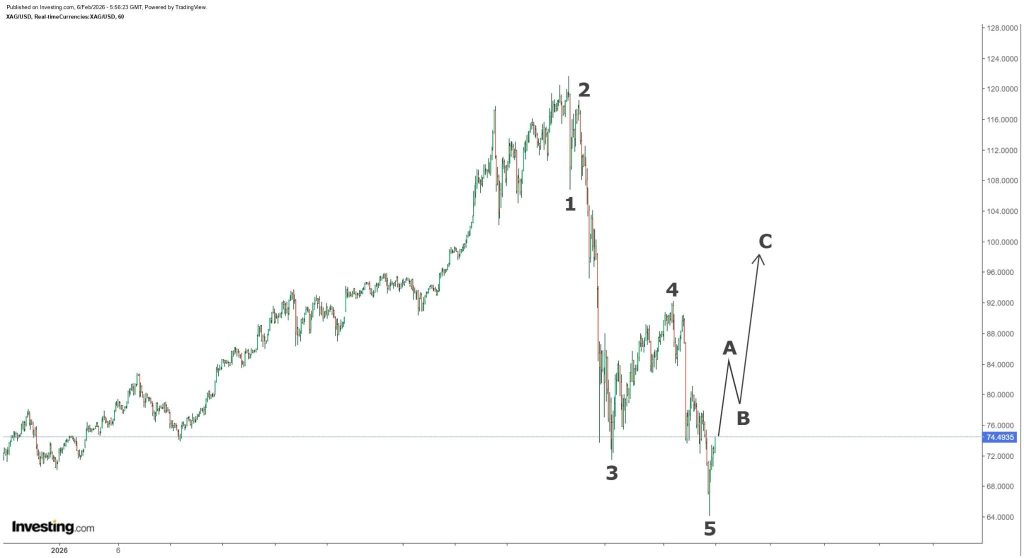
Silver Price Crash Is Over “For Real This Time,” Analyst Predicts a Surge Back Above $90

Silver Price Crash Is Over “For Real This Time,” Analyst Predicts a Surge Back Above $90

Silver has been taking a beating lately, and the Silver price hasn’t exactly been acting like a safe haven. After running up into the highs, the whole move reversed
Share
Captainaltcoin2026/02/07 03:15
