The Philippines needs more energy to fuel its growth, but we must pursue this course pragmatically and practicallyThe Philippines needs more energy to fuel its growth, but we must pursue this course pragmatically and practically

Powering energy prosperity: Balancing ambition with affordability for Filipinos

2026/01/16 10:44

Editor’s note: This article was authored by Ruth Yu-Owen, Energy Committee chair of the European Chamber of Commerce of the Philippines (ECCP), in partnership with AboitizPower and the ECCP. It was handled by BrandRap, Rappler’s sales and marketing arm. No member of the news and editorial team participated in the publishing of this piece.

I am honored to have received the inaugural Women in Renewable Energy award at the Department of Energy (DOE) Sustainability Awards 2025. While this accolade recognizes leadership and technical innovation, I view it primarily as a testament to the “Solar Nanays” – the brave women climbing roofs to master new technologies and build a more secure future for their families and our country.

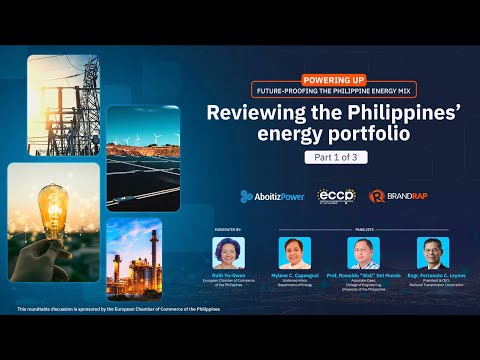
This recognition reinforces a core conviction central to our recent three-part roundtable series, “Powering Up: Future-proofing the Philippine energy mix” – our energy transition must be inclusive, technically robust, and, above all, affordable.
Play Video Powering energy prosperity: Balancing ambition with affordability for Filipinos

As we navigate the Philippine Energy Plan targets – 35% renewable energy share by 2030 and over 50% by 2040 – we must acknowledge that a diverse portfolio of technologies is our strongest asset. My experience has shown that a diverse set of technologies can create dependable systems with transformative effects on communities.

For instance, the Balesin Island Solar and Battery Storage project, featuring a 4.1 MW Solar Farm and a 5.5 MW Battery Energy Storage System, serves as a living proof-of-concept for achieving large-scale, sustainable off-grid power that replaces expensive diesel generators.

Choosing our energy future is like planting a national orchard. We should lean heavily on the “trees” we know how to grow and harvest affordably, like solar and onshore wind, which are already bearing fruit. These technologies have undergone a decades-long “ripening” process to reach the affordability we enjoy today.

As Professor Rowaldo “Wali” del Mundo recalled, when they were pioneering solar in the 1990s, the cost was a staggering $20 per 1 square centimeter, equivalent to 1 watt; today, that same quantity has commercialized to roughly $0.10 per watt, a price drop that was once unimaginable for grid integration.

Undersecretary Mylene Capongcol further illustrated this trajectory, noting that solar once cost P16 per kilowatt-hour under earlier Feed-In Tariff schemes but has since plummeted to competitive rates of P4 or P5 per kilowatt-hour. Overall, the cost of solar PV modules has declined by up to 90% since 2010.
Play Video Powering energy prosperity: Balancing ambition with affordability for Filipinos

While we nurture these mature “trees,” we must be cautious of rare, exotic varieties like offshore wind. While it promises a massive harvest – theoretically enough to power the entire country – it currently requires a prohibitively expensive irrigation system. As the panel discussed, offshore wind is laden with uncertainties and high price tags.

The primary hurdle is the infrastructure: submarine cables are the most expensive network infrastructure in the world, and we must also invest heavily in ports to handle massive turbine blades. Some analysts suggest we should observe the global trajectory for another 5 to 10 years before full-scale adoption to avoid the “early adopter” tax, allowing the technology to reach the same economies of scale that made solar affordable.

Ultimately, government signals and policy directions are vital to how the country’s energy system will develop. However, these directions should not veer away from the imperative of delivering reliable, affordable, and resilient power systems that will fuel the prosperity of Filipinos.

There is no single solution for all cases. Because our nation is an archipelago of over 7,000 islands, we must embrace a basket of solutions to suit different situations, ranging from massive grid-connected projects to independent, stand-alone systems that ensure even the most remote communities are not left in the dark.
Play Video Powering energy prosperity: Balancing ambition with affordability for Filipinos

The Philippines needs more energy to fuel its growth, but we must pursue this course pragmatically and practically. By keeping energy security and affordability front and center, we can build an energy system that delivers reliable power now and in the years to come. Only through critical, data-driven, and well-thought-out technology choices can we enable the true prosperity of all Filipinos, ensuring that our green transition is as equitable as it is ambitious. – Rappler.com

.

Market Opportunity
Fuel Logo
Fuel Price(FUEL)
$0.00162
$0.00162$0.00162
0.00%
USD
Fuel (FUEL) Live Price Chart
Disclaimer: The articles reposted on this site are sourced from public platforms and are provided for informational purposes only. They do not necessarily reflect the views of MEXC. All rights remain with the original authors. If you believe any content infringes on third-party rights, please contact service@support.mexc.com for removal. MEXC makes no guarantees regarding the accuracy, completeness, or timeliness of the content and is not responsible for any actions taken based on the information provided. The content does not constitute financial, legal, or other professional advice, nor should it be considered a recommendation or endorsement by MEXC.

You May Also Like

Over $145M Evaporates In Brutal Long Squeeze
Over $145M Evaporates In Brutal Long Squeeze

The post Over $145M Evaporates In Brutal Long Squeeze appeared on BitcoinEthereumNews.com. Crypto Futures Liquidations: Over $145M Evaporates In Brutal Long Squeeze
Share
BitcoinEthereumNews2026/01/16 11:35
Vitalik Buterin Reveals Ethereum’s Bold Plan to Stay Quantum-Secure and Simple!

Vitalik Buterin Reveals Ethereum’s Bold Plan to Stay Quantum-Secure and Simple!

Buterin unveils Ethereum’s strategy to tackle quantum security challenges ahead. Ethereum focuses on simplifying architecture while boosting security for users. Ethereum’s market stability grows as Buterin’s roadmap gains investor confidence. Ethereum founder Vitalik Buterin has unveiled his long-term vision for the blockchain, focusing on making Ethereum quantum-secure while maintaining its simplicity for users. Buterin presented his roadmap at the Japanese Developer Conference, and splits the future of Ethereum into three phases: short-term, mid-term, and long-term. Buterin’s most ambitious goal for Ethereum is to safeguard the blockchain against the threats posed by quantum computing.  The danger of such future developments is that the future may call into question the cryptographic security of most blockchain systems, and Ethereum will be able to remain ahead thanks to more sophisticated mathematical techniques to ensure the safety and integrity of its protocols. Buterin is committed to ensuring that Ethereum evolves in a way that not only meets today’s security challenges but also prepares for the unknowns of tomorrow. Also Read: Ethereum Giant The Ether Machine Takes Major Step Toward Going Public! However, in spite of such high ambitions, Buterin insisted that Ethereum also needed to simplify its architecture. An important aspect of this vision is to remove unnecessary complexity and make Ethereum more accessible and maintainable without losing its strong security capabilities. Security and simplicity form the core of Buterin’s strategy, as they guarantee that the users of Ethereum experience both security and smooth processes. Focus on Speed and Efficiency in the Short-Term In the short term, Buterin aims to enhance Ethereum’s transaction efficiency, a crucial step toward improving scalability and reducing transaction costs. These advantages are attributed to the fact that, within the mid-term, Ethereum is planning to enhance the speed of transactions in layer-2 networks. According to Butterin, this is part of Ethereum’s expansion, particularly because there is still more need to use blockchain technology to date. The other important aspect of Ethereum’s development is the layer-2 solutions. Buterin supports an approach in which the layer-2 networks are dependent on layer-1 to perform some essential tasks like data security, proof, and censorship resistance. This will enable the layer-2 systems of Ethereum to be concerned with verifying and sequencing transactions, which will improve the overall speed and efficiency of the network. Ethereum’s Market Stability Reflects Confidence in Long-Term Strategy Ethereum’s market performance has remained solid, with the cryptocurrency holding steady above $4,000. Currently priced at $4,492.15, Ethereum has experienced a slight 0.93% increase over the last 24 hours, while its trading volume surged by 8.72%, reaching $34.14 billion. These figures point to growing investor confidence in Ethereum’s long-term vision. The crypto community remains optimistic about Ethereum’s future, with many predicting the price could rise to $5,500 by mid-October. Buterin’s clear, forward-thinking strategy continues to build trust in Ethereum as one of the most secure and scalable blockchain platforms in the market. Also Read: Whales Dump 200 Million XRP in Just 2 Weeks – Is XRP’s Price on the Verge of Collapse? The post Vitalik Buterin Reveals Ethereum’s Bold Plan to Stay Quantum-Secure and Simple! appeared first on 36Crypto.
Share
Coinstats2025/09/18 01:22
Non-Opioid Painkillers Have Struggled–Cannabis Drugs Might Be The Solution

Non-Opioid Painkillers Have Struggled–Cannabis Drugs Might Be The Solution

The post Non-Opioid Painkillers Have Struggled–Cannabis Drugs Might Be The Solution appeared on BitcoinEthereumNews.com. In this week’s edition of InnovationRx, we look at possible pain treatments from cannabis, risks of new vaccine restrictions, virtual clinical trials at the Mayo Clinic, GSK’s $30 billion U.S. manufacturing commitment, and more. To get it in your inbox, subscribe here. Despite their addictive nature, opioids continue to be a major treatment for pain due to a lack of effective alternatives. In an effort to boost new drugs, the FDA released new guidelines for non-opioid painkillers last week. But making these drugs hasn’t been easy. Vertex Pharmaceuticals received FDA approval for its non-opioid Journavx in January, then abandoned a next generation drug after a failed clinical trial earlier this summer. Acadia similarly abandoned a promising candidate after a failed trial in 2022. One possible basis for non-opioids might be cannabis. Earlier this year, researchers at Washington University at St. Louis and Stanford published a study showing that a cannabis-derived compound successfully eased pain in mice with minimal side effects. Munich-based pharmaceutical company Vertanical is perhaps the furthest along in this quest. It is developing a cannabinoid-based extract to treat chronic pain it hopes will soon become an approved medicine, first in the European Union and eventually in the United States. The drug, currently called Ver-01, packs enough low levels of cannabinoids (including THC) to relieve pain, but not so much that patients get high. Founder Clemens Fischer, a 50-year-old medical doctor and serial pharmaceutical and supplement entrepreneur, hopes it will become the first cannabis-based painkiller prescribed by physicians and covered by insurance. Fischer founded Vertanical, with his business partner Madlena Hohlefelder, in 2017, and has invested more than $250 million of his own money in it. With a cannabis cultivation site and drug manufacturing plant in Denmark, Vertanical has successfully passed phase III clinical trials in Germany and expects…
Share
BitcoinEthereumNews2025/09/18 05:26