

China’s Digital Yuan Architect Accused of $8M Crypto Bribery Scheme
Yao Qian, the former architect of China’s digital yuan, accepted crypto bribes worth over $8 million while holding senior regulatory positions, Chinese state media revealed this week.
The case exposes how corrupt officials exploited the same blockchain technology Yao helped develop to conceal illicit transactions through hardware wallets and anonymous transfers.
State broadcaster CCTV aired details of Yao’s corruption scheme on January 14 in a documentary titled “Technology Empowering Anti-Corruption,” showing how investigators traced 2,000 Ethereum (valued at 60 million yuan at peak prices) from a businessman to Yao’s personal wallet in 2018.
The former director of the Digital Currency Research Institute at the People’s Bank of China used multiple shell accounts and blockchain addresses to hide bribes totaling at least 22 million yuan ($3.1 million) in fiat currency alongside substantial crypto holdings.
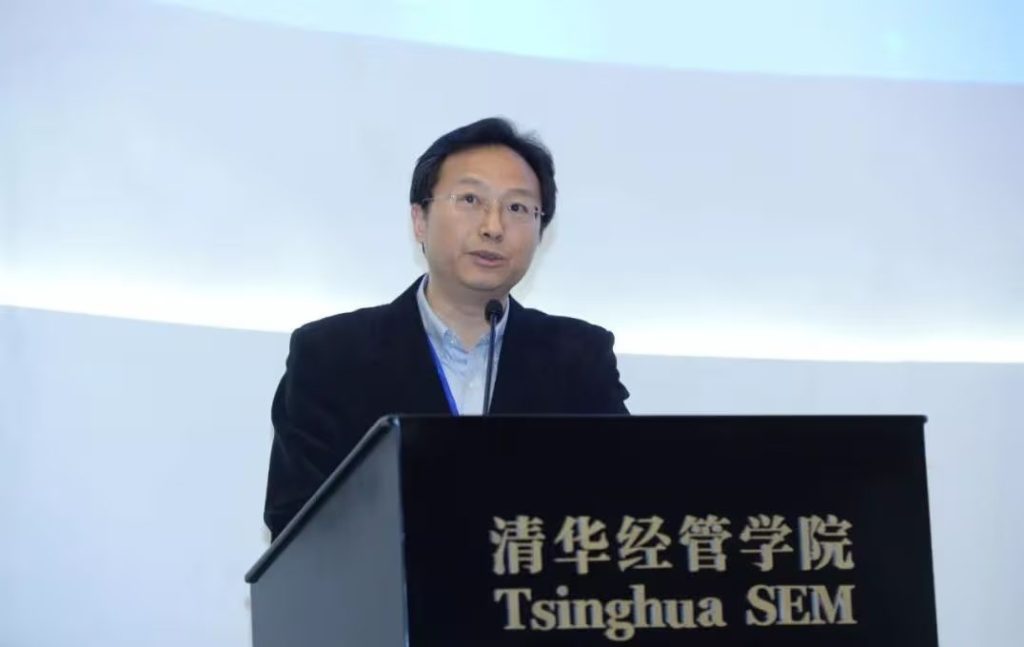 Yao Qian. | Source: CoinDesk
Hardware Wallets Betrayed Corruption Trail
Investigators discovered three hardware wallets in Yao’s office drawer, each resembling ordinary USB devices but containing millions of yuan in cryptocurrency.
“These three seemingly insignificant little wallets stored tens of millions of yuan,” said Zou Rong, a staff member with the Central Commission for Discipline Inspection stationed at the China Securities Regulatory Commission.
 Source: Sina
While Yao believed virtual currencies offered anonymity, blockchain’s transparency enabled investigators to reconstruct complete transaction histories, linking bribes directly to his wallets.
The investigation revealed that Yao purchased a Beijing villa worth over 20 million yuan using funds traced to crypto exchanges, including a single 10 million yuan payment converted from digital assets.
Authorities penetrated layers of shell accounts controlled by relatives and intermediaries, establishing clear evidence that businessman Wang transferred 12 million yuan through an information services company in exchange for regulatory favors.
“He believed that after setting up multiple layers, the system would be more isolated,” said Shi Changping of Shanwei City’s Discipline Inspection Commission, adding that multiple parties actually strengthened the evidence chain.
Yao’s legal bank accounts showed no obvious irregularities, but cross-referencing with government databases uncovered accounts opened under other identities that he secretly controlled.
These shell accounts received large transfers that investigators traced back through four layers to crypto exchange fund accounts, eventually connecting to his property purchases and corrupt dealings with technology service providers.
Subordinate Enabled Crypto Bribery Network
Jiang Guoqing, Yao’s longtime subordinate who followed him from the People’s Bank to the securities regulator, served as the primary intermediary for crypto bribes.
“I set up a transfer address where people would send coins, then transfer them to Yao Qian’s personal wallet,” Jiang confessed, acknowledging he profited from facilitating power-for-money transactions.
Source: Sina
In 2018, Jiang connected businessman Zhang to Yao, who used his industry influence to help Zhang’s company issue tokens and raise 20,000 Ethereum through a cryptocurrency exchange, in exchange for 2,000 Ethereum.
“Yao Qian has great influence in the industry because of his position,” Jiang told investigators, explaining how regulatory authority translated into cryptocurrency market access.
Beyond digital bribes, prosecutors documented that Yao accepted expensive gifts, arranged luxurious banquets, manipulated employee recruitment, and facilitated software procurement deals with technology providers while serving at the China Securities Regulatory Commission.
The investigation also revealed that Yao engaged in superstitious practices (a cultural taboo in Communist Party governance) and established ties with individuals described as “key training targets” for illicit activities.
Yao was expelled from the Communist Party in November 2024 and transferred for criminal prosecution after investigators achieved “mutual corroboration and a closed loop of evidence” by combining blockchain transaction records with traditional financial forensics.
His case provided valuable experience for Chinese authorities investigating virtual currency corruption, with investigators emphasizing that “cryptocurrency is useless if it can’t be cashed out—when virtual assets eventually become real assets, their true nature is easily exposed.“
The villa Yao purchased with converted crypto remained unfinished when authorities detained him, serving as the physical evidence that exposed his elaborate digital deception scheme spanning years of regulatory service.
Digital Yuan Pushes Forward Despite Setback
Yao’s downfall hasn’t derailed China’s central bank digital currency ambitions, with the People’s Bank of China suppose to have launched a new framework on January 1 that allows commercial banks to pay interest on digital yuan wallet balances.
The move addresses long-standing adoption challenges, as the e-CNY has processed 3.48 billion transactions worth 16.7 trillion yuan through November 2025, but still trails far behind Alipay and WeChat Pay, which control over 90% of China’s mobile payments market.
You May Also Like

X to cut off InfoFi crypto projects from accessing its API

X Just Killed Kaito and InfoFi Crypto, Several Tokens Crash
