Fresh clashes between the Trump administration and the Federal Reserve reignited fears over central bank independence, weighing on US markets and boosting preciousFresh clashes between the Trump administration and the Federal Reserve reignited fears over central bank independence, weighing on US markets and boosting precious

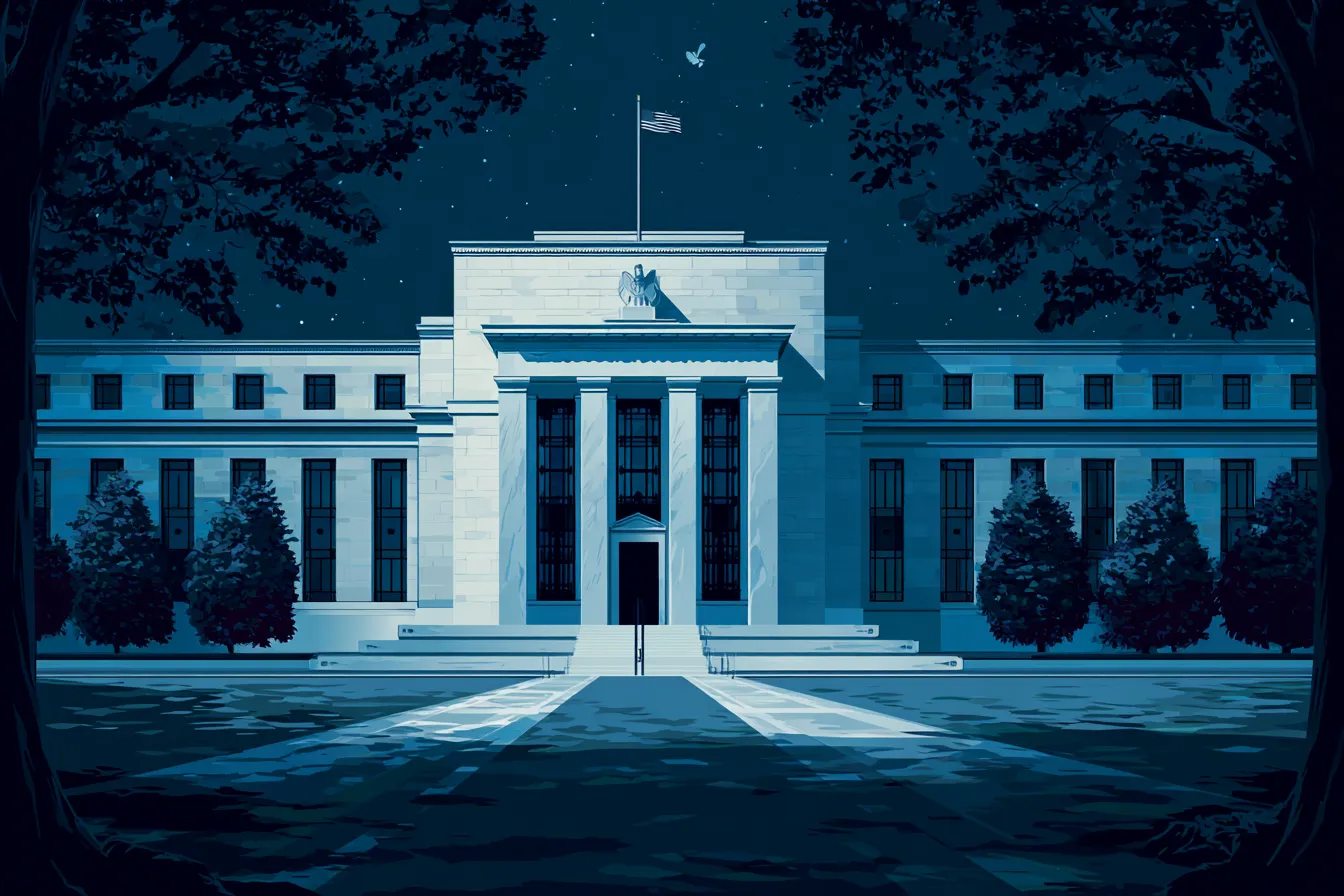
Threat to Fed Takes Center Stage
Threat to Fed Takes Center Stage

Equities and the dollar took a hit this week as market participants reduced their holdings in American assets following a notable intensification of criticism from the Trump administration directed at the country's central bank.

Longer-term yields experienced a significant increase, while precious metals reached new peaks.

Fed Chief Jerome Powell indicated that the possibility of a US criminal indictment came from a divergence in views regarding monetary policy.

Although the market declines were modest, the critical topic of the Fed's autonomy and its potential effects on American markets reemerged in discussions among investors.

On Sunday night, Powell revealed that the US central bank had been served grand jury subpoenas by the Justice Department about the upcoming headquarters renovations.

Here we have another incident in a series of disagreements with the Trump administration that have included efforts to oust Governor Lisa Cook and persistent calls for steep interest rate cuts.

Several analysts cautioned that the downturn could worsen if conflicts persist.

As concerns about rising inflation linger among the rate-setting officials, the US president has consistently advocated for a more rapid reduction in rates to invigorate the economy and lower borrowing costs for the government.

Upon taking the helm of the Federal Reserve in 1979, Paul Volcker gained recognition for his unwavering commitment to controlling inflation.

There is a prevailing sentiment that the Fed yielded to Nixon's influence, and that Volcker's initiatives did not achieve the desired outcomes.

When Trump unexpectedly announced worldwide tariffs last year, it caused a market slump and put a lot of pressure on US assets.

After the taxes were announced in April, treasury rates spiked, with 30-year yields increasing by more than 80 basis points intraday between so-called Liberation Day and late May.

The biggest notable yearly loss in the value of the dollar since 2017 was in 2025, when it fell by more than 8%. The dollar experienced its most significant decline since the beginning of the Christmas holiday.

Gold and silver surged to new heights in a widespread rally across metals, as the US Justice Department issued a warning of a potential criminal indictment against the Federal Reserve, reigniting worries about the central bank's autonomy.

The price of gold surged to nearly $4,600 per ounce, and silver climbed past $84 following remarks from Powell, who indicated that the looming indictment is accompanied by “threats and ongoing pressure” from the administration regarding interest-rate decisions.

Critiques of Trump administration breathing down the neck of the Fed significantly contributed to the rise of gold and silver last year, and this influence appears likely to continue.

The US Supreme Court has scheduled Wednesday as the next potential day for issuing an opinion regarding Trump’s tariffs.

A decision against the levies would undermine his key economic strategy and represent his most significant legal setback since resuming his role in the White House.

Market participants are closely monitoring the outcomes of the ongoing Section 232 investigation, as it could potentially result in tariffs on silver, platinum, and palladium in the United States.

That report is anticipated to be released this month.

Why crypto is paying attention

Crypto markets are watching Washington closely this week, not just for the Federal Reserve drama, but for what the Senate does with the long-awaited crypto market structure bill.

The timing matters. When confidence in US institutions comes under pressure, investors start sorting assets by jurisdictional risk. Regulatory clarity can turn crypto from a speculative side bet into a credible alternative when traditional anchors wobble.

The re-emergence of doubts around the Fed’s autonomy has already started to create a familiar split across markets.

The first pressure point is anything explicitly tied to the United States. US equities and the US dollar both softened at the start of the week, reflecting unease rather than panic. The logic is straightforward: global investors tend to avoid markets where policy credibility looks fragile. When the independence of a central bank is questioned, capital demands a higher risk premium or simply leaves.

For now, this remains a confidence issue rather than a structural break. Liquidity is still deep, and US markets retain their gravitational pull. The pullback looks more like a pause than a wholesale exit, but it highlights how quickly sentiment can shift when institutional trust is tested.

But capital leaving US assets has to land somewhere. One destination is hard assets. Gold, silver, and industrial metals such as copper benefit from two forces at once: their role as perceived safe havens and the mechanical boost of a weaker dollar, which makes them cheaper for non-US buyers. The recent surge across precious metals fits squarely into this pattern.

Another beneficiary is emerging markets. When investors rebalance away from the US, flows often move into economies offering higher growth potential and improving fiscal dynamics, especially where local currencies stand to gain from a softer dollar. This does not require optimism about global growth—only relative confidence.

So where does crypto, and Bitcoin specifically, fit? Bitcoin sits awkwardly and interestingly between these buckets.

It behaves like a risk asset when liquidity is tightening and like a hard asset when trust in institutions erodes. In this episode, the latter narrative has more weight. Bitcoin is not tied to any central bank, does not depend on policy credibility, and is priced globally rather than nationally. That gives it conceptual overlap with gold, even if the volatility profile remains very different.

At the same time, crypto does not benefit automatically from capital flight. Institutional investors still need regulatory clarity to treat it as a serious allocation rather than a tactical trade. That is why the Senate’s market structure bill matters. If progress signals a clearer, more durable framework, Bitcoin becomes easier to justify as a hedge against institutional risk rather than a speculative expression of it.

Bitcoin is not yet a default safe haven, but moments like this are where that case either strengthens or falls apart. The direction of US policy, both monetary and regulatory, will decide which side of that line crypto ultimately lands on.

➢ Stay ahead of the curve. Join Blockhead on Telegram today for all the latest in crypto.
+ Follow Blockhead on Google News
Market Opportunity
OFFICIAL TRUMP Logo
OFFICIAL TRUMP Price(TRUMP)
$5.408
$5.408$5.408
-0.46%
USD
OFFICIAL TRUMP (TRUMP) Live Price Chart
Disclaimer: The articles reposted on this site are sourced from public platforms and are provided for informational purposes only. They do not necessarily reflect the views of MEXC. All rights remain with the original authors. If you believe any content infringes on third-party rights, please contact service@support.mexc.com for removal. MEXC makes no guarantees regarding the accuracy, completeness, or timeliness of the content and is not responsible for any actions taken based on the information provided. The content does not constitute financial, legal, or other professional advice, nor should it be considered a recommendation or endorsement by MEXC.

You May Also Like

Top Altcoins To Buy Before The ETF Season Kicks In

Top Altcoins To Buy Before The ETF Season Kicks In

The post Top Altcoins To Buy Before The ETF Season Kicks In appeared first on Coinpedia Fintech News The crypto market is moving into a new phase. With U.S. regulators approving fresh standards for exchange-traded funds (ETFs), a number of leading altcoins are now in line for listings. This could shape how investors position themselves in the months ahead. SEC Approval Opens ETF Path The U.S. Securities and Exchange Commission (SEC) has approved …
Share
CoinPedia2025/09/18 12:09
Unprecedented Surge: Gold Price Hits Astounding New Record High

Unprecedented Surge: Gold Price Hits Astounding New Record High

BitcoinWorld Unprecedented Surge: Gold Price Hits Astounding New Record High While the world often buzzes with the latest movements in Bitcoin and altcoins, a traditional asset has quietly but powerfully commanded attention: gold. This week, the gold price has once again made headlines, touching an astounding new record high of $3,704 per ounce. This significant milestone reminds investors, both traditional and those deep in the crypto space, of gold’s enduring appeal as a store of value and a hedge against uncertainty. What’s Driving the Record Gold Price Surge? The recent ascent of the gold price to unprecedented levels is not a random event. Several powerful macroeconomic forces are converging, creating a perfect storm for the precious metal. Geopolitical Tensions: Escalating conflicts and global instability often drive investors towards safe-haven assets. Gold, with its long history of retaining value during crises, becomes a preferred choice. Inflation Concerns: Persistent inflation in major economies erodes the purchasing power of fiat currencies. Consequently, investors seek assets like gold that historically maintain their value against rising prices. Central Bank Policies: Many central banks globally are accumulating gold at a significant pace. This institutional demand provides a strong underlying support for the gold price. Furthermore, expectations around interest rate cuts in the future also make non-yielding assets like gold more attractive. These factors collectively paint a picture of a cautious market, where investors are looking for stability amidst a turbulent economic landscape. Understanding Gold’s Appeal in Today’s Market For centuries, gold has held a unique position in the financial world. Its latest record-breaking performance reinforces its status as a critical component of a diversified portfolio. Gold offers a tangible asset that is not subject to the same digital vulnerabilities or regulatory shifts that can impact cryptocurrencies. While digital assets offer exciting growth potential, gold provides a foundational stability that appeals to a broad spectrum of investors. Moreover, the finite supply of gold, much like Bitcoin’s capped supply, contributes to its perceived value. The current market environment, characterized by economic uncertainty and fluctuating currency values, only amplifies gold’s intrinsic benefits. It serves as a reliable hedge when other asset classes, including stocks and sometimes even crypto, face downward pressure. How Does This Record Gold Price Impact Investors? A soaring gold price naturally raises questions for investors. For those who already hold gold, this represents a significant validation of their investment strategy. For others, it might spark renewed interest in this ancient asset. Benefits for Investors: Portfolio Diversification: Gold often moves independently of other asset classes, offering crucial diversification benefits. Wealth Preservation: It acts as a robust store of value, protecting wealth against inflation and economic downturns. Liquidity: Gold markets are highly liquid, allowing for relatively easy buying and selling. Challenges and Considerations: Opportunity Cost: Investing in gold means capital is not allocated to potentially higher-growth assets like equities or certain cryptocurrencies. Volatility: While often seen as stable, gold prices can still experience significant fluctuations, as evidenced by its rapid ascent. Considering the current financial climate, understanding gold’s role can help refine your overall investment approach. Looking Ahead: The Future of the Gold Price What does the future hold for the gold price? While no one can predict market movements with absolute certainty, current trends and expert analyses offer some insights. Continued geopolitical instability and persistent inflationary pressures could sustain demand for gold. Furthermore, if global central banks continue their gold acquisition spree, this could provide a floor for prices. However, a significant easing of inflation or a de-escalation of global conflicts might reduce some of the immediate upward pressure. Investors should remain vigilant, observing global economic indicators and geopolitical developments closely. The ongoing dialogue between traditional finance and the emerging digital asset space also plays a role. As more investors become comfortable with both gold and cryptocurrencies, a nuanced understanding of how these assets complement each other will be crucial for navigating future market cycles. The recent surge in the gold price to a new record high of $3,704 per ounce underscores its enduring significance in the global financial landscape. It serves as a powerful reminder of gold’s role as a safe haven asset, a hedge against inflation, and a vital component for portfolio diversification. While digital assets continue to innovate and capture headlines, gold’s consistent performance during times of uncertainty highlights its timeless value. Whether you are a seasoned investor or new to the market, understanding the drivers behind gold’s ascent is crucial for making informed financial decisions in an ever-evolving world. Frequently Asked Questions (FAQs) Q1: What does a record-high gold price signify for the broader economy? A record-high gold price often indicates underlying economic uncertainty, inflation concerns, and geopolitical instability. Investors tend to flock to gold as a safe haven when they lose confidence in traditional currencies or other asset classes. Q2: How does gold compare to cryptocurrencies as a safe-haven asset? Both gold and some cryptocurrencies (like Bitcoin) are often considered safe havens. Gold has a centuries-long history of retaining value during crises, offering tangibility. Cryptocurrencies, while newer, offer decentralization and can be less susceptible to traditional financial system failures, but they also carry higher volatility and regulatory risks. Q3: Should I invest in gold now that its price is at a record high? Investing at a record high requires careful consideration. While the price might continue to climb due to ongoing market conditions, there’s also a risk of a correction. It’s crucial to assess your personal financial goals, risk tolerance, and consider diversifying your portfolio rather than putting all your capital into a single asset. Q4: What are the main factors that influence the gold price? The gold price is primarily influenced by global economic uncertainty, inflation rates, interest rate policies by central banks, the strength of the U.S. dollar, and geopolitical tensions. Demand from jewelers and industrial uses also play a role, but investment and central bank demand are often the biggest drivers. Q5: Is gold still a good hedge against inflation? Historically, gold has proven to be an effective hedge against inflation. When the purchasing power of fiat currencies declines, gold tends to hold its value or even increase, making it an attractive asset for preserving wealth during inflationary periods. To learn more about the latest crypto market trends, explore our article on key developments shaping Bitcoin’s price action. This post Unprecedented Surge: Gold Price Hits Astounding New Record High first appeared on BitcoinWorld.
Share
Coinstats2025/09/18 02:30
[Pastilan] End the confidential fund madness

[Pastilan] End the confidential fund madness

UPDATE RULES. Former Commission on Audit commissioner Heidi Mendoza speaks during a public forum.
Share
Rappler2026/01/16 14:02