Object Intelligence: Adaptive Machines Redefine the Future of CX
When Machines Learn Like Babies: What Object Intelligence Teaches CX Leaders About the Future of Experience
Ever watched a robot freeze because an object looked slightly different than expected? Now imagine that same rigidity inside your customer journeys.
A customer changes channels.
A product variant changes shape.
A context shifts mid-interaction.
And suddenly, the experience collapses.
This is not a robotics problem.
It is a CX problem wearing a technology mask.
Last week, Bengaluru-based deep-tech firm unveiled its Object Intelligence (OI) Platform, a system that enables robots to learn and adapt on the fly—like a human baby. No retraining. No months of data prep. And, o rigid scripts.
For CX and EX leaders, this moment matters far beyond factories.
It signals a fundamental shift in how intelligence—human or machine—must behave in real environments.
What Is Object Intelligence—and Why Should CX Leaders Care?
Object Intelligence is the ability to perceive, reason, and adapt to unknown situations in real time, without retraining.
In robotics, it solves manipulation of unseen objects.
In CX, it mirrors how experiences must respond to unpredictable human behavior.
Traditional CX systems resemble old robots.
They repeat.
They do not respond.
OI challenges that model.
Why Traditional CX Systems Break in Real-World Conditions
Most CX platforms assume stable environments and predictable journeys.
That assumption is false.
Customers do not follow flows.
Employees do not operate in clean handoffs.
Reality is messy.
The same problem haunted robotics for decades.
As Gokul NA, Founder of CynLr, puts it:
CX leaders live this daily.
- Scripts fail when intent shifts
- AI chatbots collapse outside training data
- Journey maps fracture across silos
The root issue is the same: pre-programmed intelligence.
What Changed in Robotics—and What CX Can Learn From It?
CynLr’s breakthrough is not better automation. It is a new learning model.
Their robots learn unknown objects in 10–15 seconds, versus months for traditional systems. They do this by:
- Acting to sense, not sensing to act
- Learning through interaction, not datasets
- Improving with every failure
This mirrors how humans learn.
A baby does not read a manual.
It touches. Fails. Adjusts.
CX systems rarely do this.
From Vision Language Models to Vision Force Models: A CX Analogy
Most AI today relies on static, human-generated data.
CynLr rejects that for robotics.
Their platform uses Vision Force Models, enabling robots to interact first, then learn.
Translate this to CX:
| Robotics Model | CX Equivalent |
|---|---|
| Pre-trained datasets | Historical journey data |
| Controlled environments | Scripted flows |
| Offline retraining | Quarterly CX updates |
| Vision Force learning | Live intent sensing |
CX systems must move from “predict then act” to “act, learn, adapt.”
How Object Intelligence Reframes Experience Design
OI reframes intelligence as continuous calibration, not perfect prediction.
For CX leaders, this means:
- Journeys are hypotheses, not truths
- Failures are learning signals
- Adaptation beats optimization
This is not anti-strategy.
It is strategy built for volatility.
The Universal Factory vs. the Universal Experience
CynLr’s end goal is the Universal Factory—a software-defined floor where machines switch products without retooling.
CX needs the same ambition.
The Universal Experience Stack would allow:
- One platform, many journeys
- One workforce, many contexts
- One system, infinite variations
No re-engineering.
No brittle handoffs.
Just adaptation.
What CX Leaders Can Learn From CynLr’s Platform Architecture
The OI Platform is form-factor agnostic.
It powers robotic arms, humanoids, and multi-arm systems.
CX systems rarely are.
Most platforms lock intelligence to:
- A channel
- A role
- A vendor
CynLr decouples intelligence from embodiment.
CX should decouple intelligence from touchpoints.
The Role of Neuroscience in Experience Design
CynLr’s collaboration with grounds its work in brain-like perception.
That matters.
Human experience is sensorimotor, not linear.
Customers:
- Feel before they think
- React before they articulate
- Decide before they explain
CX systems that wait for perfect signals arrive too late.
Real-World Deployment: Why This Is Not Lab Theater
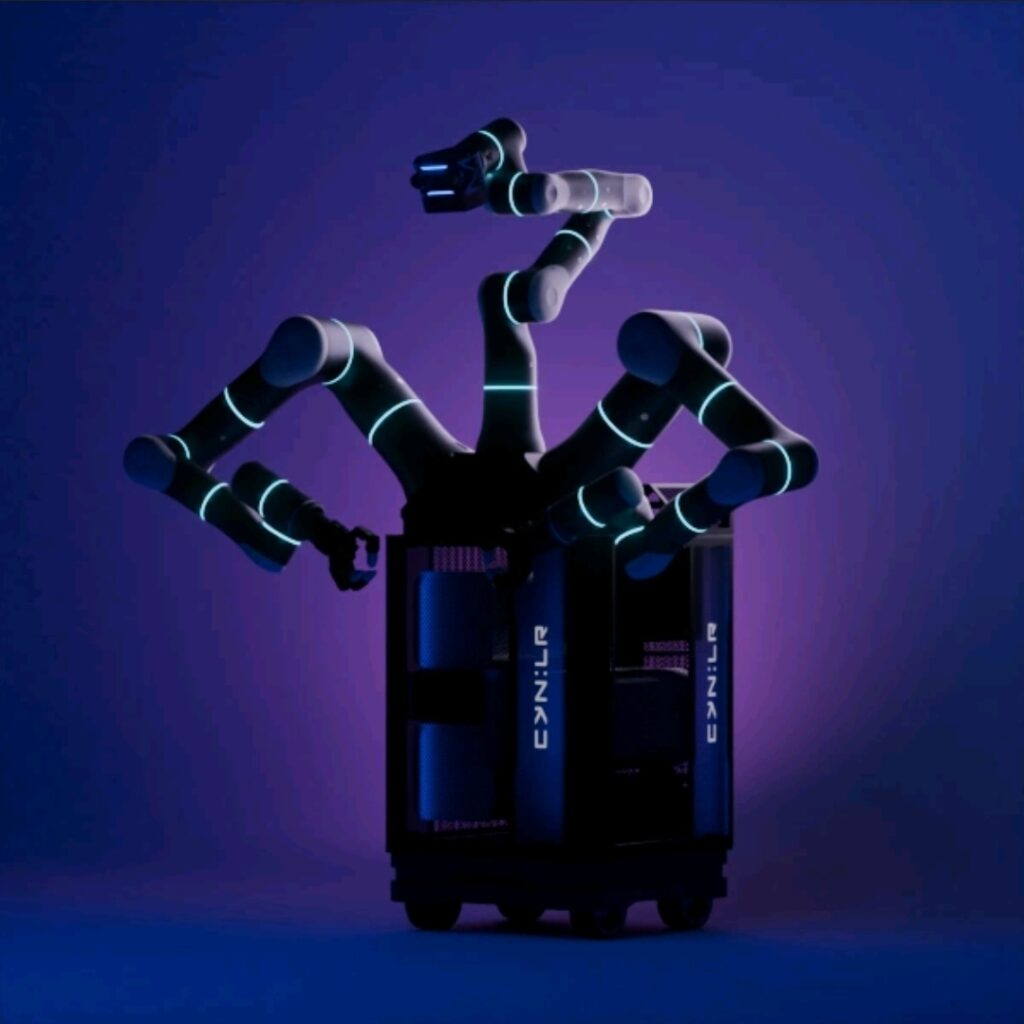
Most Physical AI fails outside labs.
CynLr’s platform is already in pilot deployments with:
- Luxury auto manufacturers
- Semiconductor automation firms
Tasks include:
- Assembly
- Maintenance
- Unstructured manipulation
This is where CX parallels matter.
Real CX complexity lives outside ideal conditions.
Switching Costs, Retraining, and the CX Debt Problem
CynLr enables:
- Instant task switching
- Hour-level recalibration
- Week-to-month new task learning
Contrast that with CX:
- Multi-quarter AI tuning
- Expensive re-platforming
- Change fatigue
Rigid intelligence creates experience debt.
Adaptable intelligence compounds value.
Common CX Pitfalls That Object Intelligence Avoids
OI succeeds by avoiding three traps CX often falls into:
- Over-reliance on historical data
- Designing for best-case journeys
- Treating failures as errors, not inputs
Every robotic grasp is a learning event.
Every CX interaction should be too.
A Practical Framework: Applying Object Intelligence Thinking to CX
1. Sense Through Action
Deploy systems that probe, not wait.
- Micro-interactions
- Progressive disclosure
- Real-time feedback loops
2. Learn at the Edge
Push intelligence closer to the interaction.
- Agent assist learning live
- Adaptive workflows
- Contextual autonomy
3. Design for Unknowns
Assume customers will surprise you.
- Flexible rules
- Intent ranges, not categories
- Recovery paths
4. Reward Adaptation, Not Compliance
Measure responsiveness, not script adherence.
Why CXQuest Covers This Story
At , we track not just CX tools—but how intelligence itself is evolving.
CynLr’s announcement matters because:
- It reframes learning as interaction
- It proves adaptation at industrial scale
- It originates from India, not Silicon Valley
This is not incremental innovation.
It is a category reset.
Recognition from the as a 2025 Technology Pioneer underscores that shift.
FAQ: Object Intelligence and CX Strategy
Is Object Intelligence relevant outside manufacturing?
Yes. It models how systems adapt under uncertainty—core to CX and EX.
How is this different from adaptive AI?
OI learns through interaction, not post-hoc retraining.
Can CX platforms adopt this approach today?
Partially. Through event-driven architectures and real-time learning loops.
Does this reduce the need for data?
It reduces dependence on massive pre-training datasets.
Is this risky for regulated industries?
Only if adaptation lacks guardrails. Design constraints still matter.
Actionable Takeaways for CX Leaders
- Audit where your CX systems break under novelty.
- Shift KPIs from accuracy to adaptability.
- Design journeys as learning systems, not flows.
- Push intelligence closer to live interactions.
- Treat failures as structured signals.
- Decouple intelligence from channels and vendors.
- Invest in sensing, not just analytics.
- Build for variation, not averages.
Final Thought
Robots are finally learning like humans.
The real question is whether our CX systems will too.
Because in the real world—nothing stays the same twice.
The post Object Intelligence: Adaptive Machines Redefine the Future of CX appeared first on CX Quest.
You May Also Like

Was ist Stellar (XLM)? Der mega Guide für Einsteiger

Solid growth outlook supports Ringgit – Standard Chartered