

What is the most promising crypto right now? A practical checklist
Quick answer: what investors usually mean by a “promising” crypto
Short plain-language definition, most recent cryptocurrency news
When readers ask which token is the most promising, they usually mean a cryptocurrency that combines real usage, accessible markets, and resilient governance, not just a recent price surge. In practical terms, that means applying market filters like market capitalization and liquidity first, then looking at on-chain indicators and developer activity, and finally reviewing legal and regulatory signals so you can limit execution risk; this approach uses market data as the first pass and treats price moves as noise unless supported by other evidence, a point echoed in industry reviews such as the Coin Metrics report Coin Metrics report and a16z State of Crypto report.
Quick public data points to check when you first review a token
Use multiple data sources for cross-checks
Think of “promising” as relative, not absolute. A token may look promising on short horizons because of developer momentum but still carry legal or liquidity risks that could wipe out gains. Use the most recent cryptocurrency news to update your watchlist, but do not let headlines replace systematic checks; cross-checked market data from multiple providers helps reduce blind spots Messari research.
For beginners, the main takeaway is simple: start with market-cap and liquidity filters to reduce tail risk, then use on-chain indicators and developer activity to judge utility, and always include a legal check before sizing a position. This layered approach is educational guidance, not investment advice, and outcomes vary with timing and risk tolerance.
Why market capitalization and liquidity should be your first filters
How market-cap and liquidity reduce practical risks
Market capitalization and trading liquidity are the clearest, most stable first-order filters when you build a shortlist of tokens. Larger market-cap tokens and those with consistent trading volume generally allow easier entry and exit, which reduces the chance you cannot sell when you need to, a point highlighted in annual market reviews like the Coin Metrics state of the network analysis Coin Metrics report.
Liquidity matters because thin order books can amplify price moves and increase slippage when you trade. That affects how you size positions and whether you can use limit orders effectively. Chainalysis and other market reports show that understanding liquidity and on-chain flows helps flag tokens with higher operational risk Chainalysis analysis. See the Chainalysis Global Adoption Index for another perspective Chainalysis Global Adoption Index.
Where to check liquidity and market-cap data
Use at least two market-data providers to cross-check market-cap and volume numbers, because methodologies vary. A second view can reveal differences in circulating supply calculation or volume aggregation, and cross-checking reduces the chance of following an outlier data point Coin Metrics report.
Qualitatively, think in tiers rather than exact cutoffs: large-cap tokens usually offer the most stable market access, mid-cap tokens can be interesting for growth but require closer liquidity checks, and small-cap tokens often carry higher exit risk. Treat these tiers as guidelines, not guarantees.
On-chain metrics: useful signals and their limits
Common on-chain indicators to review
On-chain metrics can add useful signal when they reflect genuine usage. Common indicators include active addresses, transaction volume, and realized capitalization. Active addresses suggest user interest, transaction volume shows network throughput, and realized cap can provide a view of where value is held; analysts recommend combining these indicators with market and development checks rather than relying on any single metric Messari research.
Use on-chain indicators to distinguish speculative price moves from sustained usage. For example, steady growth in active addresses over several months can indicate increasing adoption, while a one-day spike in transactions may reflect a short event or manipulation. Messari and related on-chain research note that predictive power is mixed and context matters when you interpret the numbers Messari research.
How to avoid over-interpreting on-chain data
Watch for anomalies that can distort signals, such as sudden transaction spikes, signs of wash trading, or concentrated token ownership that inflates apparent activity. A useful practical check is to compare on-chain volumes with exchange-reported volumes and to look for repeated short-term spikes without follow-through; these patterns can indicate limited genuine engagement Messari research.
Remember that on-chain data works best as part of a broader process. Treat it as a complement to market-cap and developer checks, not as a replacement. The combination delivers more reliable context than any single indicator alone.

Developer activity and protocol usage as longer-term signals
What to look for: commits, TVL, DApp growth
Developer activity and protocol usage often correlate with sustained utility for Layer-1 and Layer-2 projects. Metrics such as GitHub commits, active contributors, total value locked or TVL, and the number of active DApps can indicate whether a protocol is being improved and adopted over time, which practitioners use as an important part of evaluation CoinGecko industry analysis. Developer dashboards such as Chainspect can help track commits and active contributors.
Look for consistent development effort rather than a single burst of commits. Active contributors and public roadmaps that show ongoing work tend to signal a healthier ecosystem than a repository with little recent activity. Observing growth in TVL alongside rising DApp counts strengthens the case that a protocol is being used rather than merely promoted.
Partner with FinancePolice, explore advertising options
Use the checklist below to turn headline-driven curiosity into repeatable checks for tokens you care about.
See FinancePolice advertising options
When you review developer activity metrics, pay attention to whether usage translates into economic activity on the protocol. High TVL in DeFi primitives, paired with growing DApp user counts, suggests the protocol is capturing real network value rather than activity driven by incentives alone CoinGecko industry analysis.
FinancePolice recommends looking at developer activity metrics alongside traditional market measures. Developer commits and protocol usage are not a promise of future returns, but they provide context on whether a project is solving real problems and attracting ongoing work.
Regulatory and macro risks: why legal checks matter now
Recent regulatory trends and their implications
Regulatory developments in 2024 and 2025 increased execution risk for tokens in several jurisdictions, making legal and compliance checks an essential part of due diligence. Changes in enforcement, clearer classifications of token roles, and cross-border coordination can affect liquidity and exchange listing status, so include regulatory signals early in your review IMF staff analysis.
Monitoring central bank commentary and international bodies can flag policy shifts that matter for token design and market access. The Bank for International Settlements review highlights how evolving rulemaking and supervisory focus change the operating environment for crypto markets BIS review.
There is no single answer; use a checklist that prioritizes market-cap and liquidity, then on-chain usage, developer activity, regulatory checks, and conservative sizing to judge which tokens merit attention.
Quick legal checks include understanding token legal design, knowing the issuer jurisdiction, searching for enforcement or litigation history, and assessing delist risk on major exchanges. Treat legal risk as a factor in position sizing rather than an all-or-nothing filter.
A step-by-step checklist to evaluate a ‘promising’ crypto
Shortlist filters
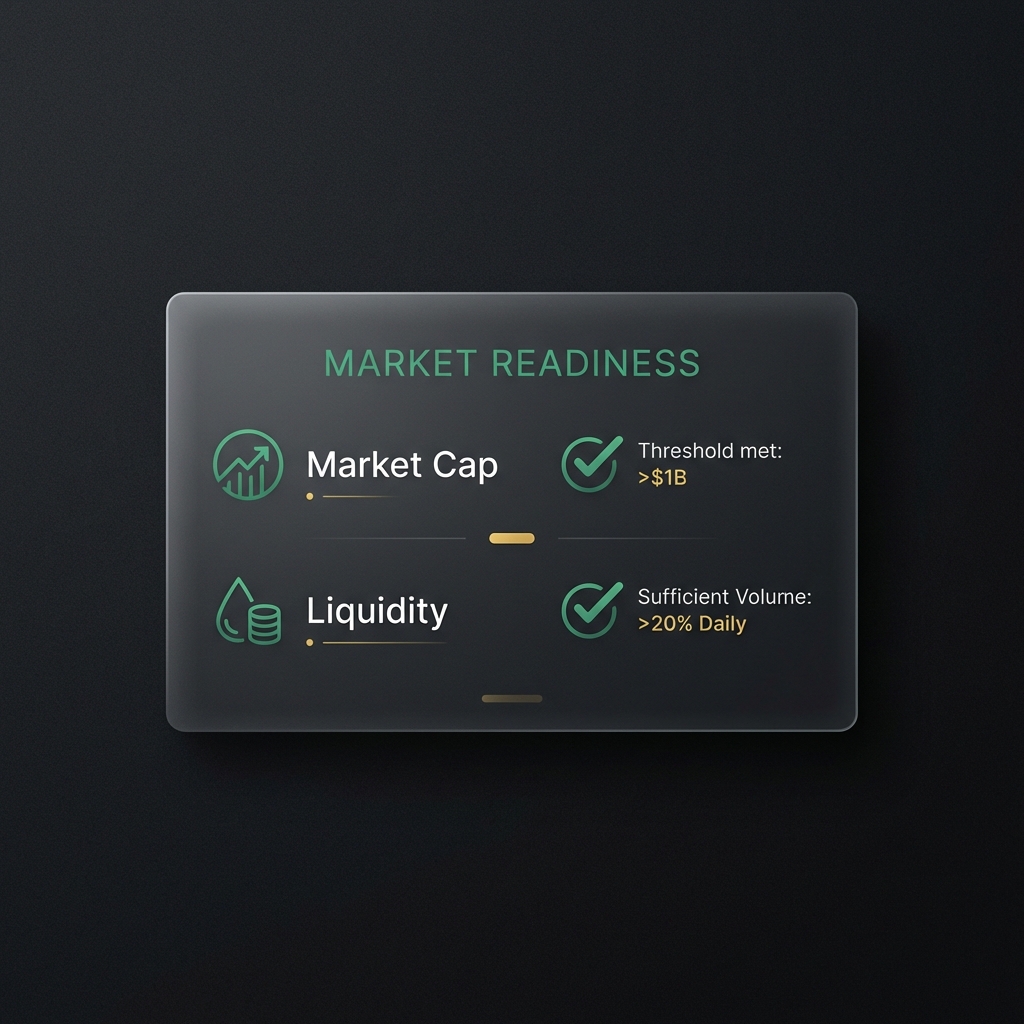
Follow an ordered checklist that you can apply consistently. Start with a market-cap and liquidity filter to screen out tokens that would be hard to trade. This reduces tail risk and makes later checks more practical, a recommendation supported by market reviews and best-practice guides Coin Metrics report.
Second, use on-chain usage signals to gauge whether activity reflects real demand. Check active addresses, transaction volume trends, and realized cap to see if growth is sustained or episodic Messari research.
Deeper checks and final decision criteria
Next, verify developer activity and protocol metrics such as GitHub commits and TVL to judge longer-term utility. Reliable developer engagement and growing protocol usage strengthen the case for keeping a token on your watchlist CoinGecko industry analysis.
Then run a regulatory and legal scan for issuer jurisdiction, recent enforcement actions, and exchange delisting risk. If legal risk appears material, either reduce the position size or remove the token from consideration IMF staff analysis. Also check exchange listings and related programs in our coverage related coverage.
Finally, set position-sizing rules and exit triggers before you buy. Use conservative assumptions where data is uncertain and cross-check multiple data providers to reduce methodological blind spots Coin Metrics report.
Red flags that should exclude a token include opaque token issuance, extreme volume concentration on a single exchange, developer inactivity, or clear regulatory advisories against the token. Treat any single red flag as sufficient to pause investment and investigate further.
Position sizing, risk management, and practical limits
How much to allocate and why
Industry guidance favors small, diversified allocations to volatile tokens and avoiding leverage. Keeping crypto exposure modest relative to your total investable assets helps limit downside while you learn and monitor the space, a conservative approach noted in institutional guidance and market commentary Chainalysis analysis.
Decide position size up front and tie increases to observable improvements in liquidity, on-chain usage, and developer engagement. Use explicit caps for any single token and a rebalancing schedule that forces you to revisit fundamentals on a set cadence.
Rules to reduce downside risk
Avoid leverage, set clear stop or exit rules linked to changes in fundamentals, and rebalance periodically. If liquidity dries up, consider using limit orders or reducing position size proactively. These practical controls help translate analysis into disciplined execution IMF staff analysis.
Keep an ongoing watchlist and calendar reminders to re-check liquidity, TVL, active addresses, and developer commits. Treat monitoring as part of the cost of holding speculative assets rather than a one-time task.
Practical walkthrough: applying the checklist to three scenarios
Scenario A: large-cap Layer-1 with steady usage
Imagine a large-cap Layer-1 token with steady active addresses, stable trading volume, and ongoing protocol commits. The market-cap and liquidity filters keep it on the shortlist, on-chain indicators show steady usage, and developer activity is consistent. Under the checklist, this token would usually stay on a watchlist and merit a conservative allocation if regulatory checks are clear Coin Metrics report.
Scenario B: mid-cap Layer-2 gaining developer interest
Consider a mid-cap Layer-2 that shows rising GitHub commits and increasing TVL but still limited liquidity. Developer activity suggests building product-market fit, but position sizing should be smaller because exit risk is higher until liquidity improves. Cross-check TVL and DApp growth on protocol dashboards and CoinGecko research pages as part of the deeper checks CoinGecko industry analysis.
Scenario C: small-cap token with on-chain spikes but weak dev activity
A small-cap token with frequent transaction spikes but low developer commits and little TVL typically fails multiple checklist steps. On-chain spikes can indicate short-term events or manipulation. In such a case, the checklist recommends excluding the token or using a tiny, watch-only allocation until evidence of sustained development or usage appears Messari research.
Summary, next steps, and what to watch in 2026
One-paragraph recap
The practical framework is simple: use market-cap and liquidity as first filters, add on-chain indicators and developer activity to assess utility, run a regulatory check, and then size positions conservatively with explicit exit rules. Cross-check multiple data providers and treat headlines, including the most recent cryptocurrency news, as prompts to run the checklist rather than as standalone signals Coin Metrics report.
Checklist for ongoing monitoring
Keep a short monitoring list: liquidity and trading volume, TVL and DApp counts, active addresses, developer commits, and relevant regulatory announcements. Update your watchlist at regular intervals and re-run the checklist when a token shows material changes in these signals CoinGecko industry analysis. See our crypto market outlook crypto market outlook for 2026.
Use conservative position sizing and avoid leverage while you learn to interpret on-chain indicators and developer metrics. This process helps you turn curiosity about which token is the most promising into repeatable checks that limit obvious execution risks.
Beginners should treat on-chain metrics as contextual signals that complement market-cap and developer checks. Start with a few indicators like active addresses and transaction volume, compare trends over time, and avoid interpreting single-day spikes as lasting adoption.
Not necessarily. Regulatory changes raise execution risk and should factor into position sizing and token selection. Use legal checks to identify tokens with higher exposure to enforcement or delisting risk and reduce allocation if uncertainty is high.
Developer activity signals ongoing work and potential utility, but it is not a guaranteed predictor of price. Use it alongside liquidity and on-chain usage to form a balanced view.
References
- https://coinmetrics.io/state-of-the-network-2024/
- https://a16zcrypto.com/posts/article/state-of-crypto-report-2025/
- https://messari.io/article/on-chain-indicators-and-market-signals-2025
- https://blog.chainalysis.com/reports/2024-crypto-crime-report/
- https://www.chainalysis.com/blog/2025-global-crypto-adoption-index/
- https://www.coingecko.com/research/reports/defi-protocol-usage-2025
- https://www.imf.org/en/Publications/staff-discussion-notes
- https://www.bis.org/publ/bisbull24.htm
- https://financepolice.com/advertise/
- https://chainspect.app/dashboard/developer-activity
- https://financepolice.com/category/crypto/
- https://financepolice.com/crypto-exchange-affiliate-programs-to-consider-heres-what-you-need-to-know/
- https://financepolice.com/bitcoin-crypto-markets-2026-outlook-stronger-fundamentals-meet-persistent-bearish-sentiment/
You May Also Like

Crypto News: Donald Trump-Aligned Fed Governor To Speed Up Fed Rate Cuts?

US regulators move toward unified crypto oversight as sec project crypto gains CFTC support
