👨🏿🚀TechCabal Daily – Sun King makes it rain
Good morning. 
Happy new week! If your productivity plan for the rest of the month is already hanging on by caffeine and good intentions, you’re among friends. But hey, there’s no gloom here.
We’re bringing something exciting to you next year. From 2026, we’re opening up some of our favourite brackets, like Cool Stuff and Hot Take, to our most active readers. You’ll get to tell us what’s genuinely cool about African tech today, and what still frustrates you to no end. Think less polite applause, more honest clapping (and maybe some side-eye).
Till then, let’s end the year on a high.
—Emmanuel
- Sun King raises $40 million
- PayPal teases launch of PayPal World
- Solly Malatsi pushes for EEIP policy
- Kenyans saved 448,000 hours ordering food online
- World Wide Web 3
- Job Openings
Funding
Sun King raises $40 million in equity funding
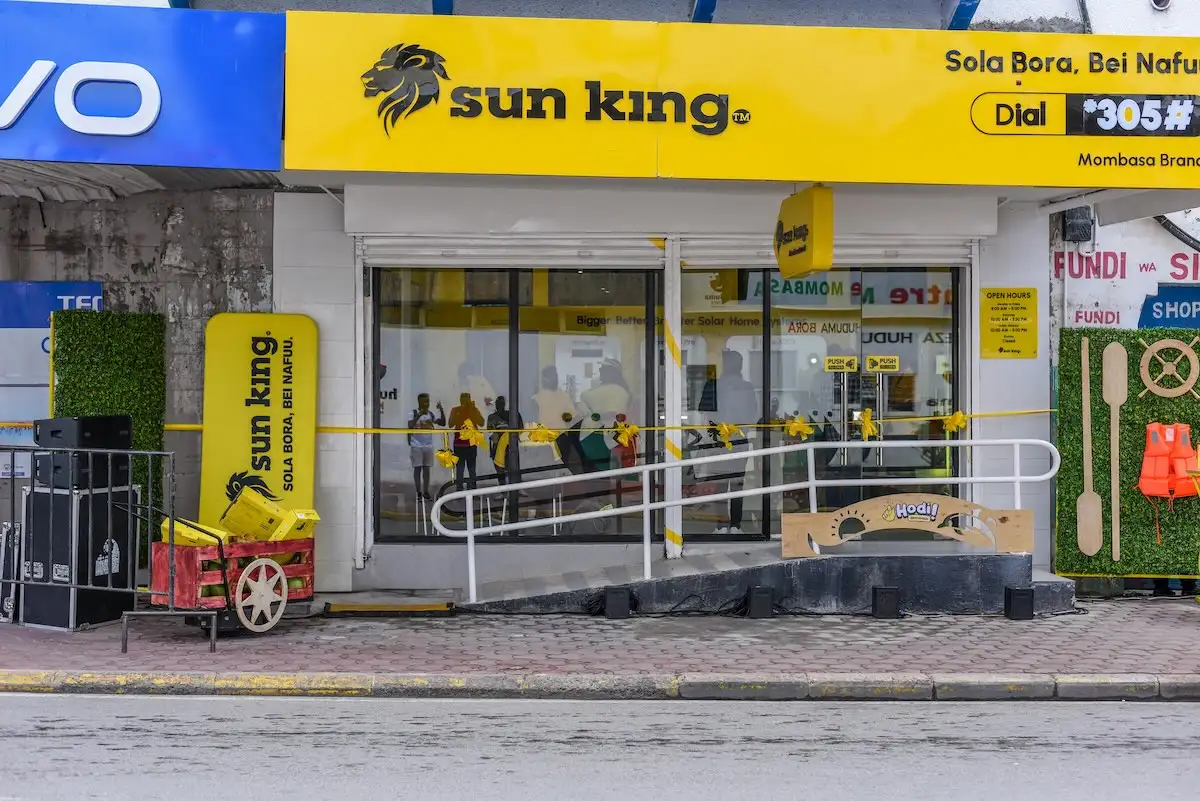 Sun King shop in Mombasa, Kenya/Image source: Sun King
Solar-tech startups have been scoring some big wins recently. Remember d.light’s massive $176 million raise in 2024?
Sun King, an off-grid solar company with operations in Sub-Saharan Africa, has raised $40 million in equity financing from Lightrock, a UK-headquartered sustainable investment firm that has backed M-KOPA and Max. Yes, Sun King raised equity financing, quite surprising for an operations-heavy company.
Usually, debt makes sense for startups in operations-heavy sectors to finance their inventory, distribution, and customer loans, making fresh equity a rare vote of confidence rather than a balance-sheet necessity.
Yet, this raise comes five months after Sun King closed a $156 million securitisation (debt) deal in Kenya, one of the largest of its kind in the region. That debt facility monetised future pay-as-you-go (PAYG) customer payments, freeing up capital to keep deploying solar kits at scale. The new equity round, however, plays a different role: it gives Sun King patient capital to expand operations without the pressure of fixed repayments.
The timing matters. Sun King has deepened its footprint by opening a manufacturing plant in Kenya, bringing part of its supply chain closer to its core markets. Local manufacturing can cut costs, reduce import delays, and improve resilience—all critical advantages in a sector where margins are thin and scale is everything.
The debt-plus-equity strategy signals a company graduating from “a foreign player coming to Africa” and embedding itself as a major infrastructure player. Sun King is building an energy utility for off-grid populations. And in a market where smaller rivals are struggling to stay afloat, this combination of scale, capital access, and local production could become a hard moat to cross.
Powering African Businesses Through the Busiest Season of the Year.
Your peak season needs fast and reliable payments. Collect, pay, and settle across Africa in the right currencies without delays. Create your Fincra account in 3 minutes.
Fintech
PayPal to launch global digital wallet in Africa
 Image source: Electronic Payments International
PayPal, the US payments giant, is in talks with African fintechs ahead of a 2026 launch of PayPal World, a cross-border digital wallet layer designed to sit on top of existing local wallets. PayPal would integrate with the wallets that Africans already use, rather than requiring them to open a PayPal account.
Here’s what happened. After announcing PayPal World in July with partners in India, China, and Brazil, the company has now confirmed that Africa is next, with plans to work through local bank apps, fintech wallets, or mobile money wallets to unlock cross-border payments and global commerce for Africans.
How it would work: A user pays with their local wallet, taps a PayPal button, and PayPal handles the interoperability in the background. Merchants already on PayPal don’t need new point of sale (PoS) machines or fresh integrations; they can accept payments from African wallets instantly.
But PayPal is already in Africa: The company already partners with some fintechs in Africa, including M-PESA and Flutterwave, to help Africans receive money from abroad or enable merchants to accept PayPal-funded payments. But PayPal World would provide full interoperability, including switching between wallets, paying foreign vendors, and letting local wallets function globally.
What this would mean: PayPal’s new launch unlocks African spend without extra work for merchants, and for users, they get fewer declined global payment transactions. Operators that are integrated with PayPal benefit from expanded use cases without a disruption in operations.
Enjoy smooth payments while you’re home this Detty December

Coming home for Detty December? Enjoy smooth payments every day with your Paga US account. Send money to any bank instantly. Don’t miss out, get started now.
Policy
ICASA told to align on a major regulatory roadblock, and Starlink is watching
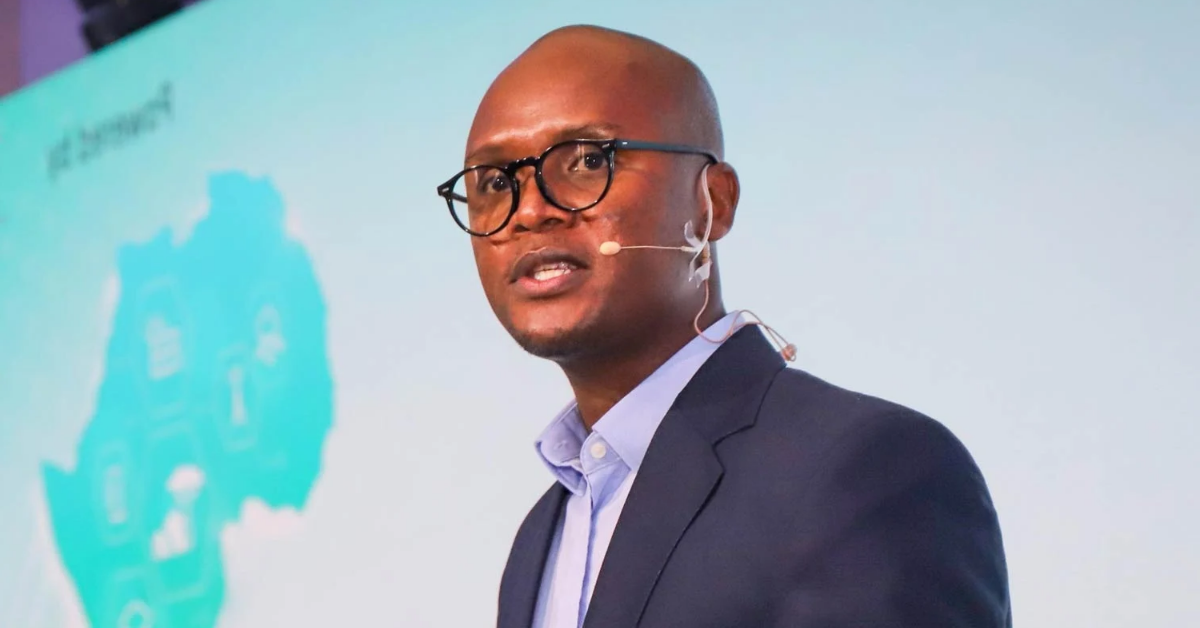 South Africa’s Minister of Communications and Digital Technologies, Solly Malatsi/Image Source: Africa.com
Solly Malatsi, South Africa’s Communications Minister, has stepped back into the country’s polarising ICT debates on whether multinational tech companies must give up local equity to operate, even when their global structures don’t allow it. In a final policy directive issued on Friday, Malatsi instructed Independent Communications Authority of South Africa (ICASA) to urgently align its licencing rules with the ICT Black Economic Empowerment (BEE) sector code, including recognising equity equivalent investment programmes (EEIPs).
Years in the making: Icasa’s ownership regulations have long ignored EEIPs, despite them being fully recognised under South Africa’s B-BBEE Act and administered by the Department of Trade, Industry and Competition (DTIC). That disconnect became impossible to ignore in 2024 and 2025, when Starlink’s plans to enter South Africa stalled over Icasa’s insistence on a flat 30% black ownership requirement, a condition Starlink says it does not meet in any of its global markets.
Starlink will be happy about this, but it’s not just Starlink. Malatsi’s push for equity equivalent investment programmes is rooted in a broader policy view that an open ICT economy attracts global players, deepens competition, and ultimately expands consumer choice. EEIPs are meant to channel that participation into measurable local economic development, like skills, enterprise support, and investment.
Yet, the timing is hard to ignore. The renewed push comes after months of tension surrounding Starlink’s stalled entry. Critics have pushed back, warning of favouritism, but Malatsi appears intent on moving forward regardless. If this push survives the regulatory and political tests ahead, Starlink, alongside other foreign ICT players, will likely welcome the outcome.
Stay up to date with Paystack news!
Subscribe to Paystack for a curated dose of product updates, insights, event invites and more. Subscribe here →.
Food Delivery
Kenyans saved 448,000 hours ordering food online, says Uber Eats
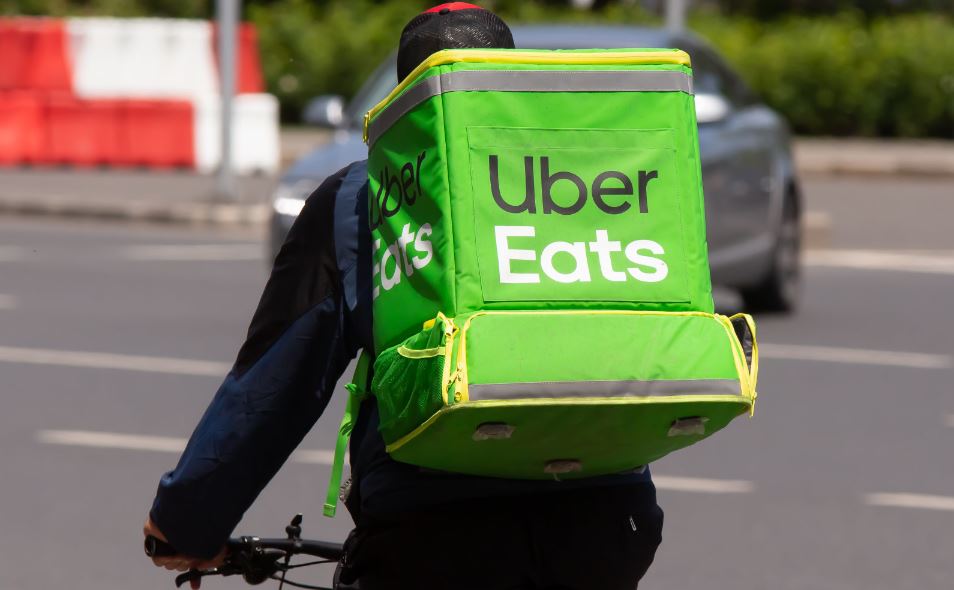 Image Source: Uber Eats
By some 21st-century sorcery, humans can tap on OLED screens, and in minutes, food arrives at their doorsteps. And it seems we’re taking full advantage of how this magic makes our lives easier.
In Uber Eats’ latest Cravings Report (fitting name), the food delivery service noted that Kenyans saved more than 448,000 hours ordering food online instead of cooking. One customer placed 718 orders, nearly twice a day, while another customer spent KES 1.8 million ($14,000) on high-value orders. The highest single-order spend also crossed KES 291,000 ($2,260) with a customer splurging on drinks and fast food.
It seems consumers are becoming more reliant on food and grocery delivery services. This year, we also saw other food-tech startups, like Nigeria’s Chowdeck, reach new milestones. After expanding to Ghana, Chowdeck crossed 2 million registered users.
Globally, food delivery has matured into a scale game. Players like DoorDash, Meituan, and Uber Eats dominate by logistics density, data-driven demand prediction, and deep integrations with merchants. African startups are earlier in that curve, but the signals look familiar: rising order frequency, higher basket sizes, and regional expansion as unit economics improve.
If Kenya can generate this level of engagement for Uber Eats, Nigeria—one of Africa’s largest consumer markets—becomes harder to ignore. Years after mid-2010s false starts, better payments, improved logistics infrastructure, and demand, could finally make a serious Uber Eats Nigeria launch less speculative and more inevitable.
With a much larger ride-hailing business since the last reported figures of 2017 (bar the occasional driver protests), you’d not be remiss to say that the US ride-hailing giant has the distribution network to take on Nigerian food-delivery incumbents like Chowdeck. But first, Uber Eats has to decide whether it wants to seriously dethrone Glovo (the food delivery market leader in Kenya) or spread wide(r) to other proven markets.
CRYPTO TRACKER
The World Wide Web3
Source:
|
Coin Name |
Current Value |
Day |
Month |
|---|---|---|---|
| Bitcoin | $89,638 |
– 0.5% |
– 6.58% |
| Ether | $3,122 |
+ 0.44% |
– 1.59% |
| SentismAI | $0.2933 |
+ 45.19% |
+ 860.97% |
| Solana | $131.89 |
– 0.34% |
– 7.56% |
* Data as of 06.20 AM WAT, December 15, 2025.
JOB OPENINGS
- VertoFX —Customer Experience Analyst, Reconciliation Associate — Hybrid (Nairobi, Kenya)
- VertoFX —Sales Director, Risk & Compliance Officer — Hybrid (Cape Town, South Africa)
- Deel —Senior Risk Analyst — Remote (Nigeria)
- Migo —Growth & Product Marketing Analyst — Lagos, Nigeria
- Piggyvest —Product Marketing & Communications Lead — Lagos, Nigeria
- Busha — Business Development Manager, Reconciliation and Settlement Analyst (Fiat & Crypto) — Hybrid (Lagos, Nigeria)
- Trust Wallet — Android Engineer, Frontend Engineer, Talent Acquisition Specialist — Remote
- Paystack —Senior Full Stack Engineer — Cape Town, South Africa
- Paystack — Business Development Partner — Lagos, Nigeria
- Flutterwave — Treasurer, Africa — Lagos, Nigeria
- Big Cabal Media —Senior Financial Analyst, Junior Sales Analyst — Hybrid (Lagos, Nigeria)
There are more jobs on TechCabal’s job board. If you have job opportunities to share, please submit them at bit.ly/tcxjobs.
- Digital Nomads: Adebayo Aderohunmu on what African talent needs to be hired globally
- Day 1-1000: ‘Nigerian hospitals wouldn’t buy our software. So we started paying for their patients’ care’
- Inside WrappedCBDC’s plan to turn the naira into a high-speed digital rail
- OpenAI launches GPT-5.2 after ‘code red’ push to counter Google
- The end of OpenAI, and other 2026 predictions
Written by: Emmanuel Nwosu and Opeyemi Kareem
Edited by: Emmanuel Nwosu & Ganiu Oloruntade
Want more of TechCabal?
Sign up for our insightful newsletters on the business and economy of tech in Africa.
- The Next Wave: futuristic analysis of the business of tech in Africa.
- Francophone Weekly by TechCabal: insider insights and analysis of Francophone’s tech ecosystem
P:S If you’re often missing TC Daily in your inbox, check your Promotions folder and move any edition of TC Daily from “Promotions” to your “Main” or “Primary” folder and TC Daily will always come to you.

You May Also Like

How this Baguio artist wove a quiet symbol of PH–Japan friendship
XRP koers kan $25-$30 bereiken door crypto ETF tsunami – model voorspelt explosie