A Texas sheriff’s bold move to seize funds from a Bitcoin ATM has sparked controversy over law enforcement practices and the future of privacy in crypto transactions. On June 16, Jasper County Sheriff Chuck Havard authorized a search warrant that led to the forced entry and seizure of nearly $32,000 from a Bitcoin ATM located in neighboring Hardin County. The action followed a report that a local family had been tricked into depositing $25,000 into the machine after being contacted by someone posing as a government official. Crypto Scam Funds Recovered From ATM, but Critics Question Sheriff’s Methods According to local reports on Tuesday, the scammers had told the family they owed legal fines and needed to pay immediately or face legal consequences. The family complied, transferring the money through the kiosk. Once alerted, deputies from the Jasper County Sheriff’s Office began an investigation and traced the funds to the Bitcoin ATM. Source: KDFM Chief Deputy Scott Pulliam, accompanied by Investigator David Lampman, traveled to the machine’s location. After securing a state search warrant, they accessed the machine and recovered $31,900. The sheriff’s office confirmed that the funds have been returned to Jasper County pending a seizure hearing. Although the money was recovered, the scammers remain unidentified. “We’re still trying to locate what I call the online scammers,” Havard said. “When thieves, lowlifes, and scammers attempt to take advantage of the citizens of Jasper County, we will work swiftly and utilize every resource at our disposal to protect our citizens and their property at all costs.” The sheriff praised his team’s rapid response. “I want to thank Chief Pulliam and our staff along with the Hardin County Sheriff’s Office for their aggressive approach to this investigation,” he said. But while some residents welcomed the recovery of funds, the operation has drawn sharp criticism online. Some questioned whether the authorities overstepped legal boundaries by accessing a privately owned crypto ATM. “Sounds like maybe government employees destroyed an innocent third party’s property and stole his money,” one Reddit user commented . Another user wrote , “Unless it was the kiosk owner who was scamming, this makes no sense. It’s like confiscating all the money from a CVS register after someone bought a bunch of gift cards to send to scammers.” The case has stirred broader questions about how far law enforcement can go in responding to crypto-related crimes. As sheriff departments across the U.S. face more digital financial scams, the balance between swift action and due process may become a growing point of tension. For now, the Jasper County Sheriff’s Office says the focus remains on identifying those behind the scam. But with an ATM forcibly opened and thousands seized, the case has set off new debates around Bitcoin ATM security and the limits of law enforcement authority in crypto crime. More U.S. Cities Crack Down on Bitcoin ATMs Amid Rising Fraud Concerns Following the dramatic seizure of $32,000 from a Bitcoin ATM in Texas, the pressure on crypto kiosks is intensifying nationwide. Earlier this month, the city of Spokane, Washington, voted unanimously to ban all crypto ATMs within city limits. Operators have been ordered to remove machines, many of which are located in gas stations and convenience stores. 🇺🇸 Spokane City Council voted unanimously on an ordinance that eliminates and prohibits crypto ATMs located within the US city in Washington. #Spokane #CryptoATM #BitcoinATMScam https://t.co/u1hiKFmxcj — Cryptonews.com (@cryptonews) June 18, 2025 Council Member Paul Dillon said the ordinance aims to “protect vulnerable residents from scams involving virtual currency kiosks.” Data from Coin ATM Radar shows nearly 45 Bitcoin ATMs were operating in Spokane prior to the ban, run by companies like Coinflip and Bitcoin Deposit. The decision follows similar action in Stillwater, Minnesota, while other U.S. cities are reviewing crypto kiosk regulations. Globally, regulators are also tightening rules. In Australia, AUSTRAC recently imposed new conditions on ATM operators , including $5,000 limits and enhanced ID checks, after identifying rising fraud risks. Back in the U.S., the issue has gained attention at the federal level. In March, o ver 1,200 crypto ATMs went offline , coinciding with Senator Dick Durbin’s proposed Crypto ATM Fraud Prevention Act , which would cap transactions and require better fraud tracking. Despite hosting nearly 80% of the world’s crypto ATMs, America’s booming Bitcoin kiosk scene is now facing a wave of scrutiny and regulation.A Texas sheriff’s bold move to seize funds from a Bitcoin ATM has sparked controversy over law enforcement practices and the future of privacy in crypto transactions. On June 16, Jasper County Sheriff Chuck Havard authorized a search warrant that led to the forced entry and seizure of nearly $32,000 from a Bitcoin ATM located in neighboring Hardin County. The action followed a report that a local family had been tricked into depositing $25,000 into the machine after being contacted by someone posing as a government official. Crypto Scam Funds Recovered From ATM, but Critics Question Sheriff’s Methods According to local reports on Tuesday, the scammers had told the family they owed legal fines and needed to pay immediately or face legal consequences. The family complied, transferring the money through the kiosk. Once alerted, deputies from the Jasper County Sheriff’s Office began an investigation and traced the funds to the Bitcoin ATM. Source: KDFM Chief Deputy Scott Pulliam, accompanied by Investigator David Lampman, traveled to the machine’s location. After securing a state search warrant, they accessed the machine and recovered $31,900. The sheriff’s office confirmed that the funds have been returned to Jasper County pending a seizure hearing. Although the money was recovered, the scammers remain unidentified. “We’re still trying to locate what I call the online scammers,” Havard said. “When thieves, lowlifes, and scammers attempt to take advantage of the citizens of Jasper County, we will work swiftly and utilize every resource at our disposal to protect our citizens and their property at all costs.” The sheriff praised his team’s rapid response. “I want to thank Chief Pulliam and our staff along with the Hardin County Sheriff’s Office for their aggressive approach to this investigation,” he said. But while some residents welcomed the recovery of funds, the operation has drawn sharp criticism online. Some questioned whether the authorities overstepped legal boundaries by accessing a privately owned crypto ATM. “Sounds like maybe government employees destroyed an innocent third party’s property and stole his money,” one Reddit user commented . Another user wrote , “Unless it was the kiosk owner who was scamming, this makes no sense. It’s like confiscating all the money from a CVS register after someone bought a bunch of gift cards to send to scammers.” The case has stirred broader questions about how far law enforcement can go in responding to crypto-related crimes. As sheriff departments across the U.S. face more digital financial scams, the balance between swift action and due process may become a growing point of tension. For now, the Jasper County Sheriff’s Office says the focus remains on identifying those behind the scam. But with an ATM forcibly opened and thousands seized, the case has set off new debates around Bitcoin ATM security and the limits of law enforcement authority in crypto crime. More U.S. Cities Crack Down on Bitcoin ATMs Amid Rising Fraud Concerns Following the dramatic seizure of $32,000 from a Bitcoin ATM in Texas, the pressure on crypto kiosks is intensifying nationwide. Earlier this month, the city of Spokane, Washington, voted unanimously to ban all crypto ATMs within city limits. Operators have been ordered to remove machines, many of which are located in gas stations and convenience stores. 🇺🇸 Spokane City Council voted unanimously on an ordinance that eliminates and prohibits crypto ATMs located within the US city in Washington. #Spokane #CryptoATM #BitcoinATMScam https://t.co/u1hiKFmxcj — Cryptonews.com (@cryptonews) June 18, 2025 Council Member Paul Dillon said the ordinance aims to “protect vulnerable residents from scams involving virtual currency kiosks.” Data from Coin ATM Radar shows nearly 45 Bitcoin ATMs were operating in Spokane prior to the ban, run by companies like Coinflip and Bitcoin Deposit. The decision follows similar action in Stillwater, Minnesota, while other U.S. cities are reviewing crypto kiosk regulations. Globally, regulators are also tightening rules. In Australia, AUSTRAC recently imposed new conditions on ATM operators , including $5,000 limits and enhanced ID checks, after identifying rising fraud risks. Back in the U.S., the issue has gained attention at the federal level. In March, o ver 1,200 crypto ATMs went offline , coinciding with Senator Dick Durbin’s proposed Crypto ATM Fraud Prevention Act , which would cap transactions and require better fraud tracking. Despite hosting nearly 80% of the world’s crypto ATMs, America’s booming Bitcoin kiosk scene is now facing a wave of scrutiny and regulation.

Texas Sheriff Breaks Open Crypto ATM, Seizes $32K—Is This the End for Bitcoin ATM Privacy?

2025/06/20 22:37
4 min read
For feedback or concerns regarding this content, please contact us at crypto.news@mexc.com

A Texas sheriff’s bold move to seize funds from a Bitcoin ATM has sparked controversy over law enforcement practices and the future of privacy in crypto transactions.

On June 16, Jasper County Sheriff Chuck Havard authorized a search warrant that led to the forced entry and seizure of nearly $32,000 from a Bitcoin ATM located in neighboring Hardin County.

The action followed a report that a local family had been tricked into depositing $25,000 into the machine after being contacted by someone posing as a government official.

Crypto Scam Funds Recovered From ATM, but Critics Question Sheriff’s Methods

According to local reports on Tuesday, the scammers had told the family they owed legal fines and needed to pay immediately or face legal consequences. The family complied, transferring the money through the kiosk.

Once alerted, deputies from the Jasper County Sheriff’s Office began an investigation and traced the funds to the Bitcoin ATM.
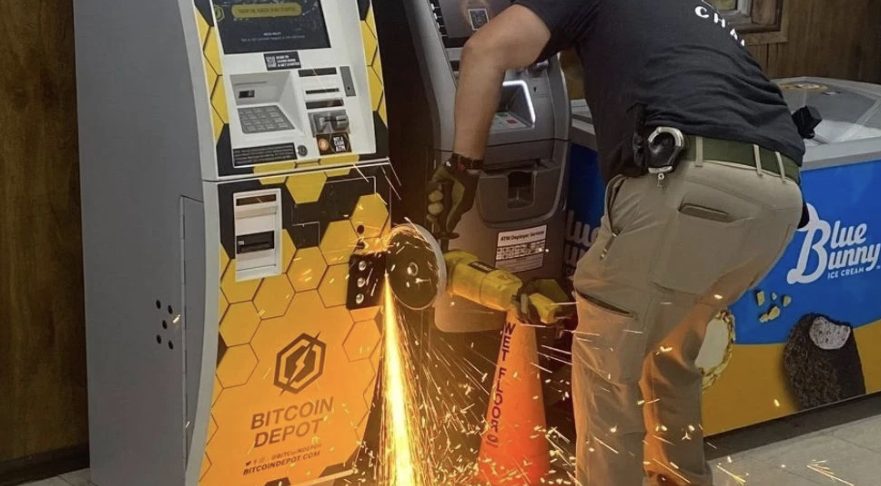
Source: KDFM

Chief Deputy Scott Pulliam, accompanied by Investigator David Lampman, traveled to the machine’s location. After securing a state search warrant, they accessed the machine and recovered $31,900.

The sheriff’s office confirmed that the funds have been returned to Jasper County pending a seizure hearing.

Although the money was recovered, the scammers remain unidentified. “We’re still trying to locate what I call the online scammers,” Havard said.

“When thieves, lowlifes, and scammers attempt to take advantage of the citizens of Jasper County, we will work swiftly and utilize every resource at our disposal to protect our citizens and their property at all costs.”

The sheriff praised his team’s rapid response. “I want to thank Chief Pulliam and our staff along with the Hardin County Sheriff’s Office for their aggressive approach to this investigation,” he said.

But while some residents welcomed the recovery of funds, the operation has drawn sharp criticism online.

Some questioned whether the authorities overstepped legal boundaries by accessing a privately owned crypto ATM.

“Sounds like maybe government employees destroyed an innocent third party’s property and stole his money,” one Reddit user commented.

Another user wrote, “Unless it was the kiosk owner who was scamming, this makes no sense. It’s like confiscating all the money from a CVS register after someone bought a bunch of gift cards to send to scammers.”

The case has stirred broader questions about how far law enforcement can go in responding to crypto-related crimes. As sheriff departments across the U.S. face more digital financial scams, the balance between swift action and due process may become a growing point of tension.

For now, the Jasper County Sheriff’s Office says the focus remains on identifying those behind the scam.

But with an ATM forcibly opened and thousands seized, the case has set off new debates around Bitcoin ATM security and the limits of law enforcement authority in crypto crime.

More U.S. Cities Crack Down on Bitcoin ATMs Amid Rising Fraud Concerns

Following the dramatic seizure of $32,000 from a Bitcoin ATM in Texas, the pressure on crypto kiosks is intensifying nationwide.

Earlier this month, the city of Spokane, Washington, voted unanimously to ban all crypto ATMs within city limits. Operators have been ordered to remove machines, many of which are located in gas stations and convenience stores.

Council Member Paul Dillon said the ordinance aims to “protect vulnerable residents from scams involving virtual currency kiosks.”

Data from Coin ATM Radar shows nearly 45 Bitcoin ATMs were operating in Spokane prior to the ban, run by companies like Coinflip and Bitcoin Deposit. The decision follows similar action in Stillwater, Minnesota, while other U.S. cities are reviewing crypto kiosk regulations.

Globally, regulators are also tightening rules. In Australia, AUSTRAC recently imposed new conditions on ATM operators, including $5,000 limits and enhanced ID checks, after identifying rising fraud risks.

Back in the U.S., the issue has gained attention at the federal level. In March, over 1,200 crypto ATMs went offline, coinciding with Senator Dick Durbin’s proposed Crypto ATM Fraud Prevention Act, which would cap transactions and require better fraud tracking.

Despite hosting nearly 80% of the world’s crypto ATMs, America’s booming Bitcoin kiosk scene is now facing a wave of scrutiny and regulation.

Market Opportunity
Threshold Logo
Threshold Price(T)
$0.006187
$0.006187$0.006187
-0.84%
USD
Threshold (T) Live Price Chart
Disclaimer: The articles reposted on this site are sourced from public platforms and are provided for informational purposes only. They do not necessarily reflect the views of MEXC. All rights remain with the original authors. If you believe any content infringes on third-party rights, please contact crypto.news@mexc.com for removal. MEXC makes no guarantees regarding the accuracy, completeness, or timeliness of the content and is not responsible for any actions taken based on the information provided. The content does not constitute financial, legal, or other professional advice, nor should it be considered a recommendation or endorsement by MEXC.

You May Also Like

Firelight Hits 50 Million XRP Milestone as DeFi Protection Demand Surges – Crypto News Bitcoin News

Firelight Hits 50 Million XRP Milestone as DeFi Protection Demand Surges – Crypto News Bitcoin News

The post Firelight Hits 50 Million XRP Milestone as DeFi Protection Demand Surges – Crypto News Bitcoin News appeared on BitcoinEthereumNews.com. Rapid Adoption
Share
BitcoinEthereumNews2026/03/27 11:46
Investors flock to IOTA miners in pursuit of stable returns

Investors flock to IOTA miners in pursuit of stable returns

The post Investors flock to IOTA miners in pursuit of stable returns appeared on BitcoinEthereumNews.com. After securing a preliminary victory in its protracted legal battle with the U.S. Securities and Exchange Commission (SEC), XRP (Ripple) has once again become a market focus. Within hours of the announcement, on-chain data revealed a discreet transfer of 15,000,000 XRP. While this amount is not significant compared to whale-level holdings, its timing and context have nonetheless drawn market attention: some analysts believe it may be related to liquidity reallocation, adjustments to cross-border payment channels, or early institutional investment. At the same time, market attention is gradually shifting from short-term price fluctuations to more sustainable profit models. Following the XRP legal victory, a large number of small and medium-sized investors have chosen the IOTA Miner cloud mining platform as an alternative to hedge against volatility and achieve stable returns. The platform’s core advantages include: Stable returns: Users receive a fixed daily mining reward regardless of market fluctuations; Low barriers to entry: No expensive hardware required; easy mobile participation; Risk hedging: Withdrawals are possible during price declines, effectively preventing significant losses; Environmentally friendly: The mining pool’s electricity is entirely sourced from renewable energy, making it efficient and sustainable. What is IOTAMiner? Founded in 2018 and headquartered in the UK, IOTAMiner is a reputable global cloud mining platform with seven years of experience, serving over 9 million users in over 100 countries. As the world’s first cloud mining platform integrating artificial intelligence with renewable energy, IOTAMiner maintains a strategic reserve of over 8,000 Bitcoins, operates in full compliance, and is committed to providing users with a 100% return on investment guarantee. IOTA Miner Registration Steps 1. Quick Registration Sign up in just a minute and receive a $15 newbie bonus to start earning immediately. 2. Link Your Wallet and Select Your Currency Link your wallet and select a major cryptocurrency (such as…

Share
BitcoinEthereumNews2025/09/18 02:02
How to earn from cloud mining: IeByte’s upgraded auto-cloud mining platform unlocks genuine passive earnings

How to earn from cloud mining: IeByte’s upgraded auto-cloud mining platform unlocks genuine passive earnings

The post How to earn from cloud mining: IeByte’s upgraded auto-cloud mining platform unlocks genuine passive earnings appeared on BitcoinEthereumNews.com. contributor Posted: September 17, 2025 As digital assets continue to reshape global finance, cloud mining has become one of the most effective ways for investors to generate stable passive income. Addressing the growing demand for simplicity, security, and profitability, IeByte has officially upgraded its fully automated cloud mining platform, empowering both beginners and experienced investors to earn Bitcoin, Dogecoin, and other mainstream cryptocurrencies without the need for hardware or technical expertise. Why cloud mining in 2025? Traditional crypto mining requires expensive hardware, high electricity costs, and constant maintenance. In 2025, with blockchain networks becoming more competitive, these barriers have grown even higher. Cloud mining solves this by allowing users to lease professional mining power remotely, eliminating the upfront costs and complexity. IeByte stands at the forefront of this transformation, offering investors a transparent and seamless path to daily earnings. IeByte’s upgraded auto-cloud mining platform With its latest upgrade, IeByte introduces: Full Automation: Mining contracts can be activated in just one click, with all processes handled by IeByte’s servers. Enhanced Security: Bank-grade encryption, cold wallets, and real-time monitoring protect every transaction. Scalable Options: From starter packages to high-level investment contracts, investors can choose the plan that matches their goals. Global Reach: Already trusted by users in over 100 countries. Mining contracts for 2025 IeByte offers a wide range of contracts tailored for every investor level. From entry-level plans with daily returns to premium high-yield packages, the platform ensures maximum accessibility. Contract Type Duration Price Daily Reward Total Earnings (Principal + Profit) Starter Contract 1 Day $200 $6 $200 + $6 + $10 bonus Bronze Basic Contract 2 Days $500 $13.5 $500 + $27 Bronze Basic Contract 3 Days $1,200 $36 $1,200 + $108 Silver Advanced Contract 1 Day $5,000 $175 $5,000 + $175 Silver Advanced Contract 2 Days $8,000 $320 $8,000 + $640 Silver…
Share
BitcoinEthereumNews2025/09/17 23:48