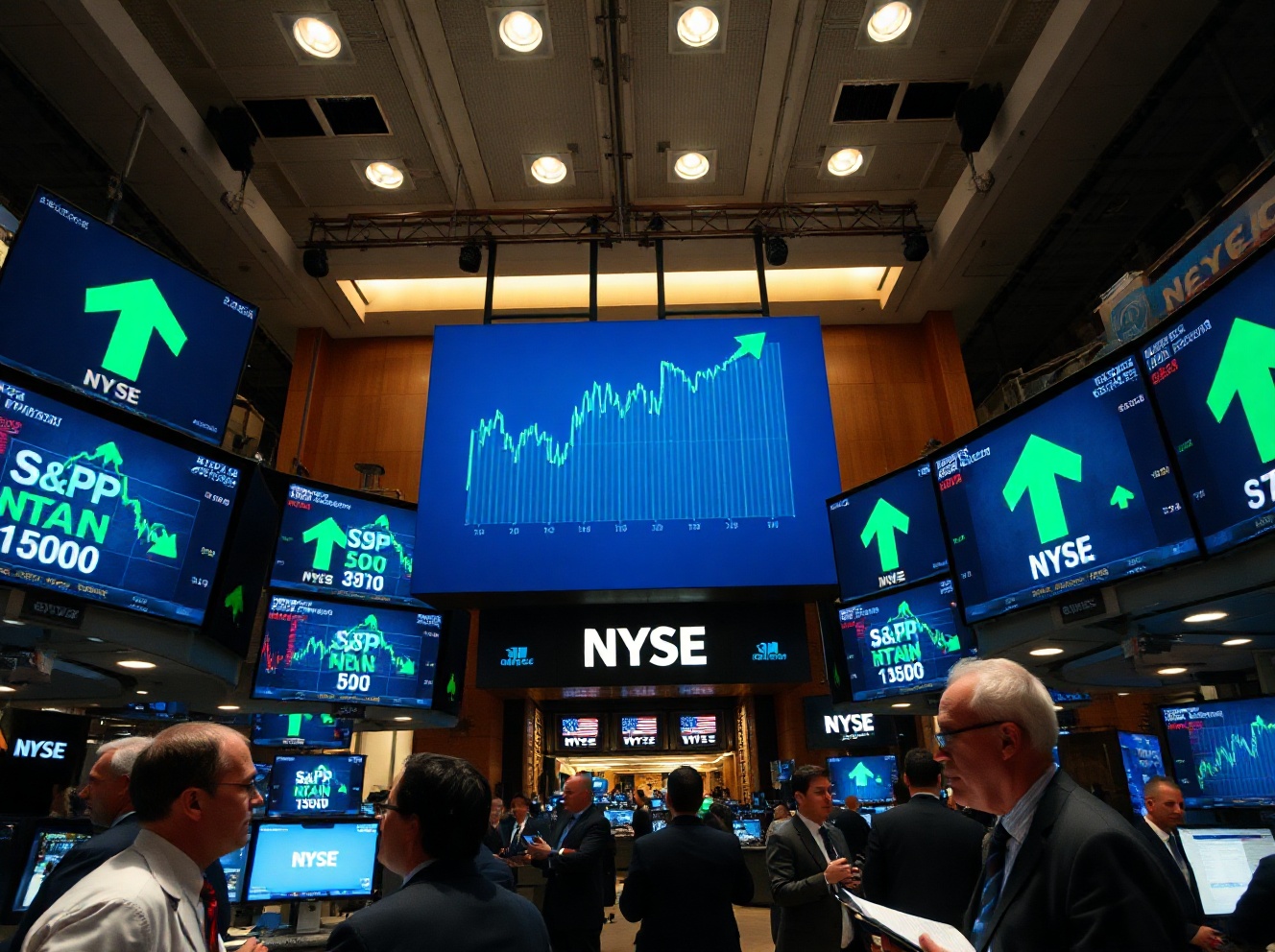
BitcoinWorld S&P 500 Rises Modestly as Iran Tensions Ease, Deutsche Bank Reports The S&P 500 posted modest gains in early trading on [Date], driven by a reliefBitcoinWorld S&P 500 Rises Modestly as Iran Tensions Ease, Deutsche Bank Reports The S&P 500 posted modest gains in early trading on [Date], driven by a relief

S&P 500 Rises Modestly as Iran Tensions Ease, Deutsche Bank Reports

2026/05/22 17:35
3 min read
For feedback or concerns regarding this content, please contact us at crypto.news@mexc.com

BitcoinWorld

S&P 500 Rises Modestly as Iran Tensions Ease, Deutsche Bank Reports

The S&P 500 posted modest gains in early trading on [Date], driven by a relief rally linked to easing geopolitical tensions surrounding Iran, according to a note from Deutsche Bank analysts. The benchmark index rose approximately [X]% as investors reacted to signals of de-escalation in the Middle East, marking a shift from recent risk-off sentiment.

Geopolitical Context and Market Reaction

Deutsche Bank’s research note highlighted that the positive move was primarily attributed to reduced fears of a broader conflict involving Iran, following diplomatic statements suggesting a potential cooling of hostilities. The S&P 500’s advance was broad-based, with gains in energy, technology, and financial sectors leading the way. The CBOE Volatility Index (VIX), often referred to as Wall Street’s fear gauge, declined as risk appetite returned to the market.

Analysts at Deutsche Bank noted that while the relief was palpable, the underlying macroeconomic environment—including persistent inflation and Federal Reserve policy uncertainty—remained a key concern. The rally was seen as a tactical repricing of geopolitical risk rather than a fundamental shift in market outlook.

Market Implications and Investor Sentiment

The modest gains underscore how geopolitical events can create short-term volatility but often fade as investors refocus on economic fundamentals. Deutsche Bank’s note emphasized that the S&P 500’s resilience in the face of geopolitical shocks reflects a market that has become somewhat desensitized to headline risks, though it cautioned against complacency.

Investors are now watching for further developments in the Middle East, as well as upcoming economic data releases and corporate earnings reports, which could provide more durable direction for equities. The relief rally, while welcome, may be limited in scope without sustained positive catalysts.

What This Means for Traders and Long-Term Investors

For short-term traders, the Iran-linked relief offers an opportunity to capitalize on volatility, but long-term investors should remain focused on portfolio diversification and risk management. Deutsche Bank’s analysis suggests that while geopolitical tensions can create entry points, they rarely alter the broader economic cycle without significant escalation.

The S&P 500’s modest gains serve as a reminder that markets are influenced by a complex interplay of factors, and that single-event-driven moves should be viewed in context of the larger investment landscape.

Conclusion

The S&P 500’s rise on Iran-linked relief, as reported by Deutsche Bank, reflects a market cautiously optimistic about de-escalation but wary of underlying economic challenges. The modest nature of the gains indicates that investors are not fully committing to a risk-on stance, awaiting clearer signals on both geopolitical and macroeconomic fronts. As always, maintaining a balanced perspective is key for navigating such periods of uncertainty.

FAQs

Q1: What caused the S&P 500 to rise modestly?
The S&P 500 rose due to a relief rally following signs of easing tensions between Iran and other nations, as highlighted in a Deutsche Bank research note. Investors interpreted diplomatic signals as reducing the likelihood of a broader conflict, prompting a return to riskier assets.

Q2: Is this rally sustainable?
Deutsche Bank analysts caution that the rally may be short-lived if not supported by additional positive catalysts, such as stronger economic data or clearer Federal Reserve policy direction. Geopolitical relief rallies often fade quickly without fundamental backing.

Q3: How does geopolitical risk affect stock market volatility?
Geopolitical events can spike volatility as investors reassess risk premiums, but markets tend to normalize once the immediate threat diminishes. The VIX often declines during relief rallies, as seen in this instance, reflecting reduced uncertainty.

This post S&P 500 Rises Modestly as Iran Tensions Ease, Deutsche Bank Reports first appeared on BitcoinWorld.


Market Opportunity
Lorenzo Protocol Logo
Lorenzo Protocol Price(BANK)
$0.03788
$0.03788$0.03788
+1.77%
USD
Lorenzo Protocol (BANK) Live Price Chart

SPACEX(PRE) Launchpad Is Live

SPACEX(PRE) Launchpad Is LiveSPACEX(PRE) Launchpad Is Live

Start with $100 to share 6,000 SPACEX(PRE)

Disclaimer: The articles reposted on this site are sourced from public platforms and are provided for informational purposes only. They do not necessarily reflect the views of MEXC. All rights remain with the original authors. If you believe any content infringes on third-party rights, please contact crypto.news@mexc.com for removal. MEXC makes no guarantees regarding the accuracy, completeness, or timeliness of the content and is not responsible for any actions taken based on the information provided. The content does not constitute financial, legal, or other professional advice, nor should it be considered a recommendation or endorsement by MEXC.

You May Also Like

Potential U.S. Recession Could Buy Japan More Time as It Faces Debt Implosion, Says Brookings Economist Robin Brooks

Potential U.S. Recession Could Buy Japan More Time as It Faces Debt Implosion, Says Brookings Economist Robin Brooks

The post Potential U.S. Recession Could Buy Japan More Time as It Faces Debt Implosion, Says Brookings Economist Robin Brooks appeared on BitcoinEthereumNews.com. While much of the attention from the crypto and traditional markets remains on the U.S., a recent analysis by a leading economist suggests it’s time to look east. Japan is teetering on the edge of a debt crisis, but a potential recession in the U.S. could provide the land of the rising sun a temporary window of relief, according to Robin Brooks, senior fellow in the Global Economy and Development program at the Brookings Institution. Japan’s debt-to-GDP is a problem For years, Japan has held the highest public debt-to-GDP ratio among advanced economies, consistently hovering above 200%. However, in the post-COVID era marked by massive fiscal spending, investors’ tolerance for such high debt levels has waned. To complicate matters, Japan’s inflation, as measured by the consumer price index (CPI), has surged since mid-2022, bringing inflation rates up to levels not seen since the 1980s. The trend is consistent with the sticky price pressures worldwide. The elevated inflation has pushed government bond yields higher and increased the cost of additional fiscal borrowing. These combined pressures have thrust Japan’s staggering debt-to-GDP ratio of around 240% into the spotlight, effectively boxing the government into a difficult position. Brooks put it best in his latest Substack post: “The bottom line is that exceptionally high government debt is putting Japan in a terrible bind. If Japan sticks with low interest rates, it risks further Yen depreciation, which could cause inflation to run out of control. If it anchors the Yen by allowing yields to rise further, this could put Japan’s debt sustainability at risk.” “This catch-22 means a debt crisis is much closer than people think,” he added. Growing debt concerns could drive investors to alternative financial escape valves such as cryptocurrencies, mainly stablecoins. Japanese startup JPYC is planning to issue the first stablecoin pegged…
Share
BitcoinEthereumNews2025/09/18 02:18
Will XRP Price Increase In September 2025?
Will XRP Price Increase In September 2025?

Ripple XRP is a cryptocurrency that primarily focuses on building a decentralised payments network to facilitate low-cost and cross-border transactions. It’s a native digital currency of the Ripple network, which works as a blockchain called the XRP Ledger (XRPL). It utilised a shared, distributed ledger to track account balances and transactions. What Do XRP Charts Reveal? […]
Share
Tronweekly2025/09/18 00:00
Bitget Unveils Tough New Rules to Crack Down on Market Manipulation

Bitget Unveils Tough New Rules to Crack Down on Market Manipulation

Bitget launched a new framework to monitor listed tokens and market makers more closely. It will flag suspicious trading, weak liquidity, and possible manipulation
Share
LiveBitcoinNews2026/05/22 19:15

No Chart Skills? Still Profit

No Chart Skills? Still ProfitNo Chart Skills? Still Profit

Copy top traders in 3s with auto trading!