

UMC Stock Analysis 2026: Foundry Demand, Mature Nodes, Intel 12nm and Dividends

Summary
United Microelectronics Corporation entered 2026 with a profitable semiconductor-foundry business, a strong position in mature and specialty process technologies, a growing 22nm product mix and several potential long-term growth projects.
UMC generated NT$237.6 billion in consolidated revenue in 2025, with a 29.0% gross margin, an 18.5% operating margin and earnings per ordinary share of NT$3.34. Shareholders approved a cash dividend of approximately NT$2.60 per ordinary share.
The company’s longer-term growth opportunities include:
- Greater use of 22nm and 28nm processes;
- Automotive and industrial semiconductor demand;
- BCD, RFSOI and embedded high-voltage technologies;
- A 12nm process partnership with Intel;
- Silicon-photonics manufacturing for AI data centers;
- Geographic diversification through Singapore and U.S. production.
The risks include mature-node overcapacity, pricing pressure, semiconductor cyclicality, customer inventory corrections, geopolitical exposure, currency changes and execution risk.
UMC closed at approximately $18.90 on July 27, 2026, after trading across a very wide 52-week range. The price should be verified again before publication because semiconductor and Taiwan-related equities can move rapidly.
UMC Financial Snapshot
| Metric | Latest available figure before Q2 2026 results |
|---|---|
| 2025 revenue | NT$237.6 billion |
| 2025 gross margin | 29.0% |
| 2025 operating margin | 18.5% |
| 2025 net income attributable to parent shareholders | NT$41.7 billion |
| 2025 EPS | NT$3.34 |
| Approved 2026 cash dividend | Approximately NT$2.60 per ordinary share |
| Q1 2026 capacity utilization | 79% |
| Q1 2026 22nm/28nm share of wafer revenue | Approximately 34% |
UMC was scheduled to release its second-quarter 2026 results on July 29, 2026. This analysis is therefore based on information available through July 28, 2026 and should be updated after the new report.
UMC’s Core Investment Thesis
UMC’s investment case differs from that of a leading-edge foundry.
The company does not primarily depend on winning the race to manufacture the smallest possible transistors. Instead, it focuses on mature and specialty technologies that remain essential across electronics.
Potential advantages of this strategy include:
- Lower capital intensity than the most advanced nodes;
- Long product lifecycles;
- Stable automotive and industrial demand;
- Specialized customer qualifications;
- Process differentiation beyond transistor size;
- Opportunities to reuse established equipment.
The main disadvantage is that mature-node competition can become intense when industry capacity expands faster than demand.
Foundry Demand and the Semiconductor Cycle
UMC manufactures chips for customers rather than selling a large portfolio of branded chips.
Its revenue therefore depends heavily on:
- Customer wafer orders;
- Factory utilization;
- Average selling prices;
- Process mix;
- Manufacturing yield;
- Consumer and industrial demand.
During a strong semiconductor cycle, customers may increase orders and reserve capacity. During a correction, customers may reduce orders while they work through existing inventory.
High utilization generally supports gross margins because fixed fab costs are spread across more wafers. Lower utilization can pressure profitability even when total capacity remains unchanged.
The Importance of 22nm and 28nm
UMC’s 22nm and 28nm platforms are central to its strategy.
These processes can provide an attractive balance of:
- Performance;
- Power consumption;
- Die size;
- Reliability;
- Cost;
- Manufacturing maturity.
Applications include:
- Wi-Fi and Bluetooth chips;
- Connectivity products;
- Display and image-processing chips;
- Consumer devices;
- Automotive components;
- Selected edge-computing products.
A growing 22nm mix can support revenue quality if customers adopt the node for products that previously used older processes.
Specialty Technology Portfolio
UMC’s competitive position also depends on technology features that are not captured by node size alone.
BCD and Power Management
BCD technology combines bipolar, CMOS and DMOS components on the same chip.
It is used in:
- Battery-management systems;
- Power converters;
- Motor drivers;
- LED drivers;
- Automotive power electronics;
- Industrial controls.
RFSOI
Radio-frequency silicon-on-insulator supports wireless front-end products such as antenna switches and tuners.
Demand can be linked to:
- Smartphones;
- 5G devices;
- Wi-Fi equipment;
- Connected vehicles;
- Internet-of-Things products.
Embedded High Voltage
Embedded high-voltage technology is important in display drivers and touch controllers for:
- Smartphones;
- Televisions;
- Tablets;
- Automotive displays;
- Industrial screens.
Embedded Non-Volatile Memory
Embedded memory allows information to remain stored without continuous power. Applications include controllers, secure products and industrial electronics.
Intel 12nm Partnership
UMC and Intel are developing a 12nm FinFET process expected to enter production in 2027 at Intel’s Ocotillo manufacturing site in Arizona.
The partnership targets applications including:
- Mobile devices;
- Wireless connectivity;
- Communications infrastructure;
- Networking;
- High-speed input/output;
- Selected data-center products.
UMC says the collaboration provides a migration path beyond its 22nm and 28nm platforms. Intel contributes U.S. manufacturing capacity and FinFET experience, while UMC contributes foundry operations, customer support and mature-node expertise.
Potential Benefits
The partnership could:
- Expand UMC’s addressable market;
- Provide U.S.-based production;
- Improve supply-chain diversification;
- Reduce the capital required for an independent advanced-node fab;
- Strengthen relationships with global customers.
Key Risks
The program could underperform if:
- Development is delayed;
- Customer interest is limited;
- Production costs are uncompetitive;
- Intel’s manufacturing strategy changes;
- UMC cannot generate sufficient volume;
- Alternative processes offer better economics.
Silicon Photonics and AI Infrastructure
In July 2026, UMC and SILITH announced the first mass-produced silicon-photonics wafers from UMC’s Singapore 12-inch fab.
The products target high-speed optical interconnects for AI and hyperscale data-center networks, including a 1.6-terabit platform. UMC also plans to make its own 12-inch silicon-photonics platform available for customer development in 2027.
This provides UMC with a credible AI-infrastructure angle, but the company should not be described as a pure AI semiconductor stock.
Its exposure is indirect and may come through:
- Optical connectivity;
- Networking;
- High-speed input/output;
- Power management;
- Specialty manufacturing;
- Data-center infrastructure.
The commercial significance will depend on production volume, pricing, customer concentration and manufacturing margins.
Automotive and Industrial Demand
Automotive semiconductors typically require:
- High reliability;
- Long qualification periods;
- Long product lifecycles;
- Stable supply;
- Specialized process technologies.
UMC’s BCD, embedded memory, display, connectivity and power technologies can serve applications such as:
- Battery management;
- Electric powertrains;
- Infotainment;
- Smart cockpits;
- Radar and sensors;
- Motor control;
- Vehicle connectivity.
Automotive demand may be more durable than short-cycle consumer demand, but vehicle production, electric-vehicle adoption and customer inventories still affect orders.
Consumer Electronics and Smartphone Exposure
Consumer and communications products remain important for UMC.
Demand can be affected by:
- Smartphone replacement cycles;
- Display shipments;
- Television and computing demand;
- Wi-Fi standards;
- Inventory held by chip designers;
- Seasonal product launches.
A strong consumer recovery can improve utilization quickly. A weak cycle can produce abrupt order reductions.
Capacity Expansion
UMC has manufacturing capacity in Taiwan, Singapore, China and Japan.
Singapore is strategically important because it provides geographic diversification and access to customers concerned about supply-chain concentration.
However, new capacity creates risk if:
- Industry demand weakens;
- Competitors add capacity at the same time;
- Average selling prices fall;
- Utilization remains below expectations.
Margins and Profitability
UMC reported a 29.0% gross margin and an 18.5% operating margin for 2025.
Future margins will depend on:
- Capacity utilization;
- Product mix;
- Electricity and labor costs;
- Depreciation;
- Wafer pricing;
- Foreign exchange;
- Yield improvement;
- New-fab ramp costs.
The 12nm program and silicon-photonics production may increase revenue opportunities, but early-stage manufacturing ramps can initially pressure margins.
UMC Dividend Analysis
UMC approved approximately NT$2.60 per ordinary share for the 2026 distribution cycle.
Because one UMC ADS represents five ordinary shares, the gross underlying dividend associated with one ADS is based on five times the ordinary-share distribution before currency conversion, withholding tax and depositary expenses.
Dividend appeal depends on:
- Annual earnings;
- Free cash flow;
- Capital spending;
- Taiwan-dollar exchange rates;
- Tax treatment;
- ADS depositary fees;
- The market price of the ADS.
A high historical yield does not guarantee that future dividends will remain unchanged.
Currency Exposure
UMC reports in New Taiwan dollars, while the ADS trades in U.S. dollars.
A simplified ADS relationship is:
UMC ADS value ≈ five ordinary shares converted into U.S. dollars
The U.S. price can therefore be influenced by both the Taiwan share price and TWD/USD exchange rates.
A weaker New Taiwan dollar may reduce the U.S.-dollar value of the ordinary shares, even when the Taiwan-market price is unchanged. However, currency effects on UMC’s operating results may be more complex because revenue and expenses can have different currency exposures.
Competitive Position
UMC competes with:
- Large global foundries;
- Mature-node specialists;
- Integrated semiconductor manufacturers;
- Expanding Chinese foundries;
- Customer-owned internal fabs.
Competitive factors include:
- Price;
- Yield;
- Reliability;
- Capacity;
- Technology;
- Customer support;
- Geographic footprint;
- Delivery times;
- Automotive qualifications.
UMC’s strongest differentiation may come from specialty technologies, customer relationships and manufacturing execution rather than leading-edge node leadership.
Geopolitical Risk
UMC’s SEC filing identifies political instability and cross-strait tension as risks that could affect the price and liquidity of its ordinary shares and ADSs.
Potential consequences include:
- Production disruption;
- Export restrictions;
- Customer diversification;
- Higher insurance costs;
- Supply-chain interruptions;
- Reduced market valuation.
Geographic diversification in Singapore, Japan and the United States may reduce some concentration risk, but it cannot eliminate Taiwan exposure.
Technical Market Context
UMC closed at approximately $18.90 on July 27, 2026 after trading as high as approximately $28.96 during the preceding 52 weeks.
The price history suggests unusually high volatility.
Technical traders may monitor:
- The July 2026 high;
- The recent decline below $20;
- Trading volume;
- Moving averages;
- Price gaps;
- Taiwan-listed 2303;
- Broader semiconductor indexes.
Technical levels should not be treated as guarantees, particularly when earnings, geopolitical events or industry news can cause large gaps.
Bull, Base and Bear Cases
| Scenario | Main assumptions |
|---|---|
| Bull | Strong utilization, continued 22nm growth, successful 12nm execution, AI-photonics demand and firm pricing |
| Base | Moderate demand recovery, stable specialty-process growth and manageable mature-node competition |
| Bear | Overcapacity, lower pricing, geopolitical stress, customer inventory reductions and delayed growth projects |
What the UMC Analysis Means for UMCON
UMCON is designed to provide total-return exposure linked to UMC, so the same fundamental drivers matter:
- Foundry demand;
- Margins;
- Dividends;
- 12nm execution;
- AI-infrastructure demand;
- Geopolitical events.
UMCON traders must also monitor:
- MEXC liquidity;
- USDT pricing;
- Ondo minting and redemption;
- Token premiums and discounts;
- Blockchain availability.
Eligible users can review the live UMCON/USDT market.
FAQ
Is UMC profitable?
Yes. UMC reported NT$41.7 billion in net income attributable to parent shareholders for 2025.
What is UMC’s main competitive advantage?
Its advantages include mature and specialty process technologies, manufacturing scale, long customer relationships and a diversified Asian fab network.
Is UMC an AI stock?
UMC has indirect AI-infrastructure exposure through silicon photonics, networking and specialty semiconductors, but it is not a pure AI processor company.
Why is 12nm important?
The Intel partnership may help UMC expand beyond 22nm and 28nm without independently building an entirely new advanced-node production platform.
What is UMC’s biggest risk?
Mature-node overcapacity, semiconductor cyclicality and Taiwan geopolitical exposure are among the most important risks.
Does UMC pay dividends?
Yes. Shareholders approved approximately NT$2.60 per ordinary share for the 2026 distribution cycle.
Can UMCON be used to trade the UMC investment thesis?
UMCON provides linked tokenized exposure but adds issuer, liquidity, exchange, blockchain and USDT risks.
Risk Disclaimer
This analysis is based on information available through July 28, 2026. It is not a recommendation to buy, sell or hold UMC or UMCON.
Semiconductor demand, market prices, exchange rates, regulatory conditions and geopolitical risks can change rapidly.
Description:Crypto Pulse is powered by AI and public sources to bring you the hottest token trends instantly. For expert insights and in-depth analysis, visit MEXC Learn.
The articles shared on this page are sourced from public platforms and are provided for reference only. They do not represent the position or views of MEXC. All rights belong to Sarah Chen. If you believe any content infringes upon the rights of a third party, please contact service@support.mexc.com for prompt removal. MEXC does not guarantee the accuracy, completeness, or timeliness of any content and is not responsible for any actions taken based on the information provided. The content does not constitute financial, legal, or other professional advice, nor should it be interpreted as a recommendation or endorsement by MEXC. For expert insights and in-depth analysis, visit MEXC Learn.
Learn More About Gensyn
View More
Meta Stock Guide: How Ads, AI Spending and Reality Labs Drive META Stock (2026 Updated)

MEXC On-chain Daily Report: Major U.S. Banks Plan Shared Tokenized Deposit Network

Zero Threshold, Zero Slippage: How to Trade U.S. Stock Futures on MEXC
Latest Updates on Gensyn
View More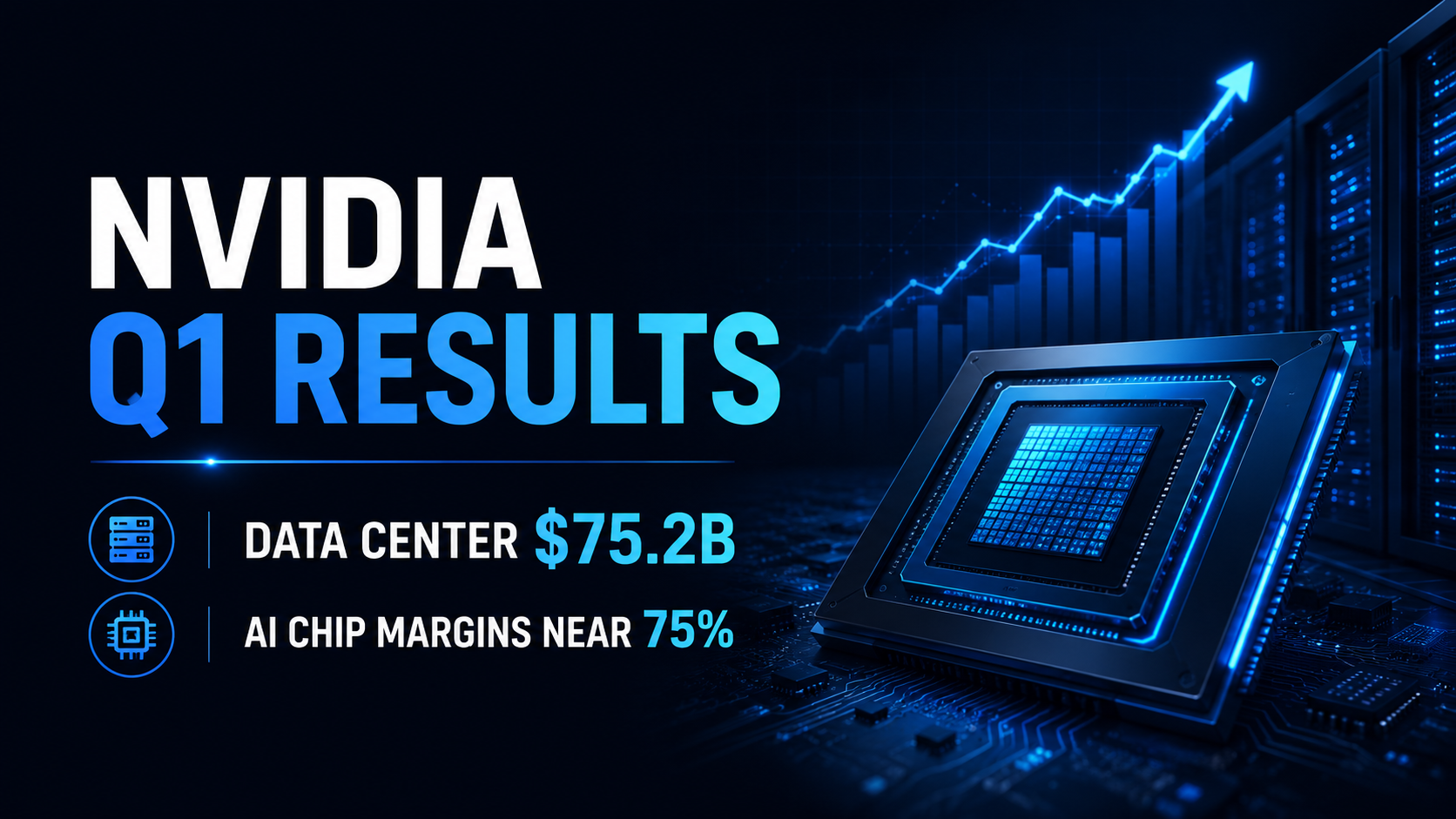
Nvidia FY2027 Q1 Earnings Review: Data Center Revenue Hits $75.2B as AI Chip Margins Hold Near 75%

Apple FY2026 Q2 Earnings Review: iPhone Revenue and Services Growth Keep EPS Story Intact

MEXC On-chain Daily Report: Robinhood Chain daily DEX volume surpassed $560 million


HOT
Currently trending cryptocurrencies that are gaining significant market attention
Crypto Prices
The cryptocurrencies with the highest trading volume
Newly Added
Recently listed cryptocurrencies that are available for trading