Overview
Global artificial intelligence compute leader
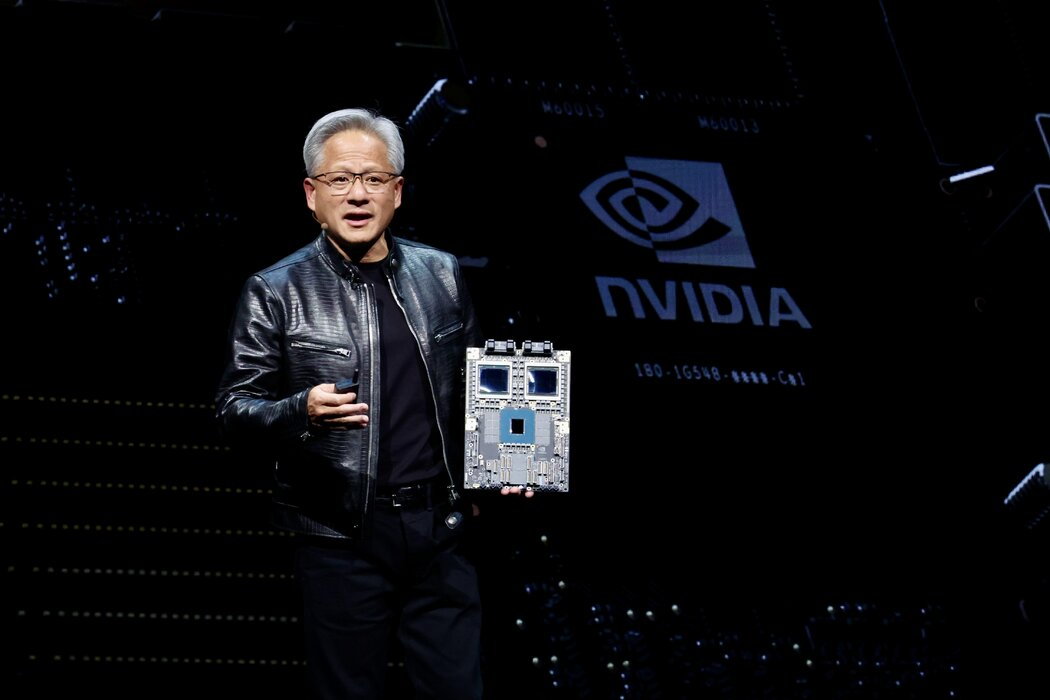
Nvidia has reportedly informed key enterprise customers and cloud hyperscalers that server systems equipped with next-generation Vera Rubin architectures and advanced Grace Blackwell platforms could experience price increases exceeding 15% upon volume shipments in 2027. According to supply chain investigations published by
Reuters, the structural catalyst driving this rack-scale hardware inflation is not foundational foundry wafer fabrication, but an unprecedented surge in the procurement and integration costs of High Bandwidth Memory (HBM). With Tier-1 memory manufacturers including
Micron Technology and
SK Hynix pre-selling manufacturing capacity through upcoming fiscal cycles, memory components now represent a historically high proportion of total AI server bill of materials (BOM). This pricing pass-through reshapes profitability across the semiconductor value chain while placing renewed focus on the durability of big-tech capital expenditure programs.
Key Takeaways
Enterprise AI server pricing faces double-digit escalation as Nvidia informs major customers that Vera Rubin and Grace Blackwell systems scheduled for 2027 delivery could see price increases exceeding 15%.
High Bandwidth Memory dominates the server bill of materials, with escalating memory bandwidth requirements for frontier foundation model training driving memory components to historic highs as a percentage of total hardware costs.
Memory manufacturing capacity constraints reinforce vendor pricing power as SK Hynix and Micron Technology lock in multi-year production agreements at elevated gross margins across HBM3E and HBM4 nodes.
Advanced packaging yields compound total assembly costs, with
TSMC advanced wafer-level packaging constraints and 12-to-16-layer vertical memory stacking increasing inspection and integration overhead for rack-scale systems.
Hyperscaler capital intensity faces near-term margin pressure, directly impacting free cash flow conversion rates for Microsoft, Amazon, Google, and Meta while accelerating the monetization requirements for enterprise generative AI software.
Supply Chain Price Pass-Through: Why Nvidia AI Server Costs Are Set to Jump Over 15 Percent
In preceding semiconductor hardware cycles, architectural transitions typically delivered computational efficiency gains that lowered the cost per unit of compute over time. The economic model for next-generation AI server deployments is deviating significantly from this historical baseline.
Customer Forward Guidance and 2027 Delivery Recalibration
Financial reporting from
Bloomberg indicates that Nvidia has begun preparing major enterprise clients and original design manufacturers (ODMs) for higher system pricing. As data center architectures shift from discrete accelerator cards to monolithic liquid-cooled compute racks like the NVL72, individual cluster costs have escalated into tens of millions of dollars. To protect its corporate gross margin baseline near 75% while absorbing rising input costs, Nvidia is systematically passing upstream cost inflation down to the enterprise level.
Transition from Silicon Pricing to Rack-Scale Capital Intensity
Next-generation AI servers represent highly complex thermodynamic and network engineering systems incorporating high-speed Ethernet switching fabrics, power distribution modules, and hundreds of dense DRAM dies. Because physical rack integration introduces elevated manufacturing tolerances, small percentage increases in sub-component pricing are magnified across the completed rack assembly, culminating in a net price increase exceeding 15%.
The Memory Bottleneck: High Bandwidth Memory Dominates AI Server Bill of Materials
As frontier artificial intelligence models expand in parameter scale, memory bandwidth rather than raw processor clock speed has emerged as the primary physical constraint on computational throughput.
The Memory Wall and the HBM4 Technology Premium
Modern distributed training algorithms generate massive data transfer demands between memory pools and processing cores. Overcoming this structural memory wall requires High Bandwidth Memory featuring vertically stacked DRAM dies connected through through-silicon vias (TSVs). Transitioning from the current HBM3E generation to next-generation HBM4 requires moving to 12-high and 16-high vertical stacks while introducing advanced foundry base dies, driving production and test expenses significantly higher.
Packaging Complexity and Yield Degradation Compounding
Analysis from the
Financial Times illustrates that connecting HBM stacks to primary compute silicon requires advanced 2.5D wafer-level integration such as TSMC CoWoS. When multiple advanced memory stacks are mounted onto large silicon interposers, cumulative defect probabilities increase, requiring manufacturers to incorporate substantial yield loss buffers into final wholesale component pricing.
The Memory Duopoly: Micron and SK Hynix Lock in Pricing Power
Concentrated market share among leading memory fabricators has transferred significant pricing power to upstream suppliers.
SK Hynix Leadership in High-Density Stacks
As the primary incumbent supplier of high-bandwidth memory to Nvidia,
SK Hynix maintains a strong competitive position derived from its proprietary Mass Reflow Molded Underfill (MR-MUF) packaging technology. With its advanced memory production capacity committed to major clients through multiple reporting periods, SK Hynix continues to command strong pricing power and high operating margins.
Micron Technology Capacity Expansion and Long-Term Agreements
In parallel,
Nasdaq listed
Micron Technology has captured meaningful market share with its 1-beta manufacturing node, providing high thermal efficiency for flagship AI accelerators. Regulatory disclosures filed with the
U.S. Securities and Exchange Commission confirm that Micron's advanced memory portfolio commands structural gross margin premiums, with long-term forward customer commitments absorbing open market supply.
Investors monitoring semiconductor sector re-anchoring and enterprise hardware volatility can track liquidity dynamics and derivatives pricing on institutional platforms.
Furthermore, trading volume data on
MEXC indicates sustained liquidity and cross-market participation across equities-linked digital assets during major technological transitions.
Hyperscaler Capital Expenditure Pressures: How Rising Hardware Costs Impact AI ROI
The compounding inflation in hardware procurement budgets will be absorbed primarily by Tier-1 cloud hyperscalers and frontier AI laboratories.
Margin Compression Across Major Cloud Infrastructure Providers
Microsoft, Alphabet, Amazon, and Meta represent the dominant volume buyers of AI computing clusters, with combined annual capital expenditures running into hundreds of billions of dollars. A 15% increase in server unit costs requires hyperscalers to expand infrastructure outlays to achieve planned compute targets, presenting structural headwinds for corporate free cash flow margins.
Downstream Software Monetization and Startup Cash Burn
Cloud providers seeking to preserve internal return on investment (ROI) metrics will inevitably adjust cloud compute instance pricing upward. Commentary from
CNBC suggests that higher cloud rental costs will challenge early-stage AI startups, accelerating a migration toward parameter-efficient, domain-specific open models and forcing enterprise developers to demonstrate clear software monetization.
Cross-Asset Implications and Critical Forward Monitoring Variables
Rising capital intensity across traditional physical data centers also provides valuable context for decentralized compute infrastructure and digital asset economies.
As centralized compute hardware costs increase, developers are exploring alternative architectures such as decentralized physical infrastructure networks (DePIN). Using blockchain coordination to aggregate and settle distributed GPU workloads offers a potential hedge against escalating centralized cloud pricing.
Market participants analyzing Nvidia and the broader semiconductor ecosystem should monitor several key forward variables:
Advanced node capacity additions from memory fabricators, tracking capital deployment and HBM4 sample qualification progress across Micron Technology, SK Hynix, and
Samsung Electronics.
Packaging bottleneck resolution timelines, monitoring monthly CoWoS output additions from TSMC alongside advanced packaging substrate yields across major packaging partners.
Hyperscaler forward capex guidance revisions, evaluating whether major technology executives adjust future capital deployment targets during upcoming quarterly earnings calls.
Exclusive View from James Mitchell
From a quantitative market structure and cross-asset perspective, the expected 15% price increase on Nvidia AI servers is not an isolated inflationary event, but a structural repricing of the compute value chain away from pure logic silicon toward memory and networking integration.
Market participants frequently view Nvidia purely as a chip designer, underestimating how high-bandwidth memory captures an expanding share of total hardware value. When HBM constitutes a massive portion of the server bill of materials, Nvidia must increase aggregate rack pricing to protect its high-tier gross margin profile. This pass-through dynamic transfers physical manufacturing inflation directly to downstream enterprise balance sheets. For equity and cross-asset derivative traders, short-term volatility reflects an institutional reassessment of the enterprise software payback cycle. The primary forward indicators to monitor are memory stacking yields and the pace at which corporate AI adoption generates operating revenue sufficient to absorb higher physical computing costs.
FAQs
Why are Nvidia AI server prices expected to rise over 15 percent by 2027?
Prices are projected to increase primarily due to escalating High Bandwidth Memory procurement costs combined with the complex thermal, liquid cooling, and advanced packaging requirements of next-generation rack-scale computing architectures.
What is High Bandwidth Memory and why is it driving AI server costs?
High Bandwidth Memory stacks DRAM dies vertically using through-silicon vias to bypass traditional bus latency constraints. Its high manufacturing complexity, substantial silicon consumption, and strict packaging yield tolerances make it significantly more expensive than standard memory, representing a major cost driver in modern AI servers.
How do Micron and SK Hynix influence Nvidia supply chain pricing?
SK Hynix and Micron operate as the primary suppliers of high-performance HBM. With advanced production capacity committed to major buyers under multi-year forward agreements, tight supply conditions grant these manufacturers strong pricing power that directly influences total server production costs.
What is the Vera Rubin architecture and how does it differ from Blackwell?
Vera Rubin is Nvidia's upcoming semiconductor architecture following the Blackwell platform. It is engineered to integrate next-generation HBM4 memory with enhanced bandwidth and higher vertical die stacks, delivering improved compute density and energy efficiency for multi-trillion parameter artificial intelligence models.
How will rising hardware costs affect major cloud hyperscalers?
A 15% increase in server pricing elevates capital expenditure requirements for hyperscale operators like Microsoft, Amazon, Google, and Meta, compressing near-term free cash flow margins and encouraging further development of proprietary in-house custom accelerators.
Will higher server prices slow down enterprise generative AI adoption?
Higher compute acquisition and hosting costs may present financial hurdles for early-stage AI startups, accelerating the optimization of smaller, domain-specific models while pressing enterprise developers to demonstrate tangible commercial revenue from deployed AI applications.
Disclaimer
The information, analysis, and views contained in this article are provided for general educational and informational purposes only and do not constitute financial advice, investment advice, legal advice, tax advice, or a recommendation to buy or sell any security, digital asset, or financial derivative. Equity securities and financial instruments are subject to high market volatility and capital risk. Past operational performance, financial results, and quantitative indicators do not guarantee future market returns. Investors must conduct independent due diligence and evaluate their personal financial situation, risk tolerance, and investment goals before executing any trade. The MEXC Crypto Pulse team assumes no liability for any direct or indirect financial losses resulting from the use of or reliance upon the information published herein.
About the Author
James Mitchell specializes in technical analysis, market trends, and trading strategies for both Bitcoin and altcoins. Based in London, he has over 10 years of experience in financial markets. Before joining MEXC Learn, James worked as a senior analyst at a leading European investment firm, where he developed expertise in risk management and quantitative trading. His transition to cryptocurrency markets began in 2017, and he has since become recognized for his data-driven approach. He holds a Master's degree in Financial Economics from the London School of Economics. His analytical approach combines traditional technical analysis with on-chain metrics to provide readers with actionable insights. Areas of expertise include technical analysis, market trends and cycles, trading strategies, Bitcoin and altcoin analysis, and risk management.