Overview
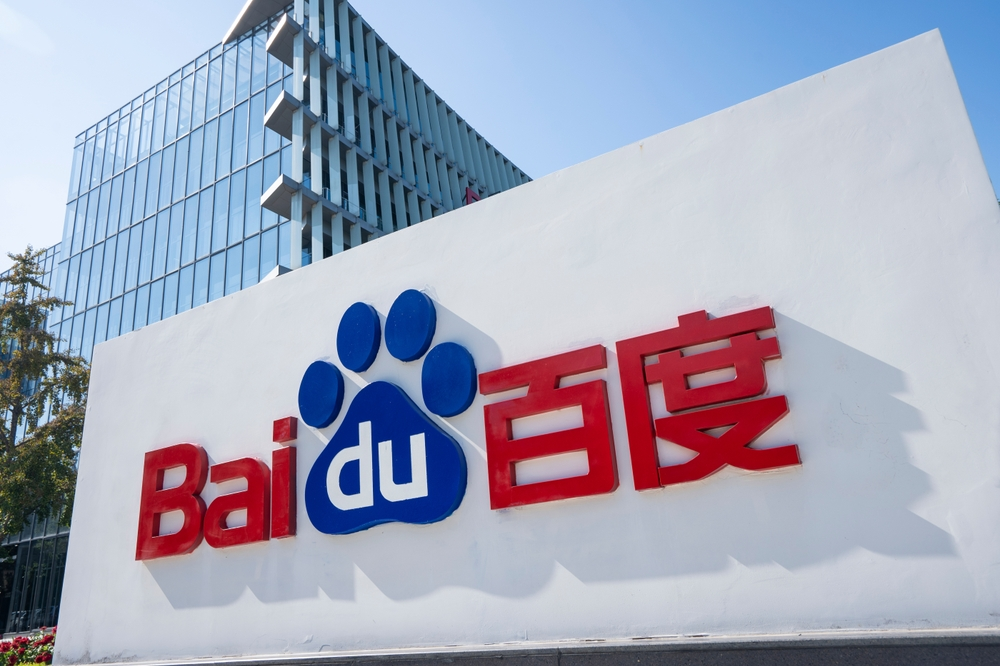
Baidu Inc. (NASDAQ: BIDU) is officially scheduled to release its second-quarter 2026 financial results today, August 18, before the opening bell on Wall Street. According to official corporate scheduling on the
Baidu Investor Relations portal, executive management will host an earnings conference call at 8:00 AM US Eastern Time to discuss operational progress and forward strategic guidance. Global equity markets and tech sector analysts are sharply focused on whether the company's accelerating artificial intelligence ecosystem can fully counteract prolonged macroeconomic headwinds across its legacy search advertising division. As documented in the
Stock Titan earnings preview update, Baidu Core AI-driven business revenue expanded by 49% year over year during the first quarter, establishing itself as the primary engine for group-level growth. Today, institutional allocators and retail traders are scrutinizing the revenue trajectory of Baidu AI Cloud, enterprise ERNIE foundation model monetization, and the commercial scaling of Apollo Go robotaxis to determine the next major repricing cycle for BIDU stock.
Key Takeaways
Earnings Release Schedule: According to
Seeking Alpha earnings coverage, Baidu will report second-quarter results pre-market on August 18, with consensus estimates projecting quarterly revenues of $4.74 billion and adjusted earnings per share of $1.46.
Core AI Driven Revenue Outperformance: Based on official metrics in the
Baidu Q1 2026 earnings release, core AI-powered operations grew 49% year over year, representing over 50% of total Baidu General Business revenue for the first time.
Surging Cloud Infrastructure Demand: Detailed financial models from
AlphaSense earnings research highlight that Baidu AI Cloud infrastructure revenues surged 79% year over year, propelled by a 184% explosion in GPU computing cloud demand.
Apollo Go Unit Economics Inflection: As highlighted in
ATFX Global market analysis, the sixth-generation Apollo RT6 autonomous vehicle reduced production costs to 250,000 RMB (roughly $34,525), providing a critical breakthrough for scalable robotaxi profitability.
Depressed Valuation Multiple: Despite advertising challenges, BIDU stock trades at historically low price-to-earnings multiples, with massive net cash reserves providing a robust valuation floor.
The Core Catalyst: Can AI Offset Traditional Online Marketing Weakness?
The Structural Shift From Search Engine to AI Powerhouse
For more than two decades, search engine marketing served as Baidu's primary cash generation engine. However, shifting consumer behavioral patterns and macroeconomic normalization have applied structural pressure to traditional online advertising budgets. According to
Reuters technology reporting on Chinese internet conglomerates, Baidu has executed a comprehensive structural reallocation toward foundational artificial intelligence.
In the first quarter, AI-driven revenues crossed the critical 50% milestone of total general business receipts. The defining question for Baidu earnings today is whether this second growth curve, driven by enterprise AI adoption and cloud compute consumption, expanded fast enough during the second quarter to offset legacy advertising contractions.
Enterprise ERNIE Foundation Model API Monetization
As Baidu's proprietary ERNIE foundation model achieves widespread adoption across financial services, manufacturing, smart cities, and software development, the company is systematically monetizing enterprise API calls and private cloud deployments.
Industry data compiled by
Bloomberg Intelligence indicates that enterprise clients are scaling their generative AI application workloads rapidly, translating into steady expansions in high-margin recurring software revenues for Baidu's enterprise ecosystem.
Baidu AI Cloud and GPU Computing Infrastructure Expansion
Exponential Growth in Inference Workload Demand
Baidu AI Cloud has firmly positioned itself as the indispensable compute backbone for domestic artificial intelligence deployment. According to the
AlphaSense analysis of Baidu's cloud trajectory, AI Cloud infrastructure revenues jumped 79% year over year in the previous operating quarter.
Even more impressive was the performance of dedicated GPU computing cloud services, which delivered a 184% year-over-year revenue surge. As enterprises transition from initial model training toward live production inference, continuous query processing requires persistent GPU compute clusters, driving sustainable cloud utilization rates.
Full Stack Vertical Integration as a Technical Moat
Baidu maintains a rare, fully integrated technology stack encompassing proprietary Kunlunxin AI accelerators, the PaddlePaddle deep learning framework, ERNIE foundation models, and cloud computing infrastructure.
This end-to-end integration allows Baidu AI Cloud to optimize cluster scheduling and minimize inter-chip communication latency, ensuring competitive pricing and healthy gross margins against conventional cloud infrastructure operators.
Apollo Go and the Global Autonomous Driving Commercialization Race
Autonomous mobility represents Baidu's most capital-intensive and revolutionary long-term strategic bet. Industry research published by
ATFX Global confirms that Apollo Go has deployed fully driverless fleets across major metropolitan centers including Wuhan and Beijing, delivering millions of commercial rides to the public.
A crucial operational milestone is the introduction of the sixth-generation Apollo RT6 robotaxi, which carries a manufacturing cost of just 250,000 RMB ($34,525). By slashing hardware manufacturing expenses by more than half compared to previous iterations, Baidu has fundamentally improved the unit economics per vehicle, accelerating the timeline toward fleet-wide operating profitability.
With tens of millions of fully autonomous test and commercial miles recorded, Apollo Go is transitioning from an exploratory research endeavor into a commercial Mobility as a Service (MaaS) network.
Institutional market participants are eagerly awaiting commentary from CEO Robin Li during today's conference call regarding city-level licensing rollouts, fleet expansion schedules, and projected gross profit margins.
Advertising Headwinds and Operating Margin Management
Balancing Capital Expenditures and Free Cash Flow
Scaling AI infrastructure and deploying autonomous fleets require substantial capital expenditures. Procuring advanced computing hardware, constructing high-efficiency data centers, and funding research teams place tangible pressure on near-term operating margins.
As noted by
Seeking Alpha market analysts, Wall Street will closely scrutinize today's earnings release to verify whether management's disciplined cost control measures successfully protected operating cash flows amid aggressive AI infrastructure spending.
Balance Sheet Liquidity and Share Repurchase Support
To support shareholder returns and insulate equity valuations against market volatility, Baidu continues to execute substantial share buyback authorizations.
As documented in
filings on the Baidu Investor Relations portal, the company holds tens of billions of RMB in cash, cash equivalents, and short-term investments, providing a fortress balance sheet capable of underwriting long-term AI development while supporting equity valuations.
What Baidu Earnings Today Mean for BIDU Stock Investors
Deep Valuation Discount vs Long Term AI Growth Potential
Throughout 2026, BIDU stock has traded at a pronounced valuation discount relative to global tech peers and US-based AI software providers.
The market has heavily discounted Baidu based on traditional advertising weakness, largely overlooking the compounding value of its AI Cloud and autonomous mobility segments. If today's report confirms that AI revenues are expanding at high double-digit rates while margins stabilize, it could ignite a sharp institutional short-covering rally and fundamental multiple re-rating.
Cross Asset Liquidity and Modern Derivatives Arbitrage
In an increasingly interconnected global macroeconomic landscape, capital flows between mega-cap tech equities and digital asset markets exhibit heightened correlation. On comprehensive multi-asset trading venues such as
MEXC, institutional and retail market participants actively utilize derivative instruments to manage earnings season volatility and hedge against cross-asset liquidity swings.
Critical Forward Looking Variables and Strategic Risks
Competitive Pressures Across Cloud and Foundation Models
Despite Baidu's market leadership, competition across foundation models and cloud hosting in China remains fierce.
Rival domestic tech giants are competing aggressively on API pricing and cloud compute tariffs, creating localized pricing pressure that could temporarily restrict margin expansion in enterprise software licensing.
Regulatory Licensing and Municipal Robotaxi Approvals
For Apollo Go, geographic expansion across tier-one and tier-two cities depends heavily on municipal regulatory approvals and commercial ride-hailing permits.
Any unexpected regulatory delays in driverless route approvals could extend the commercialization timeline for city-wide autonomous transportation fleets.
Exclusive View from James Mitchell
From a quantitative market microstructure and capital cycle perspective, Baidu is trading at an asymmetric inflection point. The market's deep valuation discount on BIDU reflects classic recency bias, treating the cyclical decline of legacy search advertising as permanent value destruction rather than a financing mechanism for high-growth AI Cloud and autonomous driving divisions. When quantitative models evaluate an enterprise where higher-margin technology segments surpass 50% of the revenue mix with near 50% annual expansion rates, the underlying valuation framework must transition from a low-multiple cyclical asset to a secular technology platform.
The 49% growth in core AI revenue alongside a 184% explosion in GPU computing demand during Q1 confirms that enterprise inference workloads are generating authentic, recurring cash flows. Furthermore, slashing the RT6 robotaxi bill of materials to $34,525 represents a landmark achievement in autonomous vehicle unit economics. In industrial technology cycles, cutting hardware unit costs by more than half is the definitive historical precursor to non-linear operational scaling.
This structural transition offers profound insights for the digital asset ecosystem and Decentralized Physical Infrastructure Networks (DePIN). Just as Baidu has invested billions to construct dense GPU compute clusters and localized robotaxi fleets, decentralized networks are attempting to coordinate and tokenize these exact physical resources globally. Baidu's emerging unit economics will serve as a foundational benchmark for decentralized AI and autonomous agent networks. For multi-asset allocators navigating today's earnings release, the disciplined approach is to look past initial headline volatility and focus on management's forward guidance regarding AI Cloud operating margins and municipal robotaxi expansion timelines.
FAQ
What time will Baidu release its Q2 earnings today?
According to the
Baidu Investor Relations official schedule, Baidu will publish its second-quarter 2026 financial results today, August 18, before the US market opens. Management will host an earnings conference call at 8:00 AM US Eastern Time to discuss financial results and corporate strategy.
What are Wall Street consensus expectations for Baidu earnings today?
As compiled by
Seeking Alpha market analysts, consensus estimates forecast total quarterly revenues of approximately $4.74 billion alongside adjusted earnings per share of $1.46. Beyond headline numbers, investors are focused on specific growth percentages for Baidu AI Cloud and Apollo Go.
Why is Baidu AI Cloud so critical for BIDU stock?
As legacy online marketing revenues face cyclical headwinds, Baidu AI Cloud has emerged as the primary growth engine. According to
AlphaSense financial analysis, AI Cloud infrastructure revenues surged 79% in the previous quarter, with GPU cloud revenue soaring 184%, establishing a high-margin recurring revenue stream.
What is the commercial status of Apollo Go robotaxis?
Detailed in
ATFX Global industry research, Apollo Go operates scaled, fully autonomous driverless fleets across major Chinese cities including Wuhan and Beijing. The deployment of the RT6 vehicle at a production cost of $34,525 has substantially improved per-vehicle unit economics.
Why has BIDU stock traded at a discount compared to global tech peers?
BIDU stock has been weighed down by investor caution regarding macroeconomic softness in traditional online advertising. However, with AI revenues now accounting for over half of general business revenues, market analysts anticipate a valuation re-rating if AI Cloud growth continues to accelerate.
What are the main execution risks facing Baidu?
Key risks include intense pricing competition in enterprise foundation model APIs, heavy capital expenditures required to maintain state-of-the-art GPU clusters, and potential regulatory delays in obtaining commercial autonomous driving permits across new municipal jurisdictions.
Disclaimer
All content, market analyses, financial data, and technical perspectives contained in this article are provided strictly for educational and informational purposes and do not constitute financial advice, investment recommendations, legal counsel, tax guidance, or trading endorsements. Equities, digital assets, and derivative instruments involve substantial financial risk and can experience rapid price swings. Past operational performance, quantitative models, and technical indicators are not reliable predictors of future market outcomes. Market participants must perform comprehensive independent due diligence and evaluate all investment decisions based on their specific financial circumstances and risk tolerance. The MEXC Crypto Pulse team disclaims all legal liability for direct, indirect, or consequential losses resulting from reliance on the information presented herein.
About the Author
James Mitchell specializes in technical analysis, market trends, and trading strategies for both Bitcoin and altcoins. Based in London, he has over 10 years of experience in financial markets. Before joining MEXC Learn, James worked as a senior analyst at a leading European investment firm, where he developed expertise in risk management and quantitative trading. His transition to cryptocurrency markets began in 2017, and he has since become recognized for his data-driven approach. He holds a Master's degree in Financial Economics from the London School of Economics. His analytical approach combines traditional technical analysis with on-chain metrics to provide readers with actionable insights.
Areas of Expertise:
Research References