Overview
Trading fees are the silent killer of crypto profits. In 2026, the gap between platforms has widened dramatically — some still charge the old-guard 0.1% standard, while others have quietly dropped maker fees to zero. Knowing which exchange genuinely costs less isn't just a nice-to-have; for active traders, it's the difference between a profitable year and one eaten up by friction costs.
This article compares the fee structures of the leading centralized exchanges — Binance, OKX, Bybit, KuCoin, and MEXC — using data pulled directly from official fee schedules, so you can make a clear-eyed decision for how you trade in 2026.
Key Takeaways
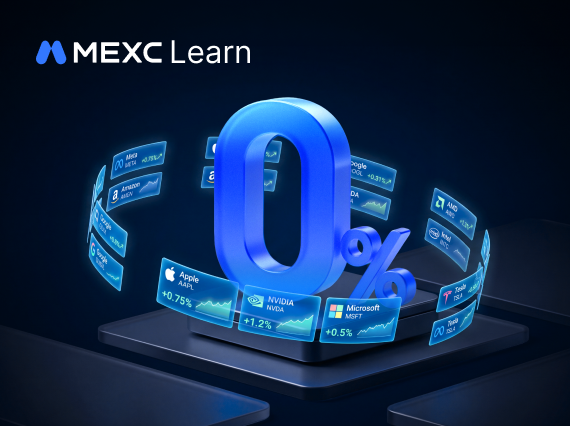
MEXC currently offers 0% fees on all spot trades (both maker and taker), making it the lowest-cost spot trading venue among major exchanges
MEXC futures fees stand at 0% maker / 0.02% taker — well below the industry average of ~0.024% / ~0.053%
Binance charges a standard 0.1% on spot trades, reducible to as low as 0.011% with BNB discounts and high volume
OKX offers 0.08% maker / 0.1% taker — competitive among traditional-fee exchanges
Bybit leads on futures with maker fees as low as 0.01%
Trading fees are only part of the picture — withdrawal fees, spreads, and funding rates all affect your real cost
Using limit orders (maker orders) is the single most effective way to cut fees on any platform
Why Fees Matter More Than You Think
Most traders focus on market selection, chart tools, and liquidity. Fees feel like a rounding error — until you actually do the math.
Take a trader with $100,000 in monthly spot volume:
Fee Rate | Monthly Cost | Annual Cost |
0.10% (Binance standard) | $100 | $1,200 |
0.05% (MEXC taker) | $50 | $600 |
0.00% (MEXC spot, current) | $0 | $0 |
As
MEXCReview's fee analysis illustrates, an algorithmic trader running $1 million in monthly volume can save over
$10,000 per year compared to Binance's standard rates — purely from the fee difference. For discretionary traders, that same math applies at smaller scales, just compounding more slowly.
Major Exchange Fee Comparison: 2026
MEXC — The Lowest Spot Fees in the Industry
According to
MEXC's official fee page and the
0-fee spot trading FAQ,
MEXC has made 0% maker and taker fees the default structure for all spot trading pairs — no promotional period, no minimum volume threshold, and no opt-in required. Every eligible user who logs in and places a spot trade pays nothing.
On the futures side,
MEXC's official fee guide confirms rates of 0% maker and 0.02% taker across perpetual contracts — meaningfully below the industry median.
Additional ways to lower costs further:
Hold 500+ MX tokens to unlock a 50% discount on futures trading fees
Enable "MX Deduction" to use MX tokens to offset remaining taker fees entirely
Watch for Zero-Fee Events on major pairs like BTC, ETH, XRP, and DOGE, where taker fees are waived temporarily
As
Chainplay's 2026 exchange review notes, MEXC serves over 40 million traders globally and lists more than 3,100 cryptocurrencies — combining low fees with one of the broadest altcoin selections available on any major exchange.
Binance — Deepest Liquidity, Competitive at Volume
Godex's fee breakdown confirms Binance's standard spot rate is 0.1% for both maker and taker. Fees drop significantly with:
BNB payment discount: 25% reduction (effective rate: 0.075%)
High-volume VIP tiers: Maker as low as 0.011%, taker as low as 0.023%
Binance wins on liquidity depth and ecosystem breadth. For retail spot traders at standard volume levels, though, the base rate remains higher than MEXC's current offering.
OKX — Strong for Advanced Traders
Yahoo Finance's hands-on exchange review ranks OKX as having the lowest advanced trading fees among the major platforms tested — at 0.08% maker and 0.1% taker. A $10,000 maker trade costs $8 on OKX versus $25 on Kraken Pro and $60 on Coinbase Advanced.
OKX also earns marks for fee transparency, publicly disclosing its 1% spread on basic orders while several competitors quietly layer charges on top.
Bybit — The Futures Specialist
Reelfinancial's 2026 comparison highlights Bybit's perpetual contract maker fee of just
0.01%, with strong VIP incentive tiers for derivatives traders. For spot trading, Bybit's rates are more standard and don't offer the same edge.
KuCoin — Solid Discounts for Native Token Holders
Per
Koinly's fee comparison, KuCoin starts at 0.1% maker and taker for spot trades. Holding KCS (KuCoin's native token) unlocks up to
60% in fee discounts, and top-tier VIP users can access negative maker fees (rebates). Without token holdings, the base rate isn't particularly differentiated.
2026 Exchange Fee Comparison Table
Exchange | Spot Maker | Spot Taker | Futures Maker | Futures Taker | Native Token Discount |
MEXC | 0% | 0% (promo) / 0.05% | 0% | 0.02% | MX: 50% on futures |
Binance | 0.10% | 0.10% | 0.02% | 0.05% | BNB: 25% off |
OKX | 0.08% | 0.10% | 0.02% | 0.05% | OKB: tiered discount |
Bybit | 0.10% | 0.10% | 0.01% | 0.06% | BIT: tiered discount |
KuCoin | 0.10% | 0.10% | 0.02% | 0.06% | KCS: up to 60% off |
Note: Rates reflect base-tier published fees as of 2026. VIP tiers and active promotions may reduce these further. Always verify current rates on each exchange's official fee page.
Beyond the Headline Rate: Hidden Costs to Watch
Withdrawal fees: Vary widely by asset and network; can erode fee savings on frequent withdrawals
Fiat on-ramp charges: Card deposits typically cost 1.5%–3.99% depending on the platform
Spread: Some "zero-fee" platforms recover revenue through wider bid-ask gaps rather than explicit charges
Funding rates: Holding leveraged positions overnight generates costs that scale with market volatility
Slippage: Thin order books on illiquid pairs mean your fill price diverges from the quoted price — an invisible fee
MEXC's own fee comparison article points out that the only exchange offering genuinely zero maker fees as a
baseline — without minimum volume or token holding requirements — is MEXC itself. That's a structural advantage for traders who don't want to manage token portfolios just to access competitive rates.
Five Practical Ways to Minimize Fees in 2026
Default to limit orders: Maker orders cost 0% on MEXC for both spot and futures — market orders are where fees bite
Hold the native token: On MEXC, holding 500+ MX reduces futures taker fees by 50%; similar dynamics apply at Binance (BNB) and KuCoin (KCS)
Track 0-fee events: MEXC regularly runs taker-free promotions on high-volume pairs — monitor the Events tab to time larger trades
Trade during liquid hours: Slippage costs are lower during high-volume windows, offsetting what headline fees miss
Choose the right withdrawal network: The same asset transferred via different chains can have fee differences of 5–10x
Who Should Use Which Exchange?
Trader Type | Best Fit | Why |
Spot / altcoin hunters | MEXC | 0% spot fees + largest token selection |
High-frequency / quant | MEXC / Binance | MEXC on fees, Binance on liquidity depth |
Derivatives specialists | Bybit / MEXC | Sub-0.02% futures maker fees |
Compliance-first / US-based | OKX / Coinbase | Regulatory clarity, audited frameworks |
Beginners | MEXC / Binance | Low cost of learning, broad documentation |
FAQ
Q: Is MEXC's 0% spot trading fee permanent?
According to the
MEXC 0-fee FAQ, there is currently no end date set for the zero-fee spot structure. It is the default fee policy, and any future changes will be communicated through official announcements in advance.
Q: What's the difference between a maker and a taker fee?
Maker fees apply when you place a limit order that rests in the order book and waits for a match — you're adding liquidity. Taker fees apply when your order immediately executes against existing orders — you're consuming liquidity. Makers typically pay less (or nothing), which is why limit orders are the core cost-saving strategy.
Q: Does a 0% maker fee really apply to all pairs on MEXC?
Per
MEXC's official FAQ, the 0-fee structure applies to all spot trading pairs on the platform with no hidden conditions and no minimum volume requirements. Institutional users, market makers, and API users are excluded.
Q: Are MEXC futures fees also zero?
MEXC charges 0% on futures maker orders. Taker fees are 0.02%, which remains well below the industry average. Holding 500+ MX tokens reduces futures taker fees by an additional 50%.
Q: Can fee savings really compound into meaningful amounts?
At $50,000 in monthly volume, the difference between 0.1% and 0% is $600/year. At $500,000 monthly, that's $6,000/year — enough to matter for anyone running a systematic strategy.
Ventureburn's 2026 exchange ranking confirms MEXC consistently appears at the top of low-fee comparisons precisely because of this compounding math.
Q: Does lower fees mean lower security?
Not necessarily. Fee structure and security architecture are independent.
MEXC operates with a multi-layer security framework serving over 40 million users globally. Always assess security, regulatory standing, and liquidity alongside fees when choosing a platform.
Disclaimer
This article is produced by the MEXC Crypto Pulse Team for informational purposes only and does not constitute investment advice, financial advice, or any other form of professional recommendation. Cryptocurrency trading involves significant risk, including the potential loss of your entire principal. Fee data cited in this article is based on publicly available information from each exchange's official fee schedule and is subject to change at any time; always verify current rates on each platform's official website before trading. Past performance of any trading strategy or platform is not indicative of future results. Please conduct your own due diligence and consult a qualified financial advisor before making investment decisions.
About the Author
MEXC Crypto Pulse Team is the editorial and research division of MEXC, one of the world's leading cryptocurrency exchanges. The team brings together professionals from finance, technology, and journalism to deliver data-driven analysis and market insights for the global crypto community. Our work covers exchange comparisons, market trends, token research, and trading education. Learn more at
MEXC.
Sources