

Gold Prices Steady Near 11-Week Low as Iran-Israel Ceasefire Takes Hold
TLDR
- Gold is hovering near an 11-week low at around $4,328–$4,333 per ounce after losing nearly 5% last week.
- Iran and Israel agreed to halt attacks, easing some geopolitical risk that had pressured markets.
- Strong U.S. jobs data reinforced expectations the Fed may keep interest rates higher for longer.
- Markets are now pricing in roughly a 70% chance of a Fed rate hike by December.
- U.S. CPI data due Wednesday and producer prices on Thursday could set the next direction for gold.
Gold has been struggling. The precious metal dropped to its lowest level since March 23 last week, shedding nearly 5% during the worst flare-up in Middle East hostilities since a truce was agreed in early April.
Spot gold was trading at around $4,328 to $4,333 per ounce in Asian trade on Tuesday. U.S. Gold Futures edged slightly lower to $4,358 per ounce.
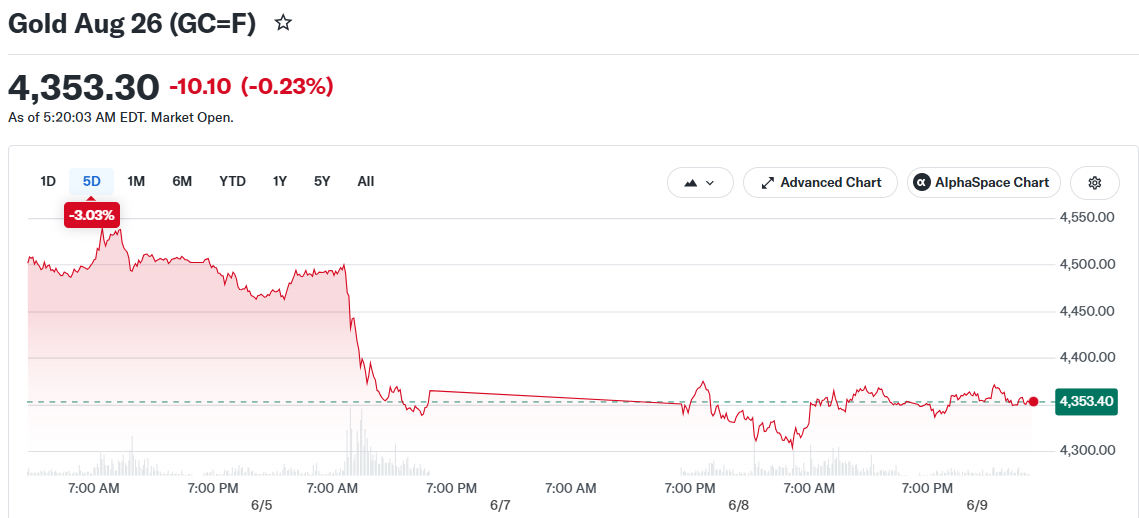 Gold Aug 26 (GC=F)
The drop was driven largely by strong U.S. jobs data released last week. That data strengthened expectations that the Federal Reserve could keep interest rates elevated for longer, which typically weighs on gold since it pays no yield.
Markets are now pricing in roughly a 70% chance of a Fed rate hike by December.
The U.S. Dollar Index rose to a two-month high before dipping 0.2% on Tuesday, adding further pressure to dollar-denominated commodities like gold.
Iran-Israel Tensions Ease
Gold did find some support after Iran and Israel agreed to halt attacks following a weekend flare-up in violence.
U.S. President Donald Trump said Monday evening the U.S. was “close to declaring a total victory” in the Iran conflict and that oil prices were likely to fall sharply.
The war, now in its fourth month, has disrupted energy flows through the Strait of Hormuz, pushed oil prices higher, and raised concerns about global inflation.
That inflation pressure has been working against gold. Higher oil prices have kept Treasury yields and the U.S. dollar elevated, reducing the appeal of non-yielding assets.
Yemen’s Iranian-backed Houthis also announced a blockade of Israeli ships in the Red Sea on Monday, adding another layer of uncertainty to the region.
Rhona O’Connell, head of market analysis at StoneX Group, said key issues around the conflict remain “unresolved” and noted the firm was watching for any signs of bargain hunting.
CPI Data in Focus
All eyes now turn to U.S. consumer price index data due on Wednesday, followed by producer price figures on Thursday.
These reports will help determine whether higher energy costs are spilling into broader inflation. The results could shift expectations around Federal Reserve policy and move gold either way.
Silver rose around 0.4–0.5% to roughly $68 per ounce. Platinum gained 0.3% to $1,767 per ounce. Copper advanced on both the London Metal Exchange and U.S. futures markets.
Gold remains caught between two forces: a potential easing of Middle East tensions on one side, and persistent pressure from elevated U.S. interest rate expectations on the other.
The post Gold Prices Steady Near 11-Week Low as Iran-Israel Ceasefire Takes Hold appeared first on CoinCentral.


You May Also Like

The Best Skills to Monetize From Home This Year

Phemex Publishes April 2026 Proof of Reserves, Reporting 131% Total Reserve Ratio

Best Crypto Presales to Buy in 2026 as Bitcoin Stabilizes



